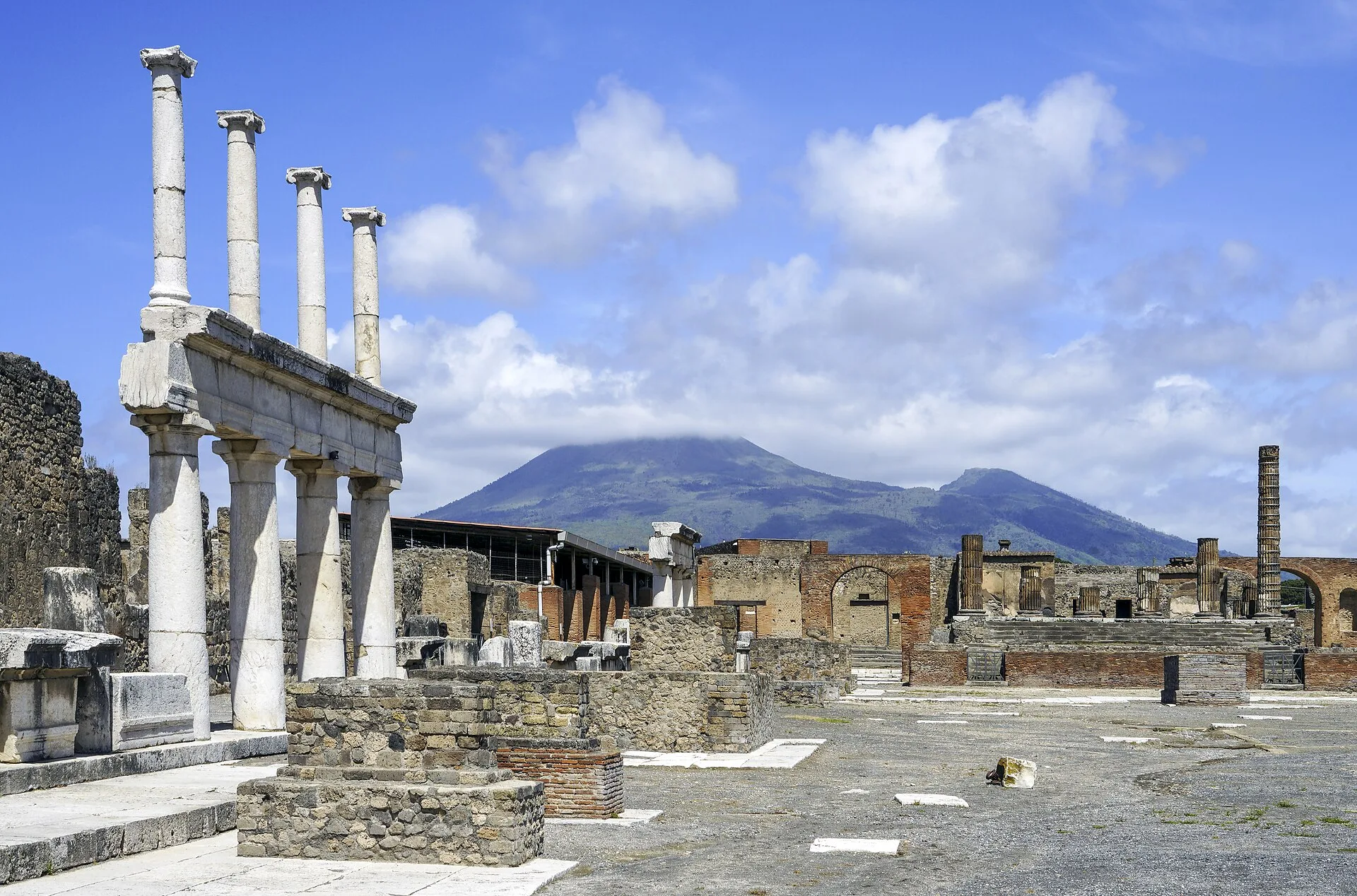
_and_the_Vesuvio.jpg)
Destination desk · Campania
Pompeii
A Roman town read through daily systems, a phased disaster and the changing choices that excavation and conservation have made visible.
Generated illustration: ExcursionPass · CC BY-SA 4.0. Forum reference: Commonists.
1 field story12 visual explanations19:56 original audio1 complete rail chain
The city before the catastrophe
Begin with streets, water and work.
Pompeii was neither an untouched Roman ideal nor a town preserved at one perfect second. Its buildings carried centuries of change; the earthquake of 62 or 63 CE left repairs unfinished; residents occupied sharply unequal social worlds; and the eruption buried different districts through different processes.
Excavation created knowledge while also exposing walls, roofs, paintings and remains to new damage. The Bourbon tunnels, Fiorelli’s recording and casting, twentieth-century clearance and today’s conservation campaigns all affect what a visitor can see.
Use this desk to plan a coherent route and to decide whether a bundled high-speed day from Rome, independent rail from Rome or Naples, a guided format or a slower stay matches the questions you actually want to follow.
The Pompeii field story
One city, several timescales.
Move from urban life through eruption mechanics, human decisions, excavation ethics and the practical chain that makes a modern visit possible.
Ways into Pompeii
Ask system, phase and afterlife.
The working town
Read paving, fountains, pipes, baths, shops, bakeries, homes and public buildings as interdependent systems sustained by unequal labour.
The evolving eruption
Separate pumice fall, roof loading, column collapse and repeated density currents instead of compressing the disaster into one cinematic instant.
Excavation and care
Ask how tunnels, casts, exposure, wartime damage, drainage, research and conservation changed both the evidence and its public meaning.
Plan from current sources
The open route is the real route.
Buildings, paths, weather and transport change. Check the park and railway immediately before travel, then use the field story to decide what deserves your limited time.
Read the complete Pompeii field guide