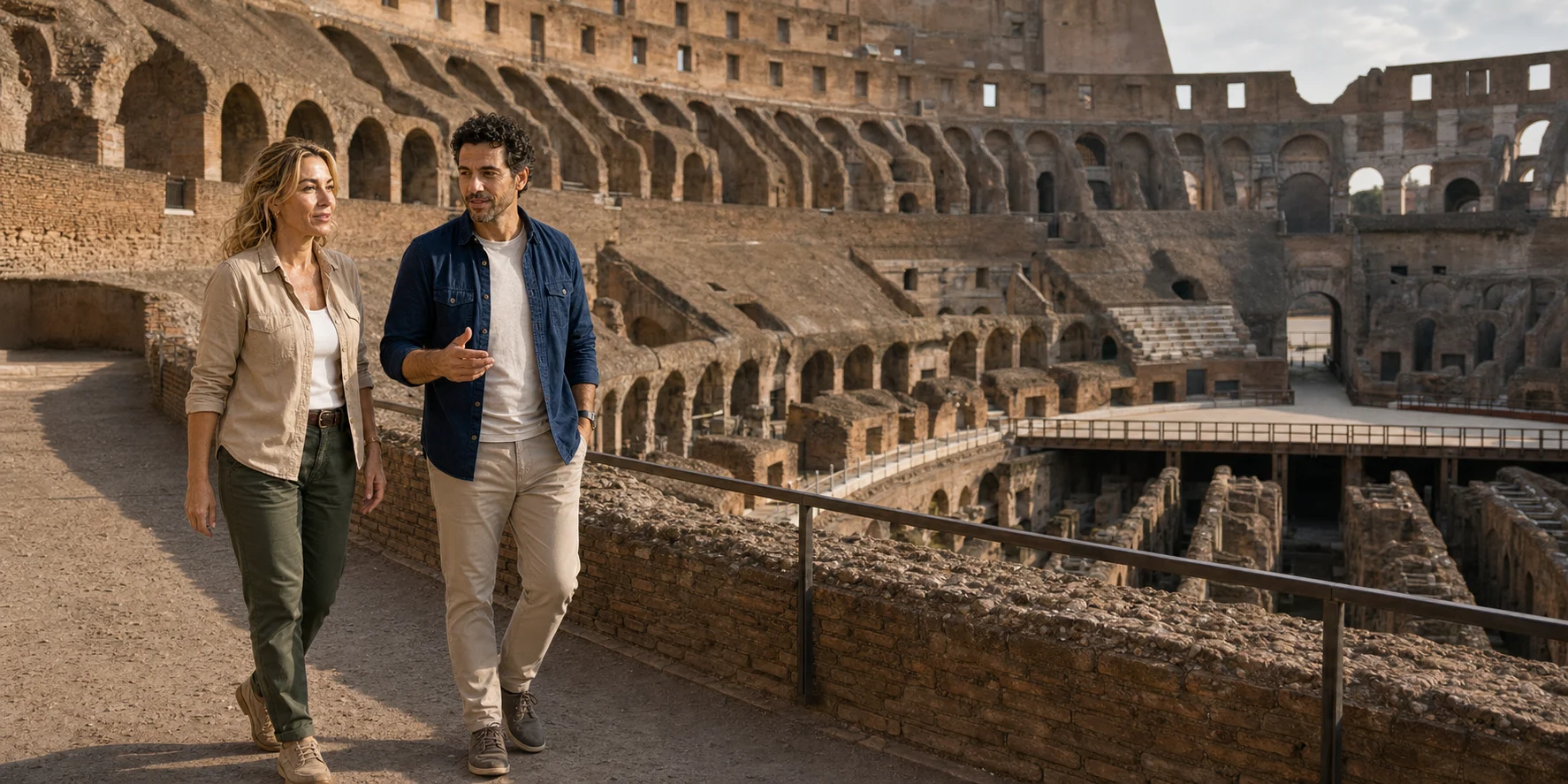
The Colosseum is not an isolated monument, the Forum is not a field of disconnected stones, and the Palatine is not merely a viewpoint. Walk them in that order and one Roman valley becomes a three-part lesson in spectacle, civic authority and the invention of palace life.
01 · Rome archaeological route
One ticket, three different ways of seeing
The most useful way to begin this route is with a distinction. A guided Colosseum visit may use the ordinary first- and second-level route, or it may include a separately controlled Arena viewpoint. Neither label automatically means that the same guide continues through the Roman Forum and Palatine Hill. In a hybrid guided-and-independent format, the Colosseum receives the guided interpretation and the Forum and Palatine become a second act to explore yourself. Establish that boundary before choosing a tour. That changes how to prepare: a map, downloaded notes and enough time are what keep the Forum from dissolving into rubble and the Palatine from becoming only a climb.
These are also three different archaeological problems. The Colosseum survives as a monumental shell whose geometry still directs the body. Its entrances, radial passages, seating wedges, barriers, arena and underground rooms reveal a building created to sort and move large crowds. The Forum is an accumulated civic landscape: roads, temples, basilicas, memorials and political buildings repeatedly replaced one another over more than a millennium. The Palatine adds domestic and imperial layers, from traces of early settlement to houses associated with Augustus and the vast palace complexes of later emperors.

The sequence matters. At the Colosseum, power addresses a crowd. In the Forum, power argues, legislates, worships, prosecutes, trades and commemorates. On the Palatine, power lives above the city and turns a private residence into an institution. The English word palace ultimately carries the hill's name because later rulers across Europe reused the association between the Palatine and sovereign residence.
The distances look small on a map, but the day is physically deceptive. Security screening, timed admission, stairs, uneven surfaces, sun exposure, scarce shade and the mental work of reading ruins all consume time. Treating the complex as a checklist almost guarantees that the last place will receive the least attention. The better objective is not to stand beside every labelled stone. It is to understand the transformations that connect them.
02 · Rome archaeological route
Before the amphitheatre: Nero's lake and a Flavian answer
The Colosseum's ancient name was the Flavian Amphitheatre. Vespasian, the first emperor of the Flavian dynasty, began it in the 70s CE; Titus inaugurated it in 80, and Domitian completed important additions. The familiar modern name emerged later, probably through association with a colossal statue that had stood near the site. Calling the building Flavian restores its political point: it was a dynastic project placed with extraordinary care.
After the great fire of 64, Nero created the Domus Aurea, a huge palace landscape that included gardens, pavilions and an artificial lake in this valley. His overthrow in 68 was followed by civil war and four emperors in rapid succession. Vespasian needed legitimacy. Building an immense public entertainment venue where part of Nero's lake had been was an architectural argument: space appropriated by a condemned ruler could be presented as returned to the Roman people.
That story is often polished into a simple gift. It was not. The amphitheatre celebrated a new dynasty, channelled popular attention and advertised imperial capacity. A reconstructed inscription on the building indicates that Vespasian ordered it built ex manubiis—from the proceeds of war booty. The Flavians had recently defeated the Jewish revolt and destroyed Jerusalem in 70. Scholars therefore connect the funding claim with spoils from that war. The nearby Arch of Titus makes the victory explicit in a relief showing Roman soldiers carrying sacred objects, including the seven-branched menorah, from the Jerusalem Temple.
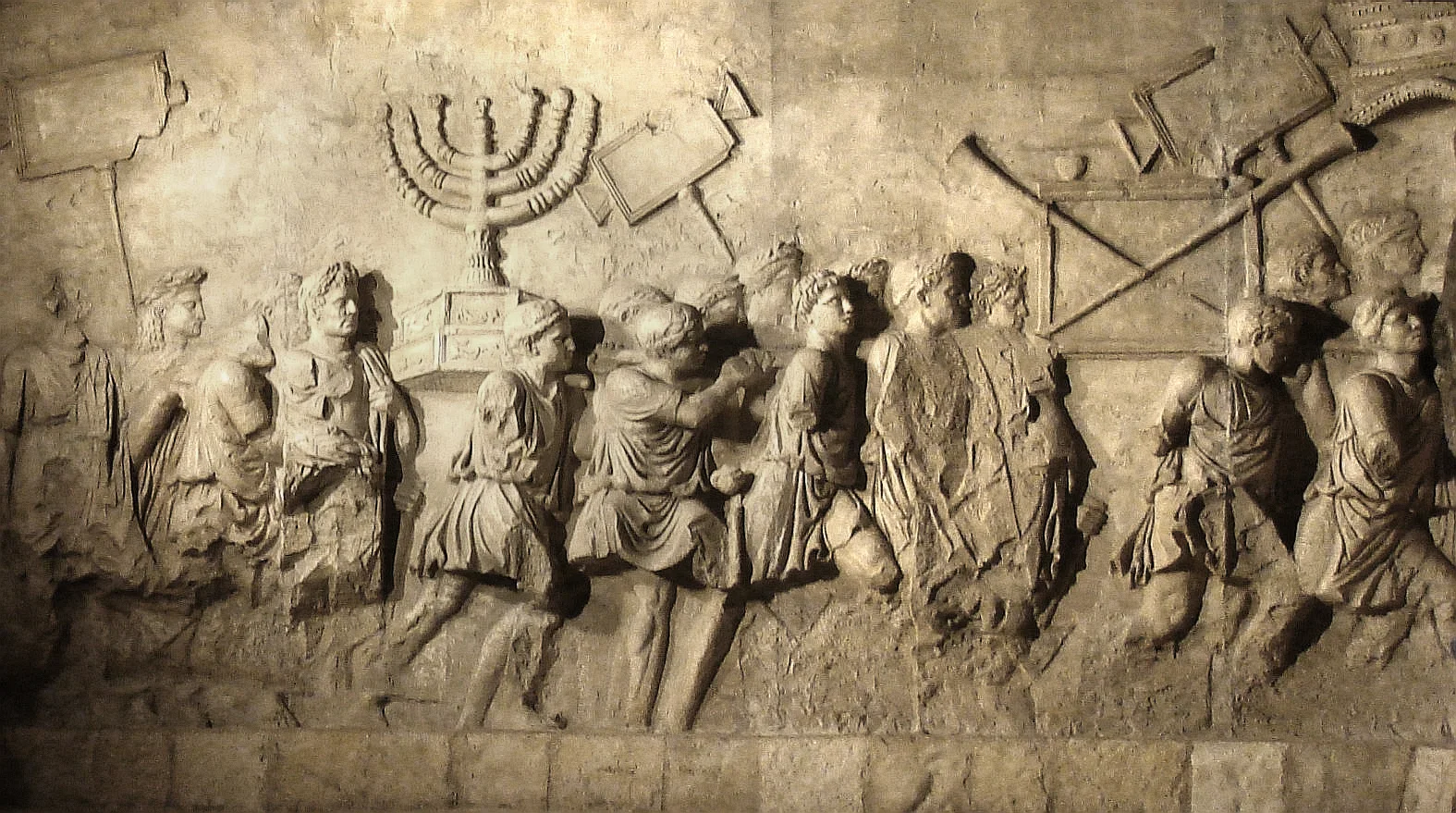

The evidence does not justify a widely repeated numerical claim that a specified mass of Jewish captives built the amphitheatre. Captives and enslaved people were certainly part of Rome's coercive economy, but the surviving inscription identifies the source of funding, not a workforce ledger. The honest history holds two facts together: the monument offered public entertainment in Rome, and its financing was bound to an imperial war that meant dispossession, enslavement and death elsewhere.
The site also required formidable engineering. Draining the lake valley, laying foundations in difficult ground and coordinating stone, concrete, brick and labour were acts of administration as much as construction. The result was not timeless Roman genius materialising at once. It was a political commission, financed through empire, adapted over successive reigns and maintained by people whose names mostly disappeared.
03 · Rome archaeological route
The façade is a machine for trust
From outside, the Colosseum reads as repeated arches stacked into an ellipse. The repetition is calming because it makes a huge building seem orderly. Travertine piers frame the lower arcades; engaged columns use changing classical orders as the levels rise; the attic originally carried fittings associated with the great awning. Yet the façade was not merely decorative. It announced that thousands of bodies could enter a charged public event and be placed where Roman status said they belonged.
Numbers over entrance arches helped ticket holders find their routes. Inside, radial corridors, stairs and sloping passages divided circulation. The Latin term vomitoria describes passages through which crowds could be discharged into or from seating; it does not mean rooms where diners went to be sick. The organisation resembles a modern stadium because modern stadium designers inherited the same problem: move many people quickly, prevent opposing flows from colliding, preserve sightlines and keep service work apart from spectators.

The seating made social hierarchy architectural. The emperor, Vestal Virgins and highest officials occupied privileged positions near the arena. Senators sat in the lowest tier; equestrians and other citizens were arranged above; women and poorer spectators were generally assigned higher and more distant places, although rules and practice changed across time. The building gathered a broad public, but it did not create equality. It turned distinctions of gender, legal status and rank into distances from the action.
An awning called the velarium could shade parts of the seating. Sailors associated with the fleet at Misenum are traditionally connected with its operation, and the stone sockets and external supports preserve evidence for the system. It was not a roof sealing the arena from summer. Wind, sun angle, rain and the practical limits of deploying fabric over an enormous ellipse made comfort uneven. When a modern visit feels exposed, that discomfort can clarify rather than romanticise the ancient problem.
The façade has also changed because Rome kept using it. Earthquakes damaged the structure. Stone and metal were quarried for other projects. Medieval occupants inserted houses, workshops and fortified spaces. Christian memory attached new meanings to it. Modern restorers added buttresses, consolidated masonry and continue to monitor a monument squeezed by traffic, pollution, weather and intense tourism. What looks like one ancient object is a record of repeated salvage, occupation, loss and repair.
04 · Rome archaeological route
Arena access: standing on the missing surface
Arena access is valuable because it restores the relationship between the performers' level and the audience. The word arena comes from the Latin for sand, the absorbent material spread across a timber floor. Most of that floor no longer survives. Modern platforms cover only part of the ellipse, leaving the underground service complex visible.
That exposed underground is called the hypogeum. It is easy to mistake it for the arena itself because it dominates the view today. In antiquity, spectators largely saw a flat performance surface, scenery and openings. The corridors, cages, winches, ramps and lifts below were backstage infrastructure. The present ruin reverses the ancient visual order: the work once concealed is now the building's most conspicuous feature.
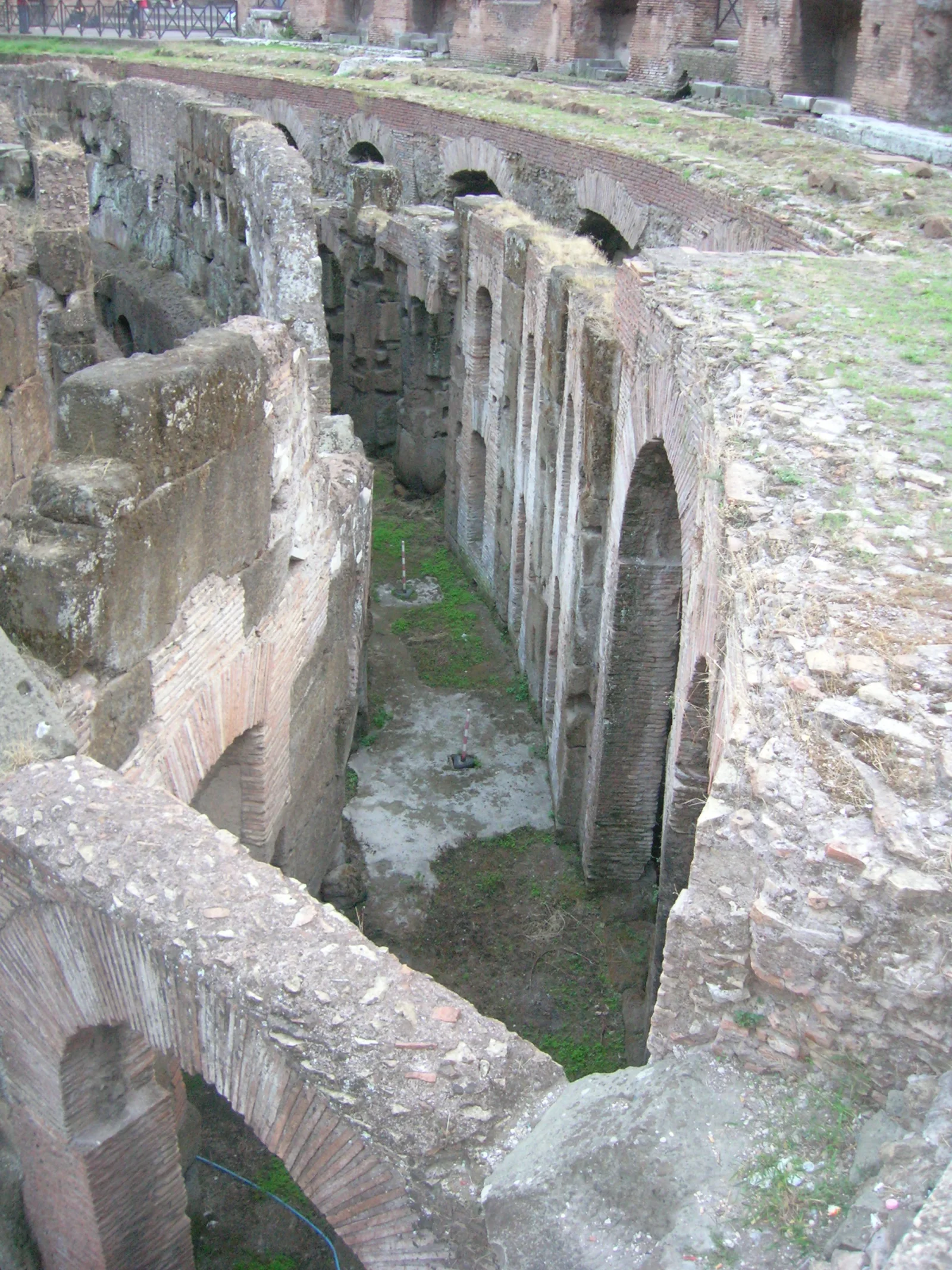

The partial floor is modern, and proposals for larger reversible surfaces remain matters of conservation and interpretation. Cover more of the hypogeum and visitors could better grasp the arena's original continuity; leave it exposed and the machinery of spectacle becomes legible. A future floor would not be an excavated original. It would be an interpretive intervention required to protect remains, allow inspection and avoid pretending that uncertainty has disappeared.
Standing at arena level also corrects scale. The surviving walls feel less like a picturesque ruin and more like a steep bowl designed to focus attention. An individual below was visible from many directions. Noise would have reflected from hard surfaces, though modern acoustic impressions cannot recreate a full ancient crowd. The most responsible imaginative exercise begins with the evidence—distance, sightline, enclosure, exposed entrances—and stops before inventing a roar, smell or emotional response for people who left no testimony.
05 · Rome archaeological route
Beneath the spectacle: machines, handlers and risk
The underground service system changed with the amphitheatre. Its early timber structures were rebuilt in masonry under Domitian and altered again by later emperors. Holding areas, entrances and vertical machinery therefore belong to successive arrangements, not a single system installed once. The Parco's study of the stage systems describes 28 Flavian lifting installations operated by capstans and a much more extensive later system with around 60 lifts. For the early mechanism, teams totalling more than two hundred people could be required. Exact arrangements changed, but the principle is clear: an apparent miracle above depended on disciplined labour below.
Capstans converted human force into controlled lifting. Ropes, pulleys and platforms moved animals, people or scenery toward trapdoors. Timing mattered. A platform had to rise without exposing the mechanism prematurely, reach the correct height and avoid injuring whatever it carried. Dampness, darkness, confined corridors and frightened animals made the backstage environment hazardous even before performance violence began.
Workers included animal handlers, stage technicians, attendants, guards and enslaved labourers. Their tasks complicate the smooth word “spectacle.” A beast appearing suddenly on the sand was not conjured. It had been captured, transported across imperial networks, kept alive, confined beneath the crowd and moved by people taking physical risks. A painted set or artificial landscape likewise required carpenters, riggers and stage crews.
The underground also explains why ancient sea-battle stories need caution. Sources associate early amphitheatre celebrations with water displays, but once the elaborate masonry hypogeum occupied the arena footprint, flooding the full space would have been impractical. Scholars debate where and how particular aquatic spectacles occurred. A confident claim that the surviving Colosseum regularly became a complete naval basin ignores both chronology and the archaeology underfoot.
06 · Rome archaeological route
Gladiators were professionals inside a coercive system
“Gladiator” has become a generic word for anyone fighting in an arena, but Roman spectacles contained different events and legal conditions. Trained gladiators usually fought opponents according to recognised types, equipment and conventions. Venatores specialised in animal hunts. Condemned people could be executed in staged forms. Captives, enslaved people, volunteers and, at times, women entered arena performance under very unequal circumstances.
Gladiators trained in schools and were valuable assets to the organisers who owned or contracted them. Pairings could set contrasting equipment against each other: a heavily protected murmillo with large shield and short sword, for example, or a retiarius with net and trident facing a more armoured opponent. These categories changed and should not be imagined as fixed sports teams spanning all Roman history.

Not every bout ended in death. Training was expensive, and evidence for outcomes varies by period and source. Defeated gladiators could appeal for release from a match, while the event's presiding authority and crowd participated in the decision. The familiar thumbs-down gesture is a modern simplification; ancient texts refer to thumb signals without giving cinema a secure universal code. Mercy was possible, but it should not soften the institution. The power to spare a person only existed because the system allowed another person's body to become public entertainment.
Some gladiators achieved fame, received gifts and eventually won freedom. Graffiti, lamps and mosaics preserve names and types. Those traces reveal an audience fascinated by particular performers. They do not turn enslavement into a meritocracy. A successful career could coexist with legal degradation, bodily danger and another person's ownership of the contract.
Animal spectacles made imperial reach visible. Lions, leopards, bears and other species were transported across great distances. Hunts staged mastery over landscapes as well as animals, while mass killing could damage populations and depended on extensive supply networks. A modern visitor may admire the engineering and still recognise that its purpose included domination.
07 · Rome archaeological route
The crowd was part of the constitution
The amphitheatre was political because the emperor and people could see one another. A ruler sponsored games, displayed generosity and watched the public react. Spectators applauded, shouted requests and expressed judgements in a space whose acoustics and focus amplified collective presence. Distribution of seats reinforced hierarchy, yet a crowd could still become an audience with demands.
Free admission to many events did not make them free of cost. Imperial and elite patrons paid enormous sums; provinces supplied animals and wealth; labourers built and maintained the site. Sponsorship converted resources into reputation. Food distributions, festival days and entertainment helped define good rule, but they also offered occasions when rulers could be compared with predecessors.
The phrase “bread and circuses,” from the satirist Juvenal, is often used as a total explanation: Romans supposedly surrendered politics for food and spectacle. It is sharper as criticism than as sociology. Rome's urban population still worked, formed associations, worshipped, petitioned and engaged with law. Games were not a hypnotic replacement for civic life. They were one of the places where empire represented itself and where the governed could appear as a collective, albeit under close control.
08 · Rome archaeological route
After the games: houses, fortress, quarry and monument
Gladiatorial events ended in the fifth century; animal spectacles continued longer. The amphitheatre did not then become an empty romantic ruin. Its arcades sheltered dwellings and workshops. A chapel and religious associations occupied parts of it. The Frangipane family incorporated the structure into a fortified complex. Later owners and church authorities controlled sections.
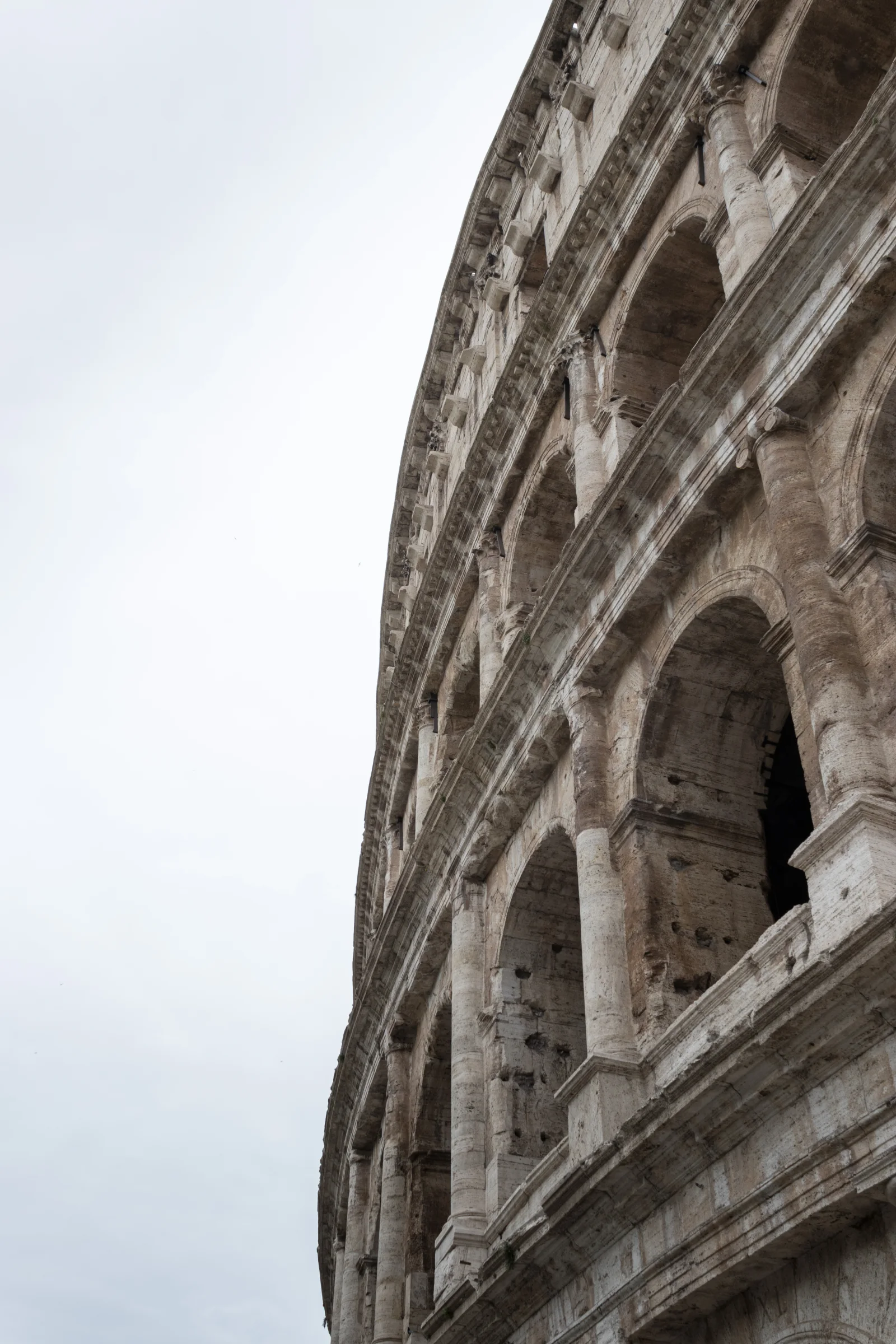

Stone was removed for buildings elsewhere, and iron clamps were extracted from masonry, leaving many familiar holes. Earthquakes accelerated collapse. These losses were not a single barbaric episode in which “medieval people destroyed antiquity.” Reuse followed changing needs, ownership, economics and attitudes toward ancient material.
From the early modern period, antiquarian study, Christian commemoration and state conservation increasingly recast the Colosseum as heritage. Popes supported interventions for different reasons. Nineteenth-century buttresses at the outer ring are now part of the monument's visible identity. Archaeological excavation exposed the hypogeum, improving knowledge while removing later layers and changing what visitors could see.
Conservation still requires choices. Cleaning reveals masonry but can erase patina if mishandled. Barriers protect fragile edges but alter photographs. Visitor routes distribute pressure but privilege some views. Reconstruction can explain a lost floor but risks appearing original. There is no neutral “restore it exactly” solution because no single date contains the whole history.
09 · Rome archaeological route
Leaving the arena: the Forum needs a verb
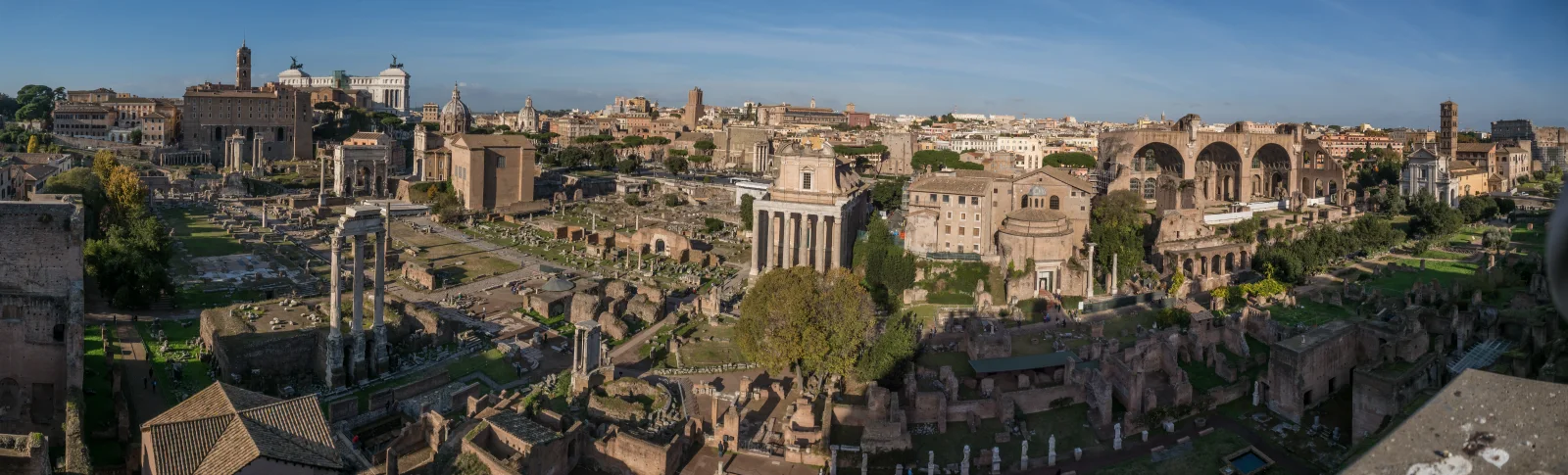
The Roman Forum is best understood through actions. People processed along the Via Sacra, spoke from platforms, voted in earlier arrangements, argued cases in basilicas, met in the senate house, worshipped at temples, borrowed and traded, celebrated victories and buried political memory beneath new construction. Naming only buildings produces a catalogue. Asking what happened between them restores a city.
_from_Palantine_Hill_-_Rome,_Italy.jpg)
The valley began as low, wet ground between hills. Drainage works traditionally associated with the Cloaca Maxima helped make it usable, though the system developed over time rather than appearing as one king's complete engineering project. Burials gave way to civic functions. By the Republic, the area contained assemblies, temples and commercial and legal spaces. Emperors repeatedly monumentalised it, while the creation of additional imperial forums relieved some pressure and created new stages for dynastic display.
Orientation is easier if you locate three anchors. At the eastern end near the Colosseum, the Arch of Titus marks the route beside the Palatine. The Via Sacra runs through the site rather than behaving like a perfectly straight ceremonial avenue. At the western end, the Capitoline rises beyond the Temple of Saturn and the later Arch of Septimius Severus. Everything between is a palimpsest: a surface written, scraped and written again.
10 · Rome archaeological route
Senate, law and the spaces between speeches
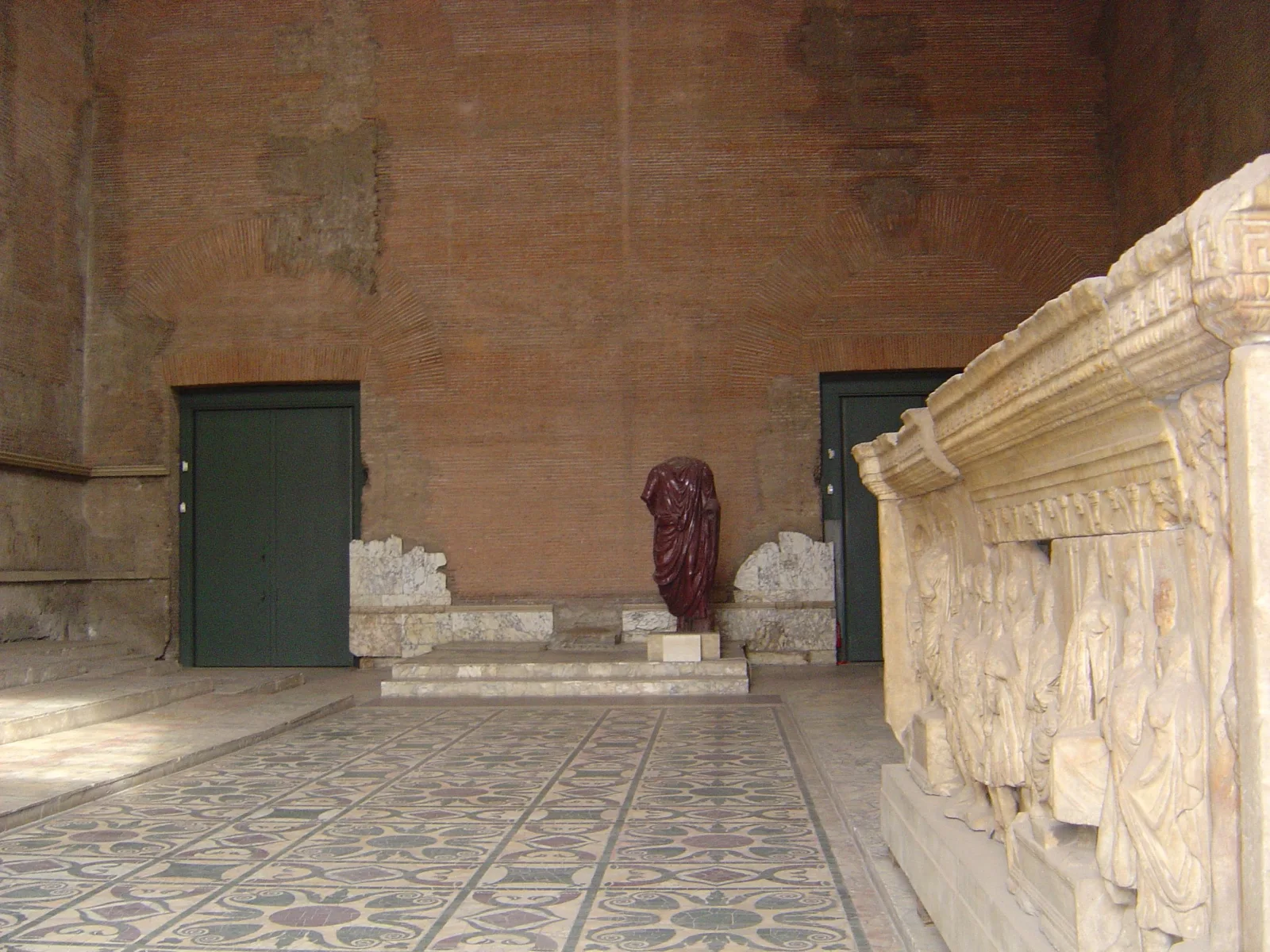
The Curia Julia, begun by Julius Caesar and completed under Augustus, gives the Forum one of its clearest surviving rooms. Its present appearance reflects ancient rebuilding and modern restoration, but the volume is instructive. Senators met inside an enclosed hall, not on the Forum pavement in a permanent open-air parliament. They debated, heard reports and participated in a system whose actual power changed dramatically from Republic to Empire.
_FORUM_11Mar2006.JPG)
The building's name can mislead. Julius Caesar was assassinated in 44 BCE at a meeting of the Senate in the Theatre of Pompey's complex, not inside this Curia, which was unfinished. The assassination belongs to Rome's political landscape, but not to every stone associated with Caesar. Keeping events in their proper place is part of reading ruins honestly.
The room itself has a different survival story. The Curia’s official interpretation describes three broad steps along the sides, accommodating about 300 senators, and a late-antique marble floor from its restoration under Diocletian. Its conversion into a church in the seventh century helped the shell survive. The bronze doors now in the façade are copies; the ancient doors were moved to the Lateran in the seventeenth century. A senate house, a church and a restored archaeological monument occupy the same outline. That continuity explains survival while preventing the attractive mistake of treating everything visible as Caesar’s interior.
Nearby, the Rostra was a speaking platform whose name came from the prows—rostra—of captured ships displayed on an earlier version. Orators addressed citizens from it; public notices and political theatre accumulated around it. Cicero's severed head and hands were displayed on the platform after his murder in 43 BCE, a documented act of vengeance that turned the place of speech into a warning about who controlled speech.
The basilicas along the Forum were not churches in their original function. They were large roofed halls used for law, business and administration. Their open interiors offered shelter from weather and flexible space for tribunals and transactions. Later Christian architecture adopted the basilican form because it could gather a congregation, which is why one word can name both a Roman civic building and a church without implying that the ancient Forum halls were Christian.
The Basilica of Maxentius makes that civic scale tangible near the eastern end of the Forum. Maxentius began it in 308 CE; Constantine completed and altered it after defeating him. The three enormous coffered barrel vaults that survive belong to the north aisle, rather than to the building’s central nave. That missing nave once rose under cross vaults supported by eight monolithic marble columns. What looks like a complete sequence of giant halls is therefore only one side of a much larger interior.
The building partly occupied earlier pepper and spice warehouses, the Horrea Piperataria: imperial administration replaced a site of commerce without leaving the valley’s commercial history behind. Constantine placed a colossal image of himself in an apse; its surviving fragments are now on the Capitoline. Read the ruin in three moves—locate the surviving side aisle, imagine the absent central span, then consider the ruler’s image at its end. The size served courts and administration, but it also made an audience feel the scale of authority.
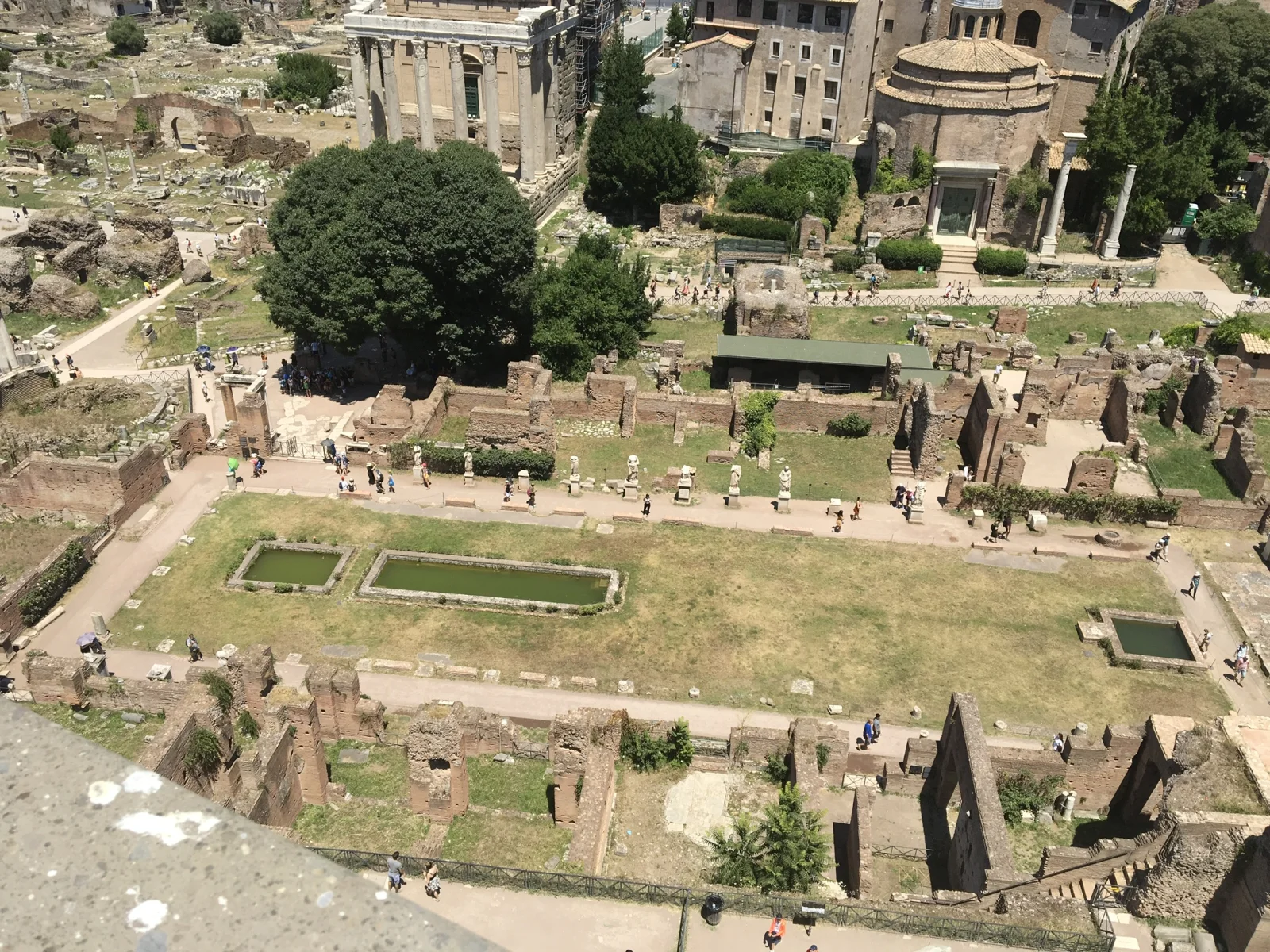
The House of the Vestals and the round Temple of Vesta add another kind of institution. Six Vestal Virgins, selected as girls and serving long terms, maintained the sacred fire and performed rites tied to Rome's continuity. They held privileges unusual for Roman women: they could own property, make wills and occupy honoured seating at spectacles. Their status was nevertheless controlled by the state, their sexuality regulated and violations punished with terrifying severity. Privilege and constraint were not opposites here; they were produced by the same office.

11 · Rome archaeological route
Caesar's memory and Augustus's new order
At the Temple of Divus Julius, visitors often leave flowers near the remains of a semicircular altar. The Senate authorised honours for the deified Caesar after his death; Augustus dedicated the temple in 29 BCE. Ancient accounts connect the area with Caesar's public funeral and cremation. The safest description is that the altar memorialises the funeral-pyre site within the Forum tradition—not that every surviving block proves the exact position of his body.
This modest fragment sits inside a huge political transformation. Caesar's murder did not restore a stable Republic. Civil wars followed. Octavian, Caesar's adopted heir, defeated rivals and received the title Augustus in 27 BCE. He maintained republican offices and language while concentrating authority. The Forum's monuments became instruments in that balancing act: continuity was proclaimed while the political system changed.
The Arch of Augustus near the temple no longer survives as a complete monument, but its placement connected military victory, divine ancestry and the new ruler. The nearby Regia and Temple of Vesta carried much older religious associations. Augustus did not simply replace the past. He edited it, repaired temples, revived rituals and placed his family within Rome's sacred history.
The Forum therefore makes chronology visible as argument. A temple may preserve an ancient cult while its marble belongs to an imperial rebuilding. A Republican institution may survive in name under an emperor. A victory arch may frame an older road. Rather than asking “Is this Republican or imperial?”, ask which period selected, rebuilt or reinterpreted what came before.
12 · Rome archaeological route
Why the ruins look like this
The Forum did not collapse in one night with the western empire. Political focus shifted; buildings were repaired, converted, abandoned, occupied or dismantled at different rates. Churches preserved some structures by adapting them. Floods and erosion deposited sediment. Stone and metal were reused. The ground level rose, and the ancient pavement disappeared under pasture and later neighbourhoods.
From the Renaissance onward, artists and scholars studied visible remains while quarrying continued. Systematic excavation in the nineteenth and twentieth centuries lowered ground levels and removed later fabric to expose antiquity. That work created the Forum visitors recognise now: ancient foundations opened to the sky, with selected medieval and modern layers left standing.
Archaeology is thus part of the view, not a transparent window through it. A reconstructed column may combine ancient drums, new supports and an educated proposal about position. Brick stamps, inscriptions, coins, drains, floor levels and mortar can date phases that look visually similar. Modern paths may cross where ancient walls stood. Labels cannot show every uncertainty, which is why the best guides explain how a claim is known.
The Forum rewards a three-step habit:
- Identify the function: temple, basilica, road, arch, senate house, residence or service space.
- Identify the phase: original foundation, rebuilding, later reuse, excavation or modern reconstruction.
- Identify the relationship: what route, audience, institution or neighbouring monument gave it meaning.
This method makes even a low foundation useful. The value is no longer dependent on complete columns or a dramatic story.
13 · Rome archaeological route
Climbing the Palatine: origins before palaces
The Palatine rises between the Forum and Circus Maximus. Roman tradition placed the hut of Romulus here and made the hill the setting for the city's foundation in 753 BCE. Archaeology confirms early settlement on the hill, including Iron Age traces, but it cannot verify the biography of Romulus or a single foundation day. Legend and excavation overlap without becoming the same evidence.
The Romulus story mattered because Romans used it to debate their own character. The twins Romulus and Remus, exposed and rescued, became rivals; Romulus killed Remus in one tradition after a dispute over walls or divine signs. Rome's origin was therefore imagined through asylum, violence, boundary and incorporation. Later rulers could invoke the founder while selecting which qualities to praise.
Elite houses occupied the hill during the late Republic. Its location offered proximity to the Forum, breezes and views, but also political symbolism. Augustus lived there and associated his residence with Apollo. Because subsequent emperors expanded the complex, the hill's name became shorthand for imperial residence. The transformation from neighbourhood to court was gradual and never erased all earlier religious and domestic places.

14 · Rome archaeological route
Augustus: modest rooms, immense programme
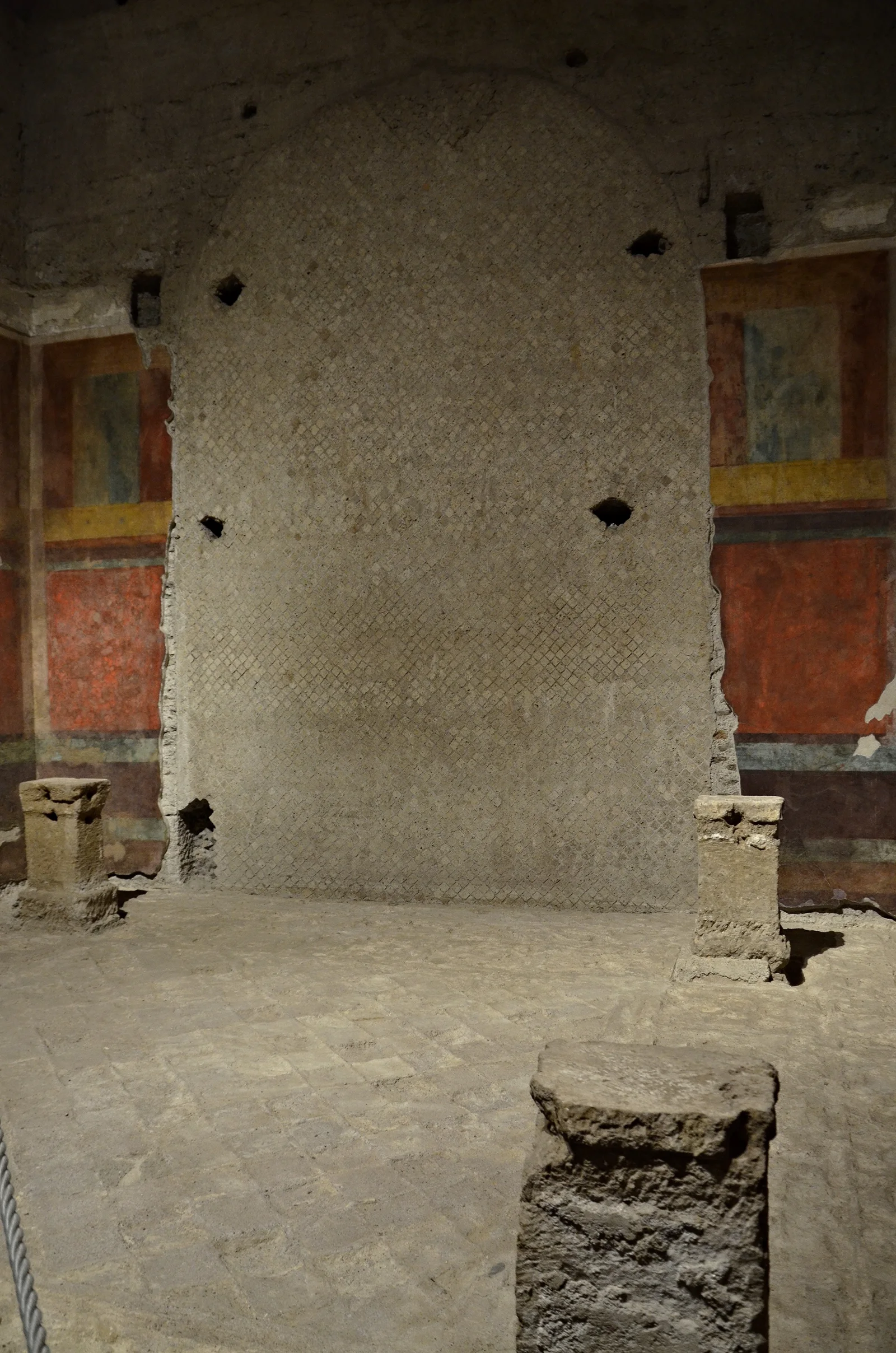
The House of Augustus is powerful precisely because its surviving rooms are not a later emperor's endless ceremonial halls. The complex combined relatively intimate spaces with refined wall paintings in the late Second Style. Architectural illusion opens painted walls into colonnades, theatres and sacred landscapes. The decoration was luxurious in skill and conception even where the rooms were not physically vast.
.jpg)
Augustus cultivated an image of restraint while directing a vast programme of religious, political and urban renewal. Establishing his residence beside the hill’s foundation traditions and a new Temple of Apollo connected personal residence, divine favour and Rome's origins. The message did not need a modern throne room. Placement did the work.
Rooms changed function over time, ancient labels are not always secure, and access to fragile interiors can be limited. Wall paintings suffer from moisture, salts, temperature variation and human presence. When an interior is closed, that is not a failure of the visit. The restriction is evidence that the colour surviving two millennia requires a different conservation regime from open brick terraces.
The Palatine Museum helps reunite sculpture, architectural fragments and objects with the hill, though displays and opening arrangements can change. The larger lesson survives without a particular room: Augustus made the domestic setting of rule part of the constitutional fiction that he was first among citizens rather than a king.
15 · Rome archaeological route
Domitian turns residence into government
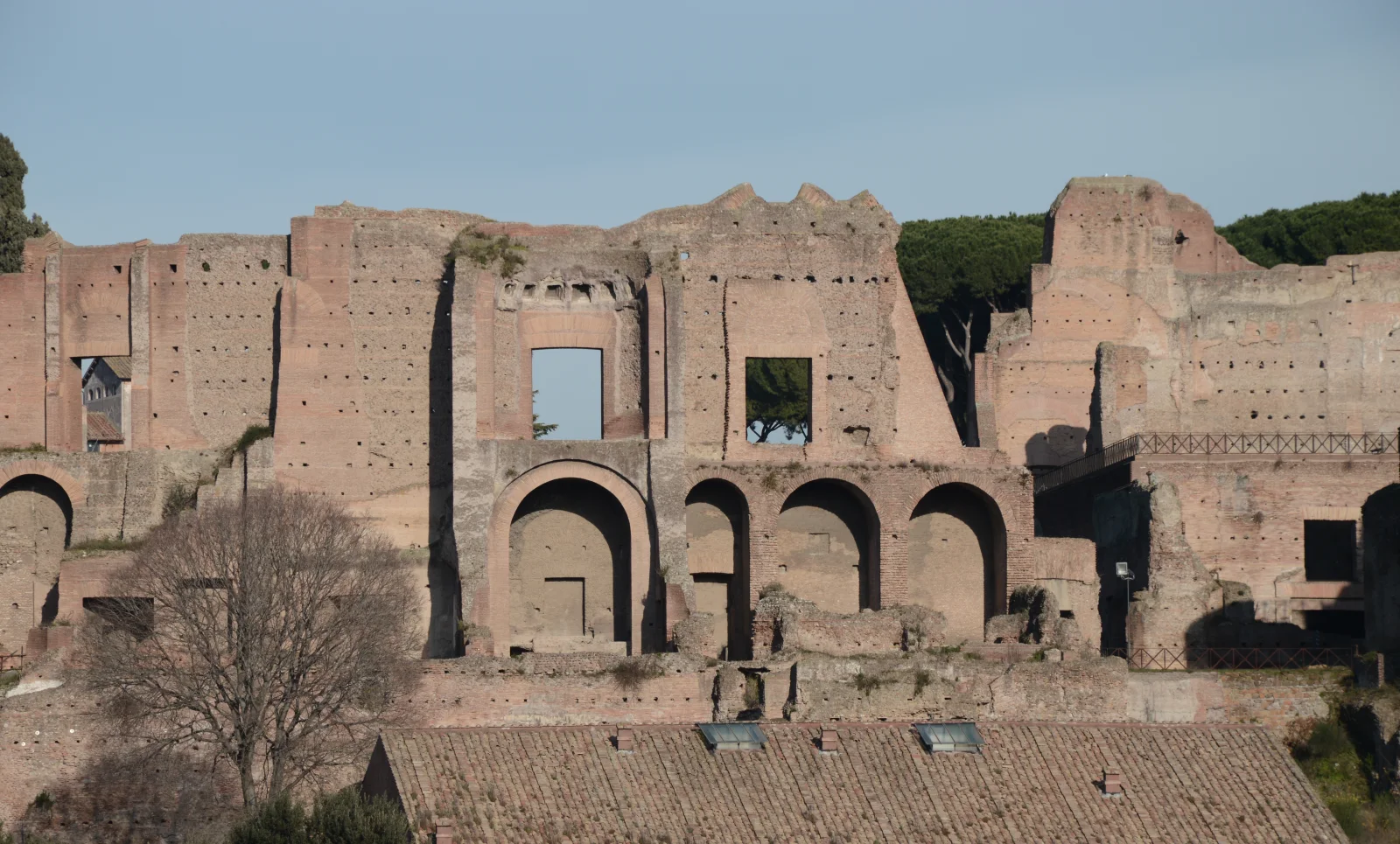
By the late first century, Domitian's palace complex—conventionally divided into the Domus Flavia, Domus Augustana and stadium or garden—operated at a scale that joined residence, ceremony and administration. Vast audience halls received delegations. Dining and reception spaces managed proximity to the ruler. Sunken courts, fountains and coloured stone created controlled sensory effects. Service routes allowed labour to support ceremony without dominating it.
The conventional names help orientation but can imply sharper boundaries than ancient life observed. “Public” and “private” were not modern categories inside a court where access to the emperor was political. A dining room could stage hierarchy. A garden could host processions or conversation. A bedroom suite existed inside a building sustained by guards, secretaries, cooks, cleaners, enslaved workers and officials.
Water was a tool of power. Supplying fountains and pools high on the Palatine required connection to Rome's aqueduct network, storage, distribution and maintenance. Water cooled air, reflected architecture and signalled command over infrastructure. The brick substructures now visible were once dressed with marble, stucco, mosaics and paint. The ruin is not the original aesthetic; it is the load-bearing anatomy after expensive skin was removed.
Looking down toward the Circus Maximus also reveals how imperial landscapes spoke to one another. Palace terraces overlooked the city's great racing venue. The emperor could appear to the crowd from a privileged position, while ceremonial and residential spaces remained linked above. Colosseum, Forum, palace and circus were separate places, but all organised the political act of seeing and being seen.
The hill’s later gardens add another dynasty to that argument. The Horti Farnesiani were created for Cardinal Alessandro Farnese and developed by his family during the sixteenth and seventeenth centuries. Terraces, stairs, fountains and aviary pavilions reused the setting of the Domus Tiberiana. The Rain Nymphaeum and the water theatre above it made climbing the slope into a sequence of staged views.
The gardens are neither untouched Renaissance scenery nor merely greenery over Roman ruins: modern excavation changed them, and parts of their planting and layout have been restored. Their patrons used imperial memory to celebrate a later family, just as Roman rulers had used the hill’s earlier associations. When a stair, fountain or pavilion interrupts the ancient brick, place it in that later story. A Palatine visit becomes richer when the centuries above the palaces remain visible.
16 · Rome archaeological route
A route through power, not a race through ruins
The route works best when each site answers a different question.
At the Colosseum, ask how architecture controlled a mass audience and concealed the labour that made wonder possible. At the Forum, ask how institutions competed for space and how later regimes rewrote earlier memory. On the Palatine, ask when a ruler's home stopped being merely domestic and became the administrative and ceremonial centre of empire.
Those questions also guide what to skip. A rushed visitor does not need to photograph every arch. One careful look at circulation can explain more than ten façade angles. In the Forum, choose a small constellation—the Curia, Rostra, Temple of Divus Julius, House of the Vestals and one basilica—then locate them along the Via Sacra. On the Palatine, compare one early-settlement story, the House of Augustus and the later Domitianic complex.
Allow the hill to conclude the story. From above, the Forum's fragments regain relationships and the Colosseum returns to the valley system that produced it. The viewpoint is not merely a reward after stairs. It is the moment when the topography becomes an argument.
17 · Rome archaeological route
Plan a visit you can sustain
A Colosseum reservation fixes a timed entrance to one part of a much larger archaeological park. The official ticket page lists the precise route and validity of each ticket; the following distinctions are useful before choosing.
24h Colosseum, Roman Forum and Palatine covers the ordinary first and second levels of the amphitheatre and the Forum-Palatine circuit, without Arena or Underground access. 24h Only Arena gives a short Arena visit of 20 minutes and the Forum-Palatine with SUPER sites; it does not substitute for the ordinary amphitheatre tiers. Full Experience with Arena, and the distinct Full Experience with Underground and Arena, have two-day validity and their stated special routes. Attic access is another separate product. Forum Pass SUPER covers the Forum-Palatine and its specified interiors but does not include the Colosseum. Do not infer one of these routes from the general words “guided tour”.
SUPER means access to specified archaeological interiors and areas, subject to their own opening arrangements and visitor limits. It is valuable for someone interested in paintings, palace rooms and the hill’s domestic history; it is not a promise that every interior will be open at the moment of arrival. Match the House of Augustus, museum and other desired stops to the ticket’s actual list. Two-day validity can make a more humane itinerary, but it does not grant unlimited re-entry.
Tickets are nominative: the name must match the identification document, and each traveller should carry the required ID. Official sales generally open 30 days ahead. A timed ticket resolves admission planning, while security screening remains part of entering the monument. The visitor regulation sets the arrival window, bag restrictions and prohibited objects. Pack lightly, keep tickets available offline and leave time to reach the correct entrance before the slot.
Opening and last-admission times vary by season. Work backwards from the Forum-Palatine closing time before making the hill the day’s final stage. A Colosseum slot and a distant lunch booking are fixed appointments; the Forum deserves a stretch between them that can absorb slower reading, rest and an unhurried climb. If that stretch is too small, reduce the chosen monuments or use a ticket that permits a second day.
Bring water in a permitted container, sun protection and shoes suited to polished stone, gravel and irregular steps. Shade is limited. Use the park’s drinking-water points and rest before fatigue makes the Palatine climb a duty. Remain on visitor paths, respect barriers and resist climbing or touching ancient masonry for a photograph. Fragile surfaces are not props, and a fenced area is not an invitation to find another way in.
For a wheelchair, walking aid or a visitor who cannot manage stairs, plan the entire chain: entrance, security, lift, viewing level, exit, Forum paths and Palatine slope. An accessible Colosseum level does not establish that every subsequent route or palace interior is accessible. Ask the park about the exact itinerary through its accessibility service, including gradients, uneven ground and a suitable exit, before committing to a three-site guided format. Choose a shorter route when the complete chain cannot meet the traveller’s needs.
Under the current park FAQ, guided groups are limited to 25 people including the guide, and groups of ten or more require a whisper system. A headset can help smaller groups too: its presence tells you how speech reaches the group, rather than proving the tour is large. Check how much of the three-site route is actually guided, and keep a map ready for any independent continuation.
18 · Rome archaeological route
Choosing a format
A guided visit on the ordinary first- and second-level route gives the best architectural overview of circulation, seating and the surviving shell. It does not include the Arena merely because a listing shows arena imagery. Choose it when an elevated view of the building matters more than standing on the reconstructed platform.
A guided Arena visit changes the viewpoint. Looking up from the level of performance and down into the exposed hypogeum can clarify the relationship between visible spectacle and hidden labour. It should be chosen for that perspective, not because “Arena” automatically means Underground access or a longer visit.
A small-group label describes scale, not the quality or flexibility of the encounter. A smaller group may make questions and movement easier, but it cannot guarantee a particular guide, an uncrowded site, shade, a rescue from late arrival or a personalised pace. Confirm whether the guide covers only the Colosseum or all three landscapes; that boundary matters more than the marketing adjective.
A fully independent visit offers more control and costs less in interpretive overhead, but it demands preparation. Official audio material, a good archaeological map and a short list of questions are essential, particularly in the Forum.
An Underground tour offers closer study of backstage systems, yet access is more restricted and tickets are harder to secure. It should be chosen for that specific subject, not because “underground” is automatically the premium version of every visit.
A private archaeological guide across the full complex can connect the three landscapes and adapt depth to the group. It is a distinct format and should not be inferred from an Arena-only or hybrid ticket.
Families, visitors with limited mobility and anyone travelling in extreme heat may gain more from dividing the complex across two visits if ticket validity and route rules allow. Completion is not the same as understanding. Leaving before exhaustion can preserve more of Rome than forcing the Palatine into the final twenty minutes.
19 · Rome archaeological route
Questions that make a guide useful
A useful guide does more than attach an emperor’s name to a wall. Ask how the claim is known: an inscription, excavation, ancient account or modern reconstruction. Then ask which part you are looking at. In the Forum, identifying one building’s footprint and its missing volume can unlock the next ruin more effectively than another list of dates.
Use the Colosseum’s surviving circulation to test an explanation. Where did spectators enter, and what separated their movement from the workers beneath the arena? On the Palatine, compare the intimate painted rooms associated with Augustus with the later palace’s audience spaces. These comparisons give a family, a first-time visitor or a specialist something concrete to discuss without pretending that everyone in ancient Rome experienced the same day.
Keep the independent second act small enough to investigate. A Curia stop, the Basilica of Maxentius and one palace complex form a meaningful route if you understand their functions and phases. Add monuments because they answer a question, and leave room for a bench, water and a view back across the valley. The best end to the route is a clearer understanding of how the places connect.
20 · Rome archaeological route
Listen: two Colosseum routes, one archaeological sequence
The 22-minute Arena episode is useful as field notes on the missing floor, stage machinery and the physical transition into the Forum. The 24-minute small-group episode concentrates on the value and limits of live interpretation when the Colosseum is guided but the Forum and Palatine continue independently. The two routes illustrate how interpretation changes with the viewpoint, and where a guided visit gives way to independent exploration.
21 · Rome archaeological route
After the guided portion: make the second act count
Hybrid formats make sense when the Colosseum is where you want concentrated interpretation and the later ruins are where you want freedom. That freedom is valuable only if it has structure. Before arrival, download the official map, mark the Curia, Temple of Divus Julius, House of the Vestals and one Palatine complex, and decide what can be omitted. When the guided portion ends, confirm which Forum-Palatine entrance and validity window apply to the exact ticket rather than following a remembered route from an episode.
22 · Rome archaeological route
Continue exploring
The Colosseum reveals Rome's capacity to stage power for a mass audience. The Forum shows power negotiated through institutions and rewritten in monuments. The Palatine reveals power turning residence into government. Together they make a single answer to a question that Rome kept asking for centuries: who may be seen, from where, and on whose terms?
For official extensions, the Parco's pages on the Colosseum, Roman Forum and Palatine provide current route and monument interpretation. Continue through central Rome with the street-scale guide to valleys, piazzas, water and vehicle limits, then beyond the walls with the Via Appia, tombs and catacomb-access field guide. Across a real institutional and sovereign boundary, follow the Vatican Museums, Sistine Chapel and St Peter's route. For a different ancient-city question, follow Pompeii from urban life through eruption, excavation and conservation.