Story 58 · Power, design & survival
Destination desk 10 · France
Read the city through movement, material and memory: the Seine joins monuments, the Catacombs expose quarried ground, the Eiffel Tower reveals iron and ascent, the Latin Quarter stacks layers on one hill, and two estates beyond Paris compare concentrated and accumulated power.
Eiffel Tower · ExcursionPass original generated visual
Paris at five scales
At city scale, the Seine, islands, bridges and western royal axis turn Notre-Dame, Orsay, Invalides, the exhibition grounds, Tuileries and Louvre into connected history. A bicycle can make that continuity legible without pretending an exterior stop replaces an interior visit.
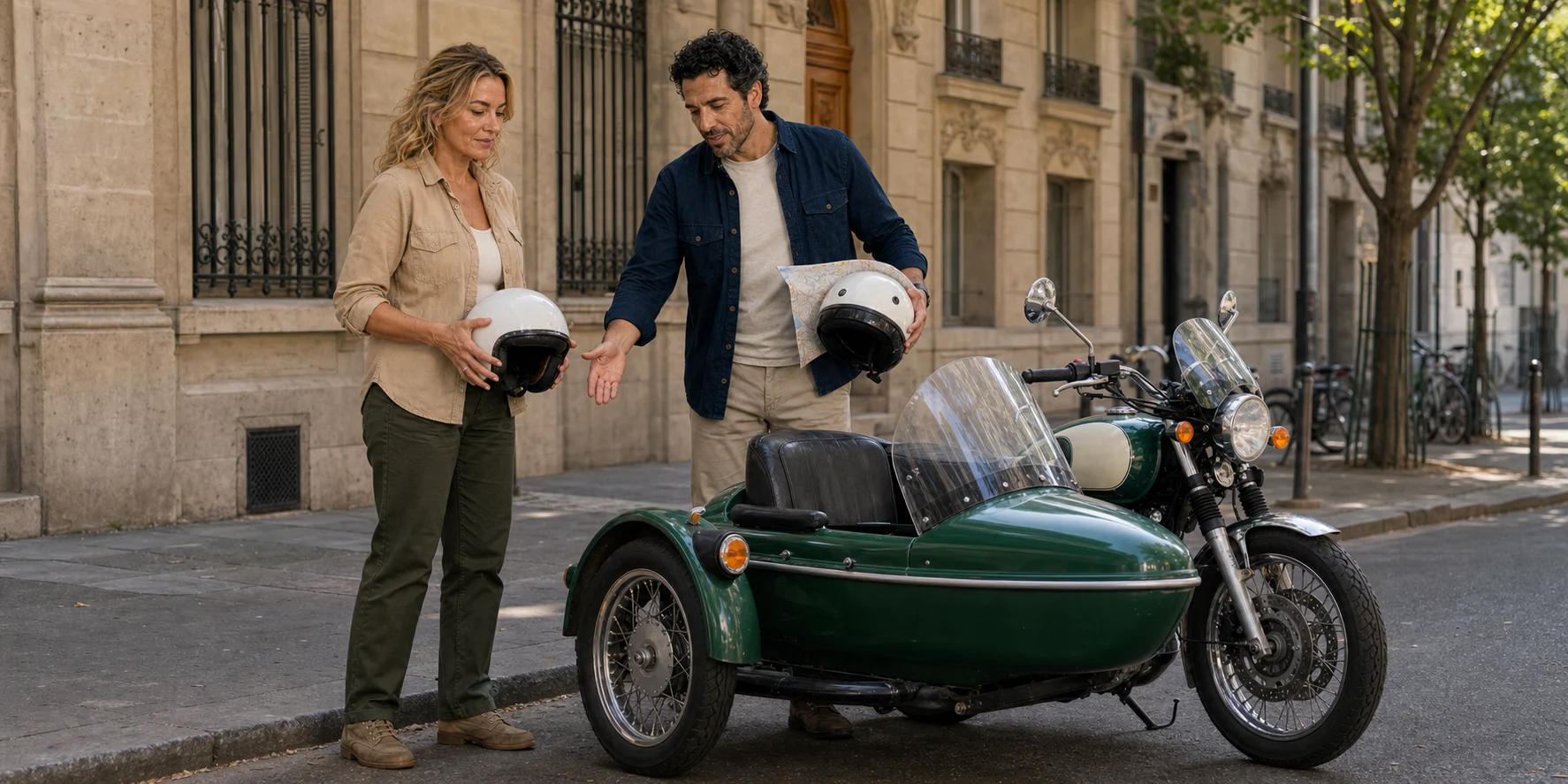
At street-and-ground scale, a sidecar makes asymmetry, weather and traffic physical before the Catacombs reveal the limestone, quarry inspection and cemetery reform beneath Paris. The two environments form one chain only when boarding, equipment, storage, timed entry, stairs and the separate exit are planned together.
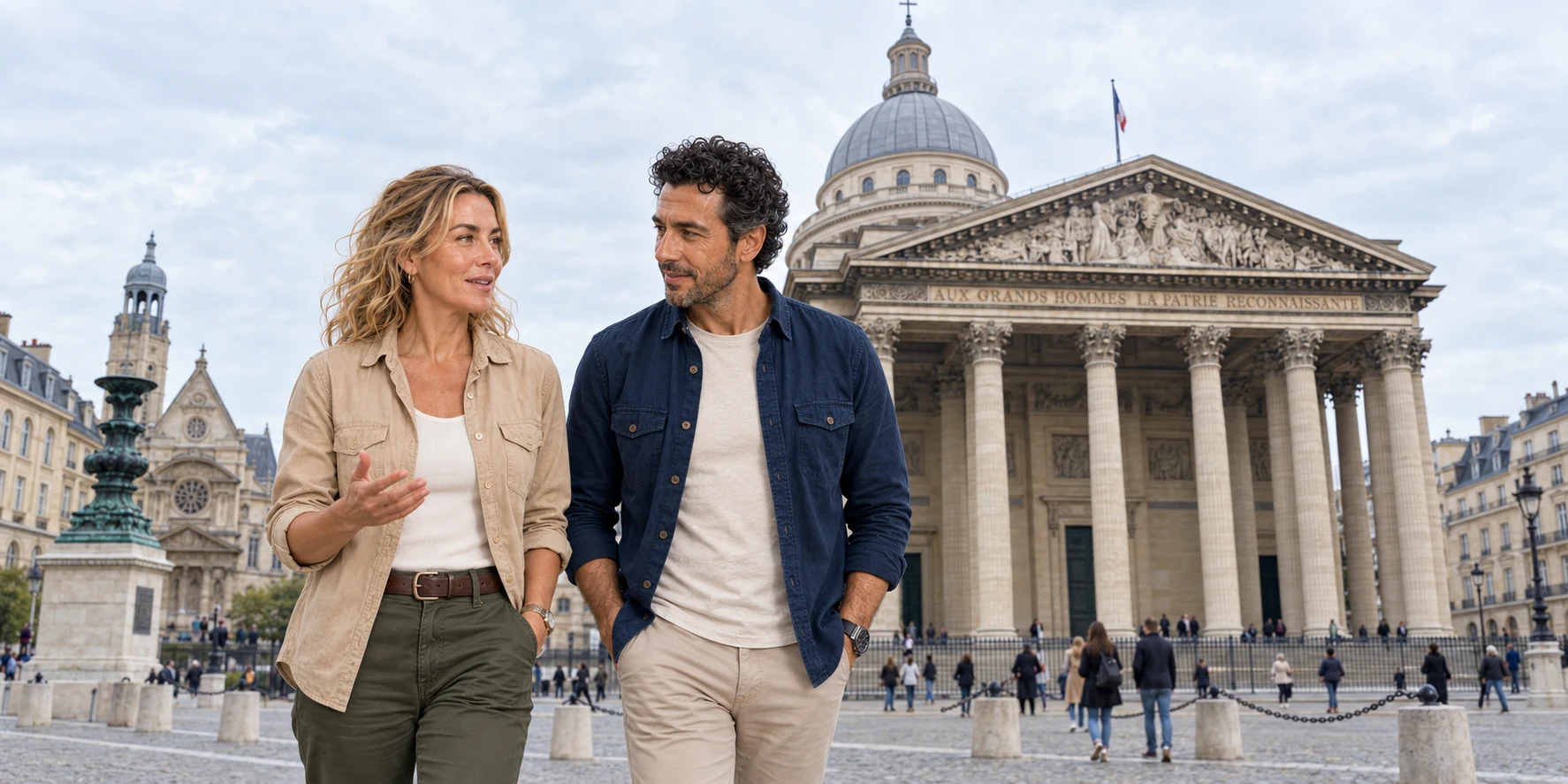
At neighbourhood scale, the Latin Quarter guide follows evidence from the Arènes de Lutèce to Saint-Étienne-du-Mont, the Luxembourg Garden and the Panthéon. Roman fabric, university life, hagiographic tradition, worship, garden design, political commemoration and experimental physics require different kinds of proof.
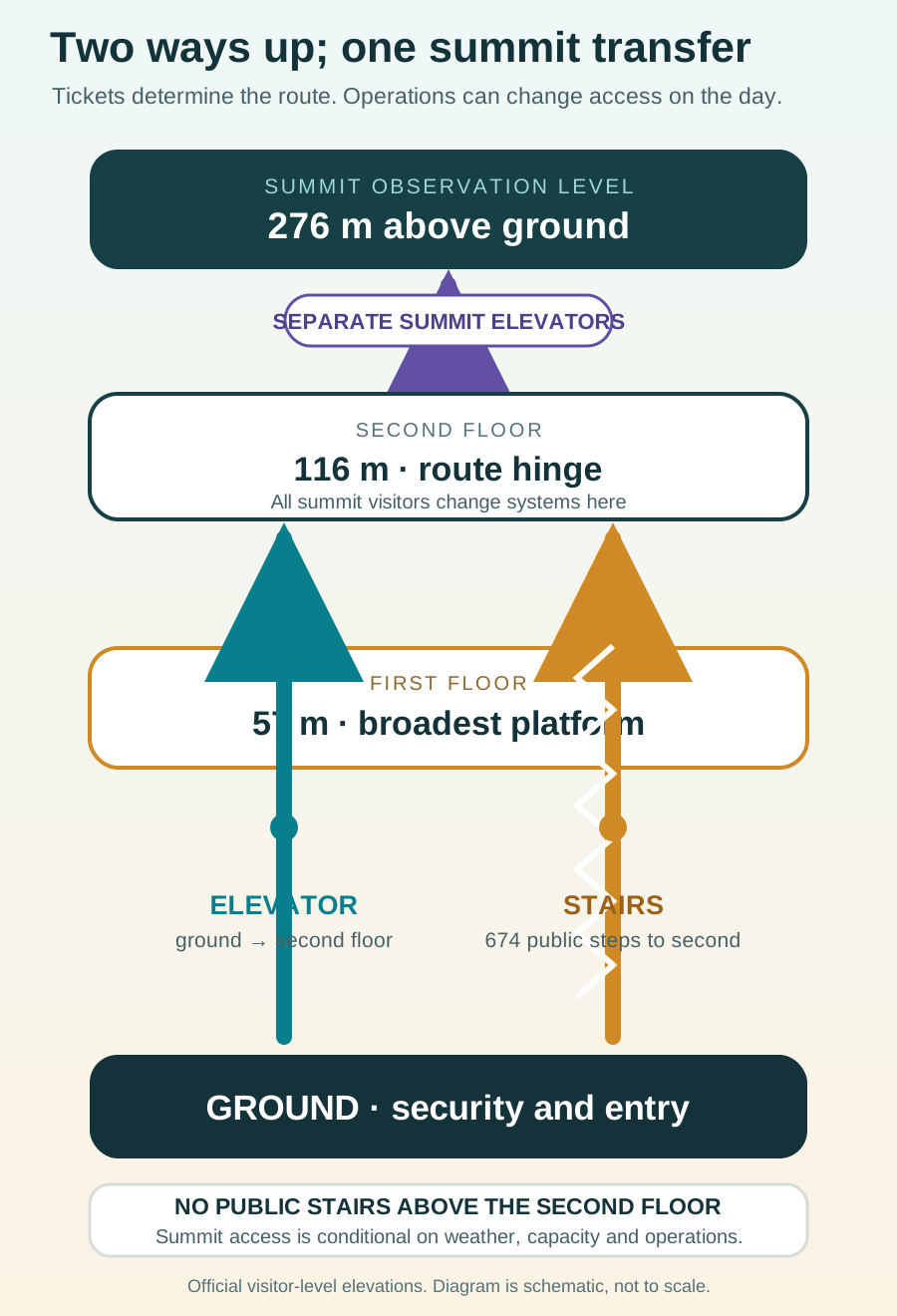
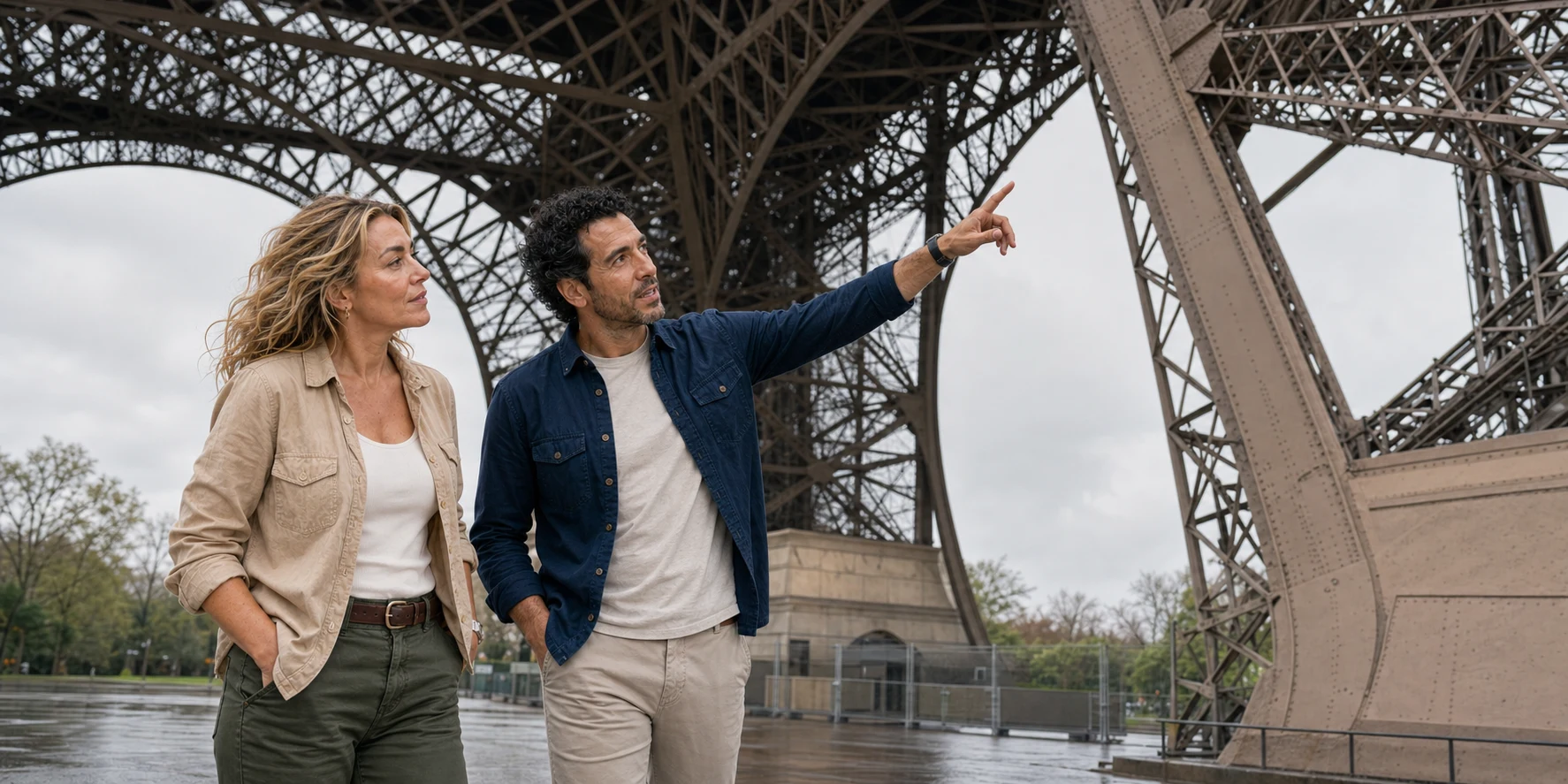
At monument scale, the Eiffel Tower works because shape, material and ascent were designed together. Curved lattice piers carry wind and gravity to four foundations; inclined elevators negotiate the changing slope; stairs expose rivets, braces and platforms.
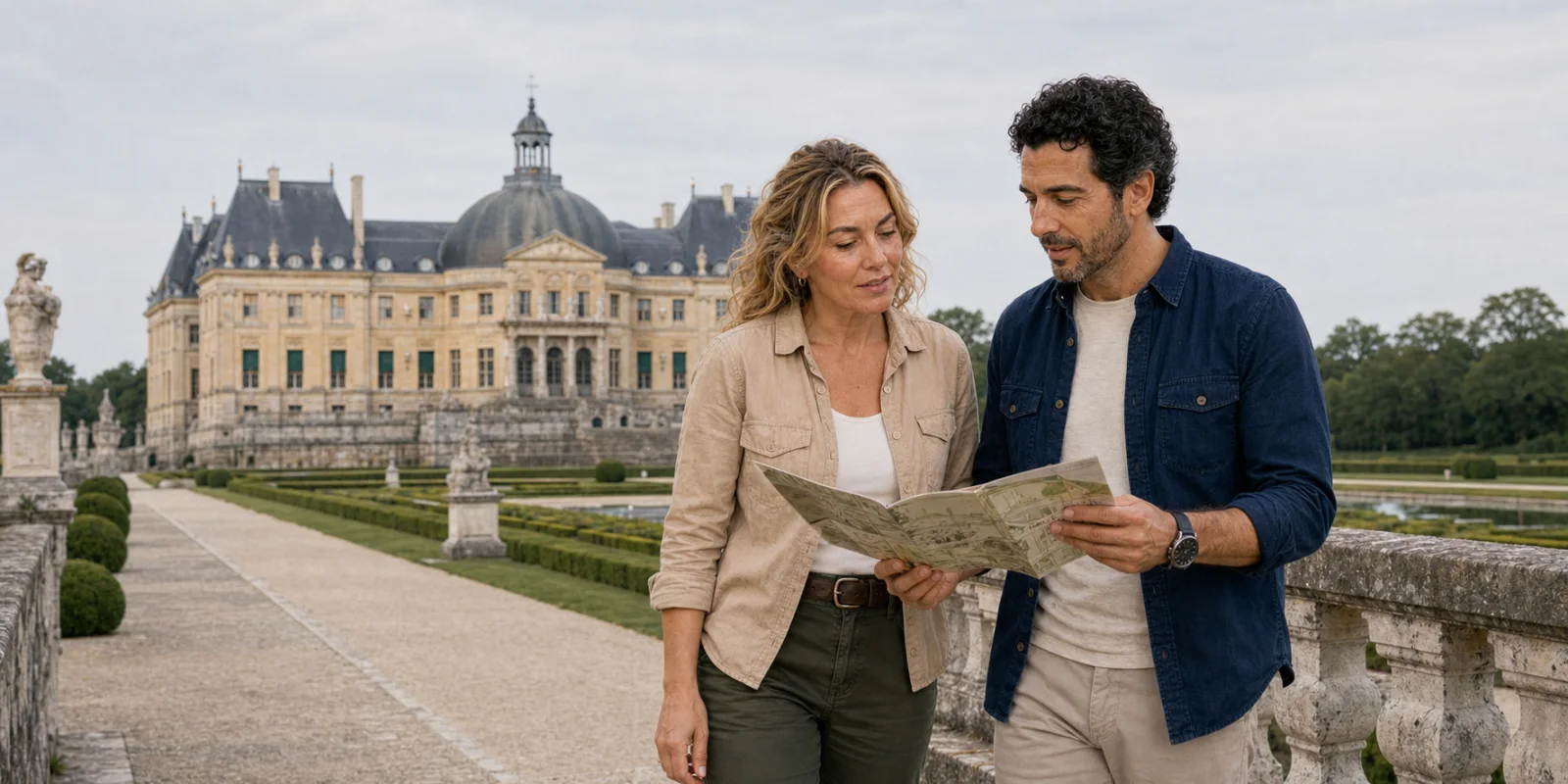
At day-trip scale, Vaux-le-Vicomte concentrates a patron, three design disciplines and a long garden axis into one programme, while Fontainebleau accumulates medieval, Renaissance, Bourbon and Napoleonic layers. Their independently managed access systems make transport and attention part of the comparison.
Together the stories ask the same practical question: what does a route reveal, and what does it skip? Street conditions, museum and monument access, estate transfers and operating details remain separate from the durable explanation.
Field stories
Vaux and Fontainebleau compare a unified estate with a layered palace; the Latin Quarter follows one hill; the bicycle joins riverbanks; the sidecar follows road mechanics underground; the tower story slows down inside one structure.
Story 58 · Power, design & survival
Story 38 · Urban layers & memory

Story 34 · City orientation
Story 35 · Mechanics & memory
Story 17 · Architecture & engineering
The vertical sequence
Look upward through the four piers to understand why the route begins with load paths, foundations and security thresholds.
The structure becomes inhabitable: rooms, circulation and the glass floor sit inside the lattice rather than on top of it.
Paris becomes legible as axes, river and districts; stair and lower-elevator visitors meet before any summit transfer.
The city compresses into geography, but access depends on a separate lift and can close for weather, safety, capacity or technical reasons.
Plan with current facts
Use official notices for hours, closures, security and accessibility. Treat any seller route as a format, not as power to override monument operations.
Read the Latin Quarter field guide