Story 56 · Canadian sector field guide
Destination desk · Normandy coast and inland approaches
A battlefield-and-memory landscape where beaches, bluffs, roads, museums, cemeteries and living communities explain different parts of one unfinished history.
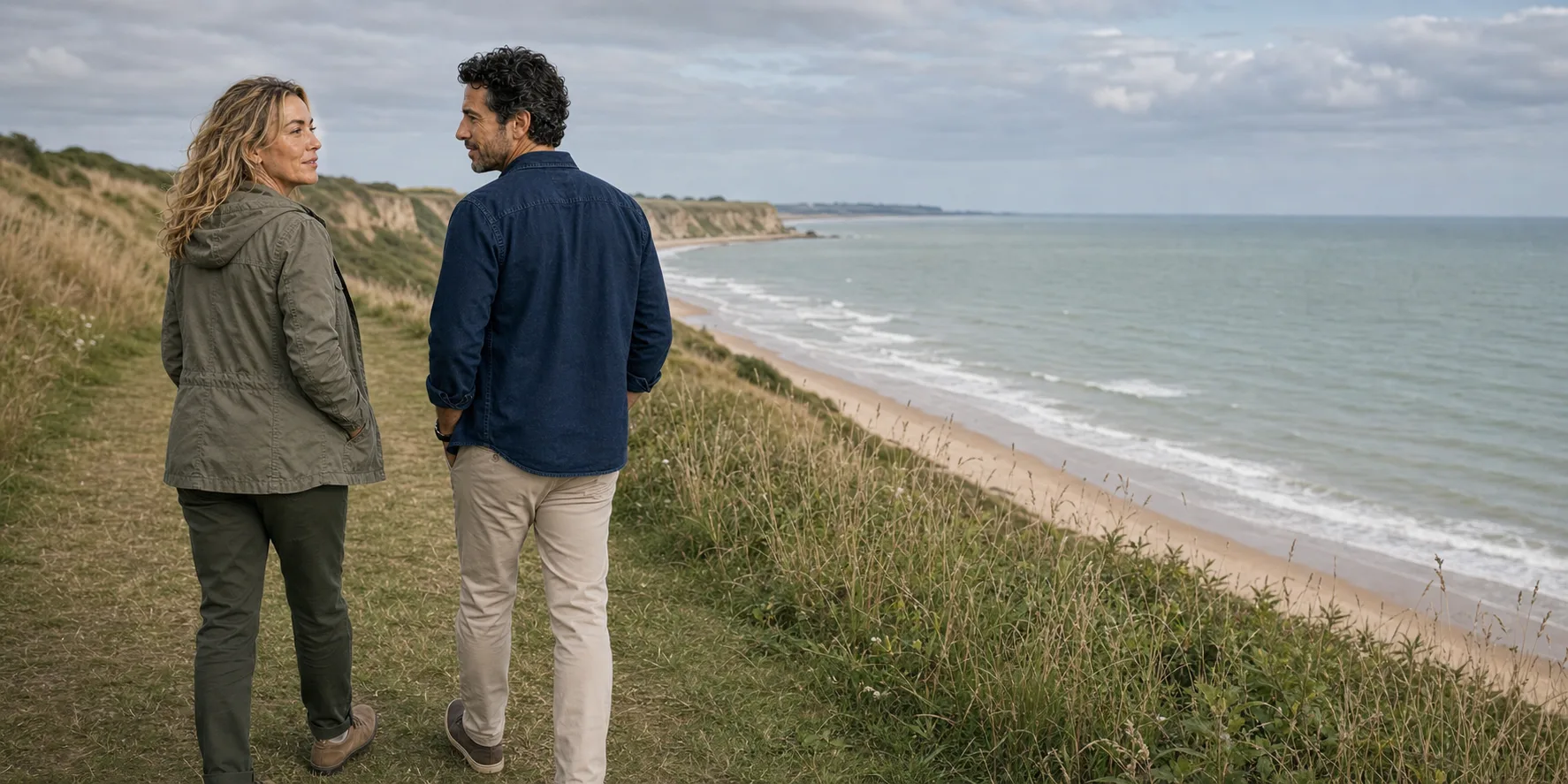
Omaha Beach coast · Original ExcursionPass generated visual
The system behind the sites
Normandy’s landing coast is often sold as a row of stops. The reporting begins one layer earlier: occupation, intelligence, deception, weather, tide, airborne objectives, amphibious assault, engineers and supply created the conditions each viewpoint now preserves.
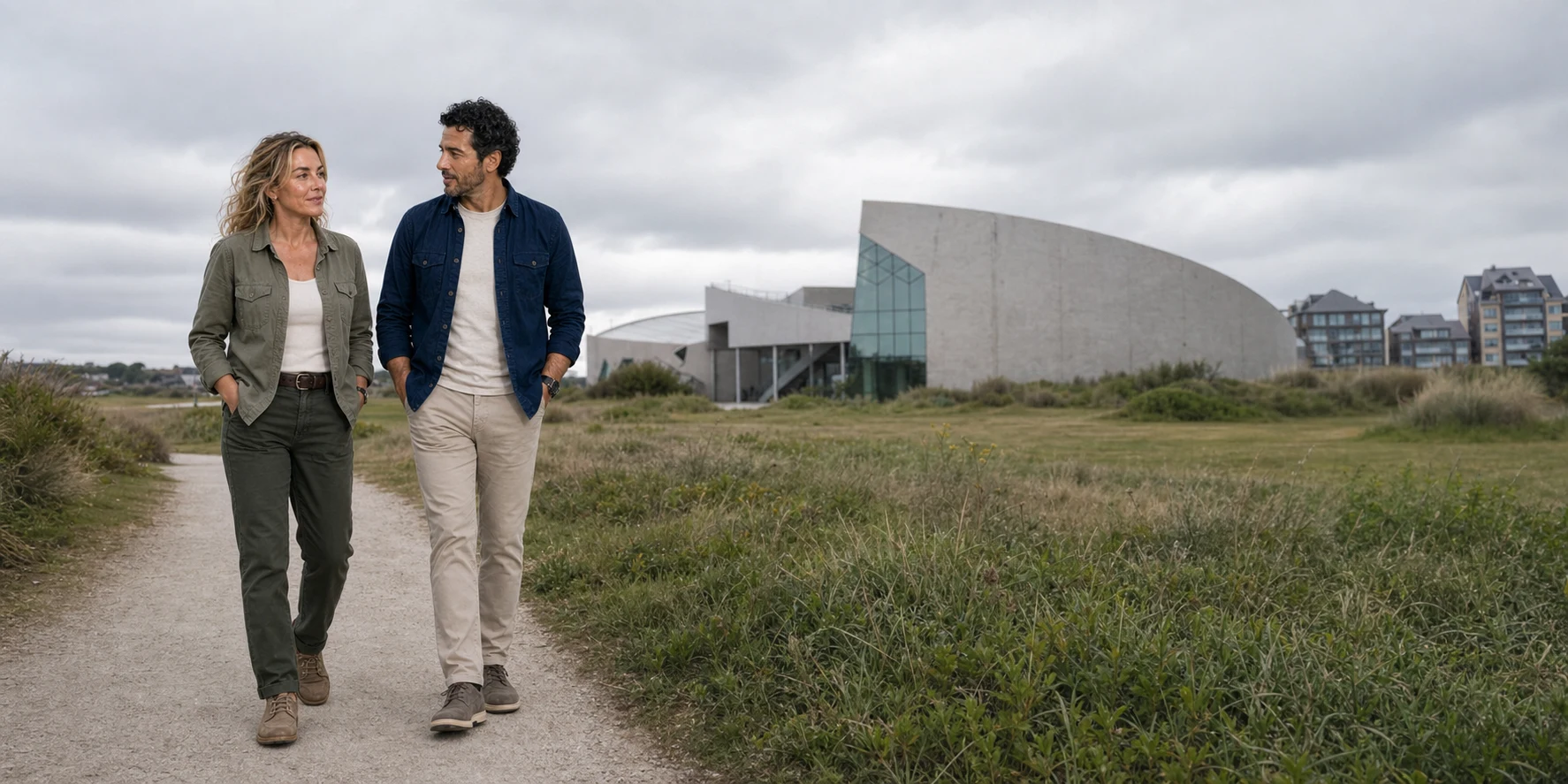
The U.S. story follows Omaha, Pointe du Hoc, airborne objectives and American commemoration. The Canadian story moves east through Courseulles, Bernières and Saint-Aubin before following the advance inland, the veteran-built Juno Beach Centre, surviving fortifications and Bény-sur-Mer cemetery. Together they keep five distinct assaults inside one multinational operation.
Battlefield remains, living towns, museum collections and cemetery design are different evidence environments. Conservation, mobility and memorial conduct belong inside the history rather than after it.
In 2026, UNESCO inscribed a serial property comprising Utah, Omaha, Gold, Juno and Sword beaches plus Pointe du Hoc. Its defined boundaries connect six components of the landing landscape; they do not extend to every museum, cemetery or town in Normandy.
Battlefield field stories
Two original podcasts become sourced routes through U.S. and Canadian-led sectors, terrain, towns, people, logistics, museum evidence, cemetery design and practical visit formats.
Story 56 · Canadian sector field guide
Story 21 · U.S. sector field guide
What this desk follows
Read current, tidal flat, obstacles, draws, bluffs, flooded lowlands, roads and bocage beside command and improvisation.
Keep civilians, multiple Allied nations, German defenders, medics, missing people and a segregated U.S. Army inside the account.
Ask what a battlefield, archive image, museum object, grave marker and commemorative design can—and cannot—prove.
Follow closures, erosion, archaeology, dangerous remnants, private grief and the practical obligations of a present-day visit.
Check the live landscape
ABMC controls its cemetery and Pointe du Hoc access. The Juno Beach Centre controls museum, park-tour and accessibility information. Veterans Affairs Canada supports Canadian memorial planning. SNCF controls rail schedules.
Explore Normandy experiences