Story 43 · Washington, D.C.

Destination desk 05 · Mid-Atlantic
A capital read through the systems and arguments behind its marble: institutions and records by day, memorial architecture and public memory after dark.
Neptune Fountain · ExcursionPass original generated visual
The capital beyond the postcard
Washington’s ceremonial plan can make government look settled. The city is more revealing when its buildings are read as active systems: laws are debated, collections are classified, records are appraised and access is continually negotiated.
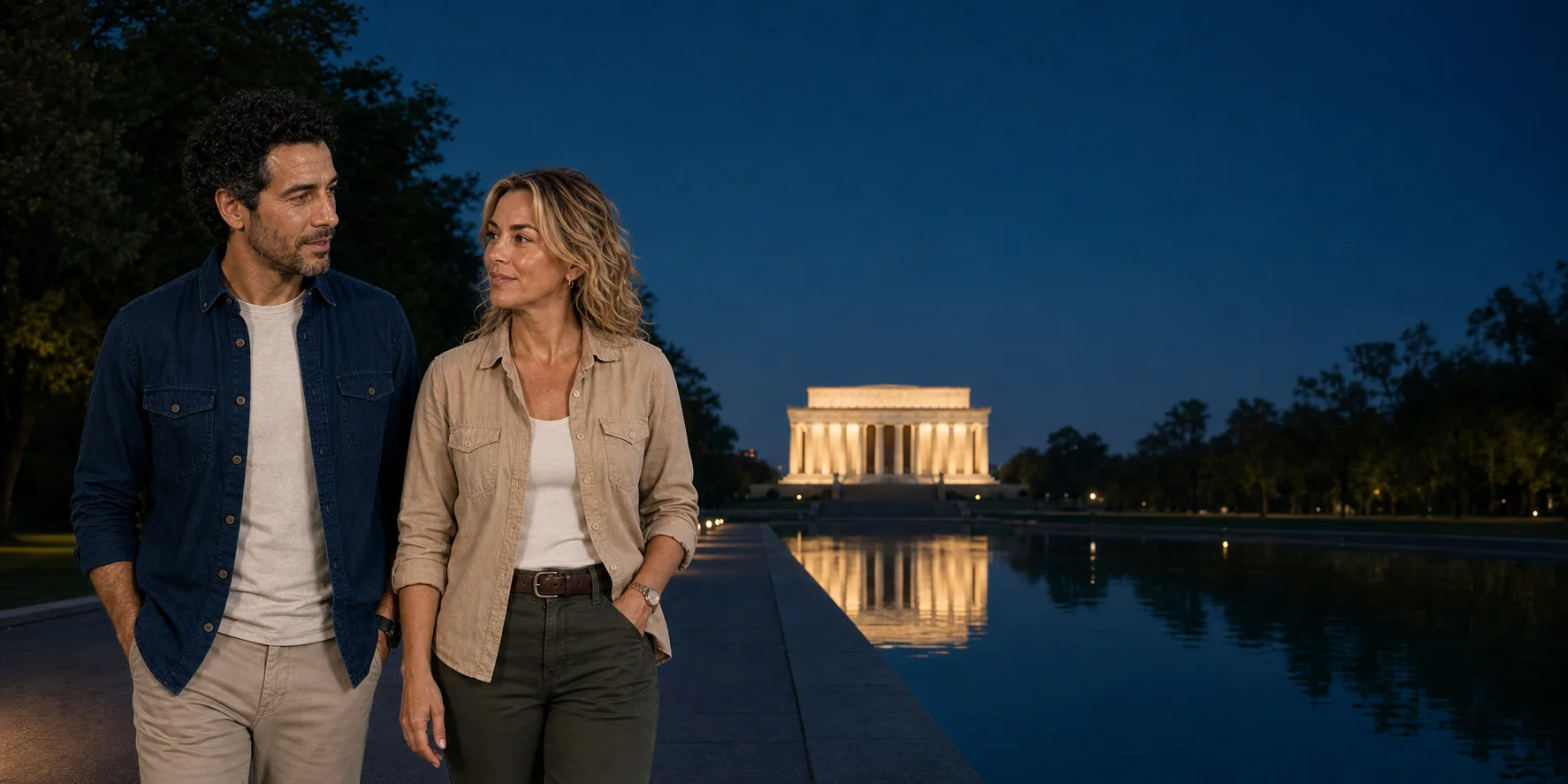
One route connects the U.S. Capitol, Library of Congress and National Archives without treating them as interchangeable marble stops. A second follows the National Mall after dark, where illumination changes orientation, access and the reading of war and civil-rights memory. Together they keep institutions, commemoration and public space in the same civic landscape.
Institutional schedules and security rules change independently. Plan from the current official pages, then use the reporting here to understand why the route matters.
Washington stories
Two longform journeys connect the civic triangle to the National Mall’s illuminated memorial landscape.
Story 43 · Washington, D.C.
Story 07 · Washington, D.C.
Ways into Washington
Classical language, industrial engineering and ceremonial space understood as political choices.
Who built the Capitol, who appears in its art and how D.C. residents experience federal power.
How collections, archives and conservation decide what evidence can survive and be found.
Plan from current sources
Reservations, security, visitor hours and accessible routes change separately. Check each institution before combining the route.
Browse Washington experiences