Story 31 · Living landscape
Destination desk 25 · Thessaly
Begin with stone, then follow caves, communities, vertical access and six distinct monasteries into the decisions of a present-day visit.
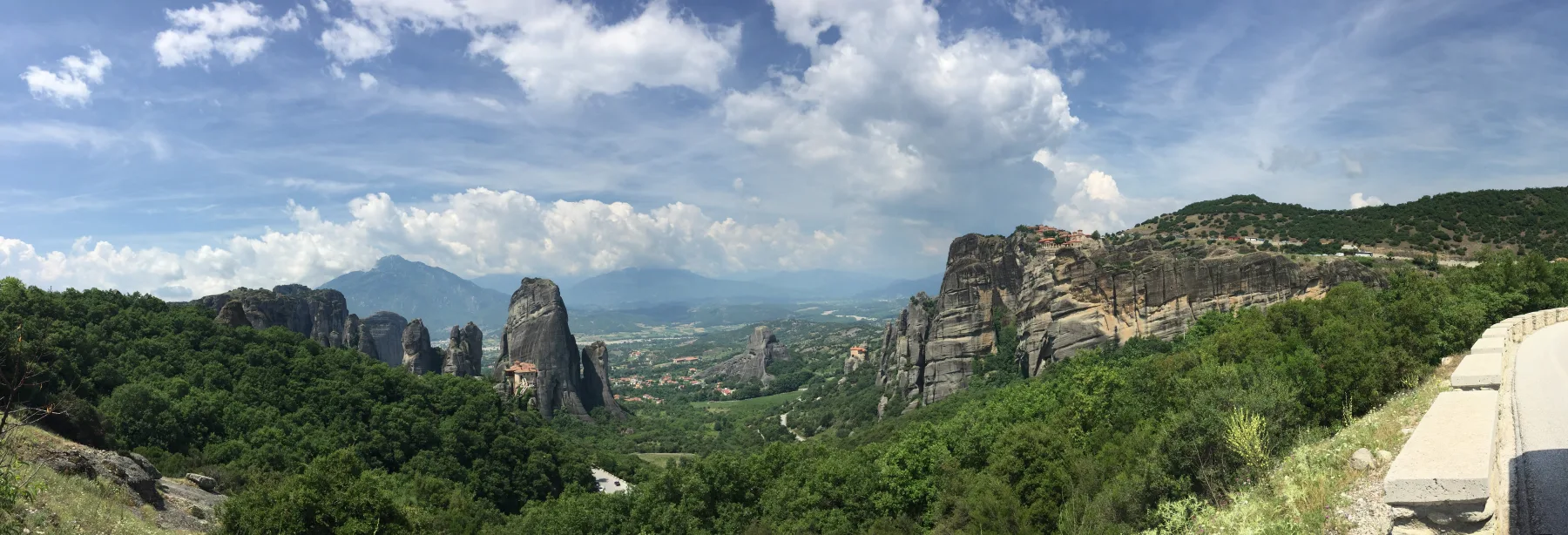
Meteora viewpoint · ExcursionPass original generated visual
A landscape made more than once
Meteora's conglomerate towers began as river-carried sediments in a changing basin. Cementation made rock; uplift, fractures, water and weather cut relief. The improbable silhouette is therefore a long process, not a single disaster or a setting designed for monasteries.
Human use also has stages. Hermits occupied caves and ledges before coenobitic communities founded summit monasteries. Ropes, ladders, nets and cisterns made withdrawal workable; later roads, stairs and bridges changed the terms of access without making every threshold equal.
This desk keeps the six active monasteries separate, reads sacred art as a liturgical system and treats opening rotations, dress, mobility, crowds and operator promises as current facts to verify—not permanent features of the place.
The field story
One self-contained route joins geology, chronology, architecture, art, access engineering, visitor pressure and day-trip decisions.
Story 31 · Living landscape
Three working lenses
Use the basin, sediments, cementation, fractures and erosion to explain form without replacing geological process with miracle language.
Keep Great Meteoron, Varlaam, Rousanou, St Nicholas Anapafsas, Holy Trinity and St Stephen distinct in foundation, plan, art and access.
Prayer, community, road traffic, viewpoints, conservation, town life and commercial tours coexist; no single photograph contains the whole system.
Build the visit
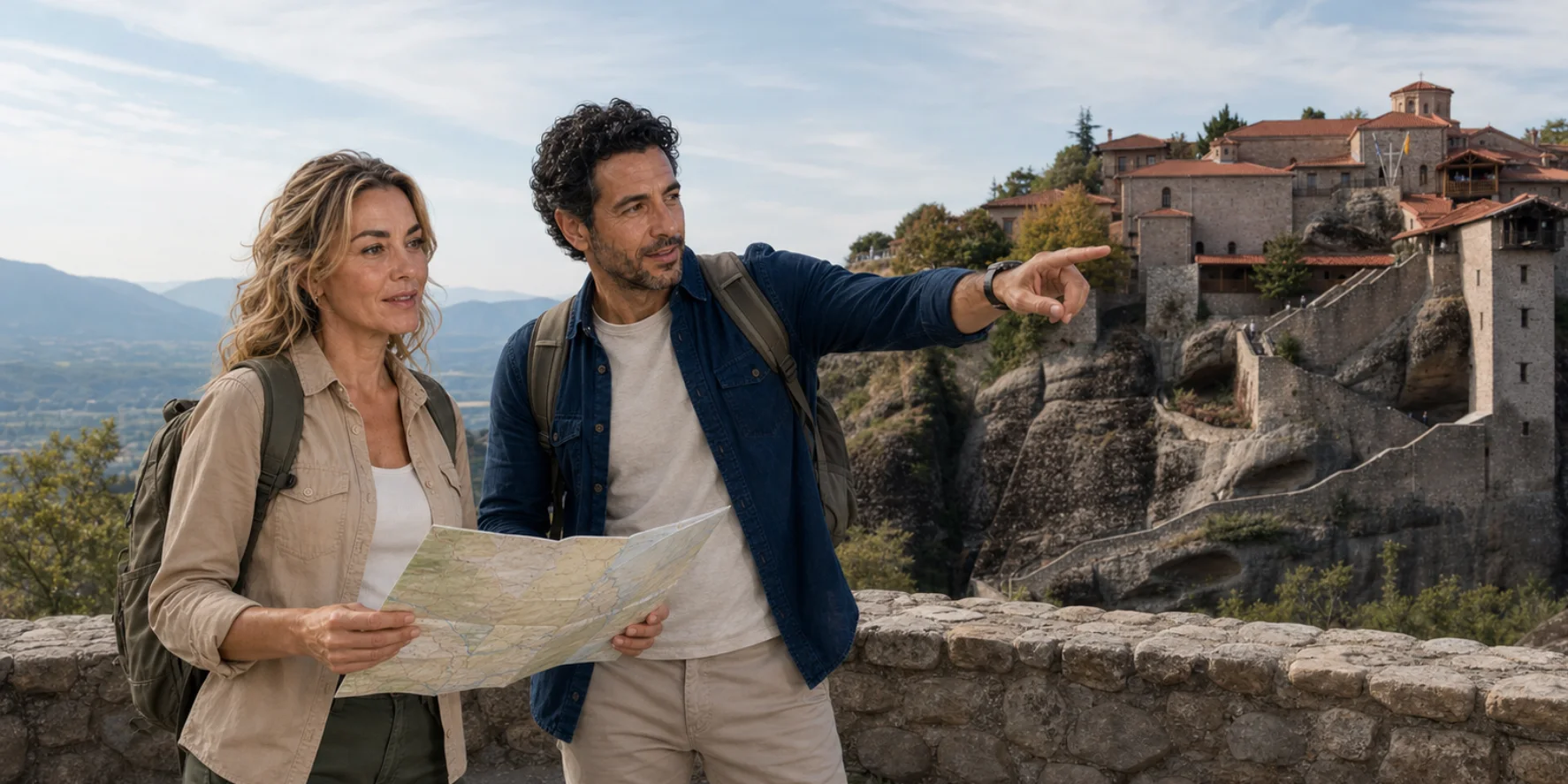
Use it for orientation and a selected interior sequence. Accept that transfers consume much of the day and opening rotations determine the actual three.
Add dawn or evening, walking links and a second operating day when landscape reading matters more than maximum compression.
Match the approach, stairs, bridges, seating, dress requirements, heat and return transport to the least flexible person in the group.
Current planning doors
Monastic services, closures, restoration and seasonal calendars can change the interior sequence. Verify the operating day, then use the field guide to understand what each stop contributes.
Read the complete field guide