Story 40 · Martha Brae River
Destination desk · Trelawny and Falmouth
A quiet passenger journey opens onto a much larger system: limestone water, port history, oral tradition, bamboo craft, skilled labour, regulation and access.
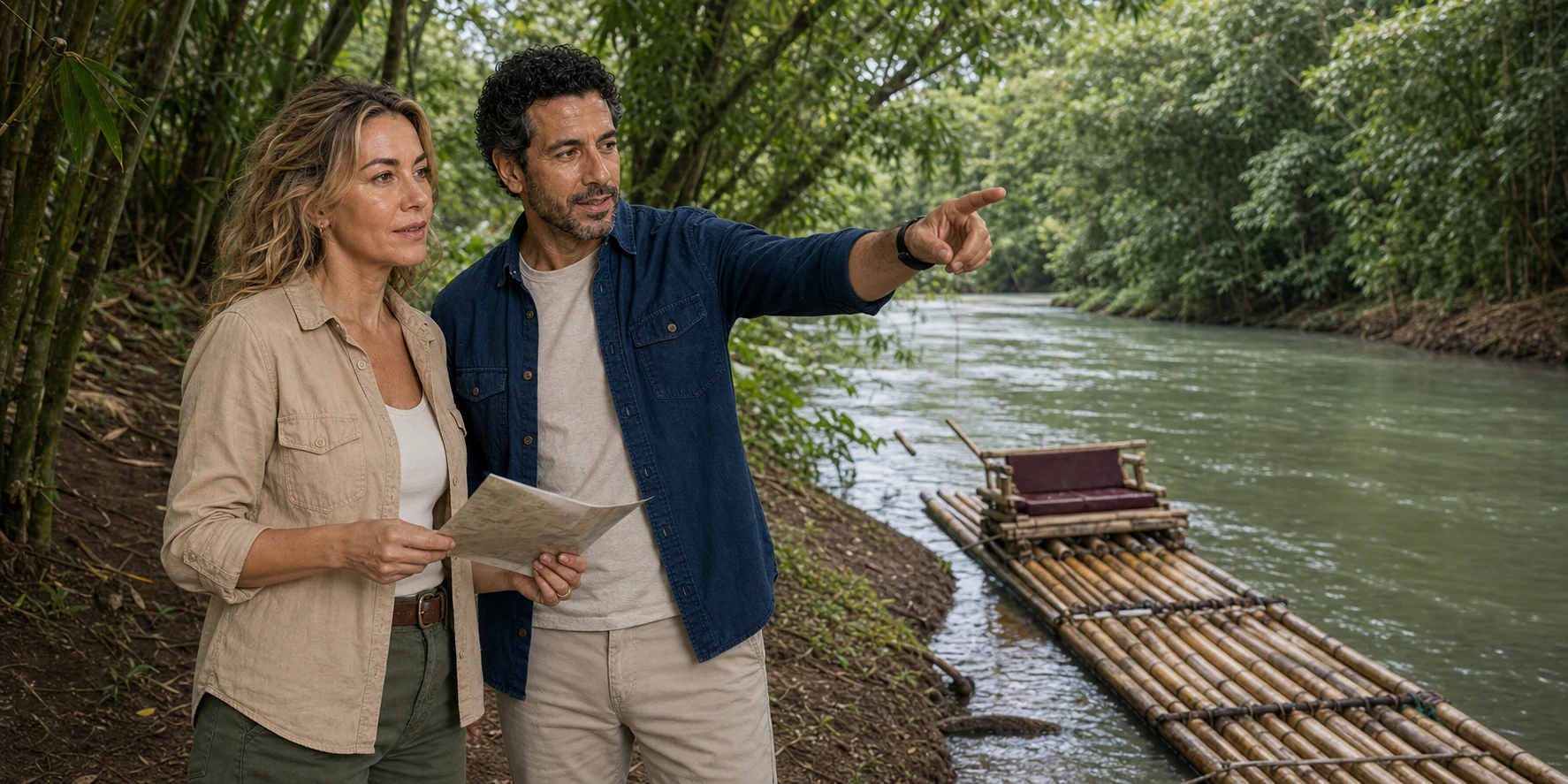
Martha Brae riverbank · ExcursionPass original generated visual
The river beneath the attraction
The organised raft journey sits near Falmouth in Trelawny Parish, inside a basin much larger than the visible visitor corridor. Rain, limestone, groundwater, tributaries and downstream flow connect the attraction to communities and land use beyond it.
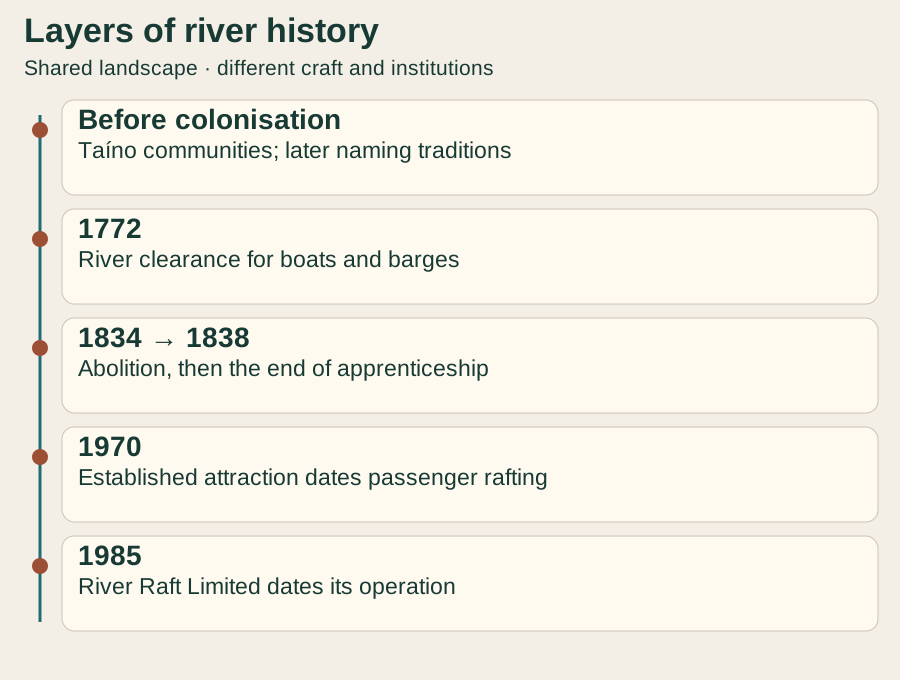
Falmouth’s port history matters, but it does not prove that today’s passenger raft descends unchanged from colonial cargo craft. Indigenous history, plantation slavery, river clearance, harbour growth and later tourism need their own evidence and chronology.
The desk keeps the practical choice equally concrete: transport, landing, boarding, seating, safety equipment, facilities and return form one access chain.
River landscape, history and access
The complete podcast route expands into a sourced account of water, people, chronology, bamboo craft, work, regulation, ecology and practical decisions.
Story 40 · Martha Brae River
What this desk follows
Connect rainfall, limestone recharge, groundwater and water quality without turning clarity into a purity claim.
Separate Indigenous history, slavery, river clearance, Falmouth commerce, oral tradition and later tourism.
Make raft construction, poling skill, regulation, working conditions and consent visible.
Plan every link from vehicle to landing and return, while respecting weather, water and ecological limits.
Check the institutions
The field guide holds the enduring explanation. Heritage, water, law and visitor institutions remain closest to mutable detail and primary evidence.
Read the full field guide