Story 40 · Martha Brae River
Country desk · Caribbean
Begin with a river that joins limestone water, Indigenous and colonial history, bamboo craft, labour, regulation and the living landscape around Falmouth.
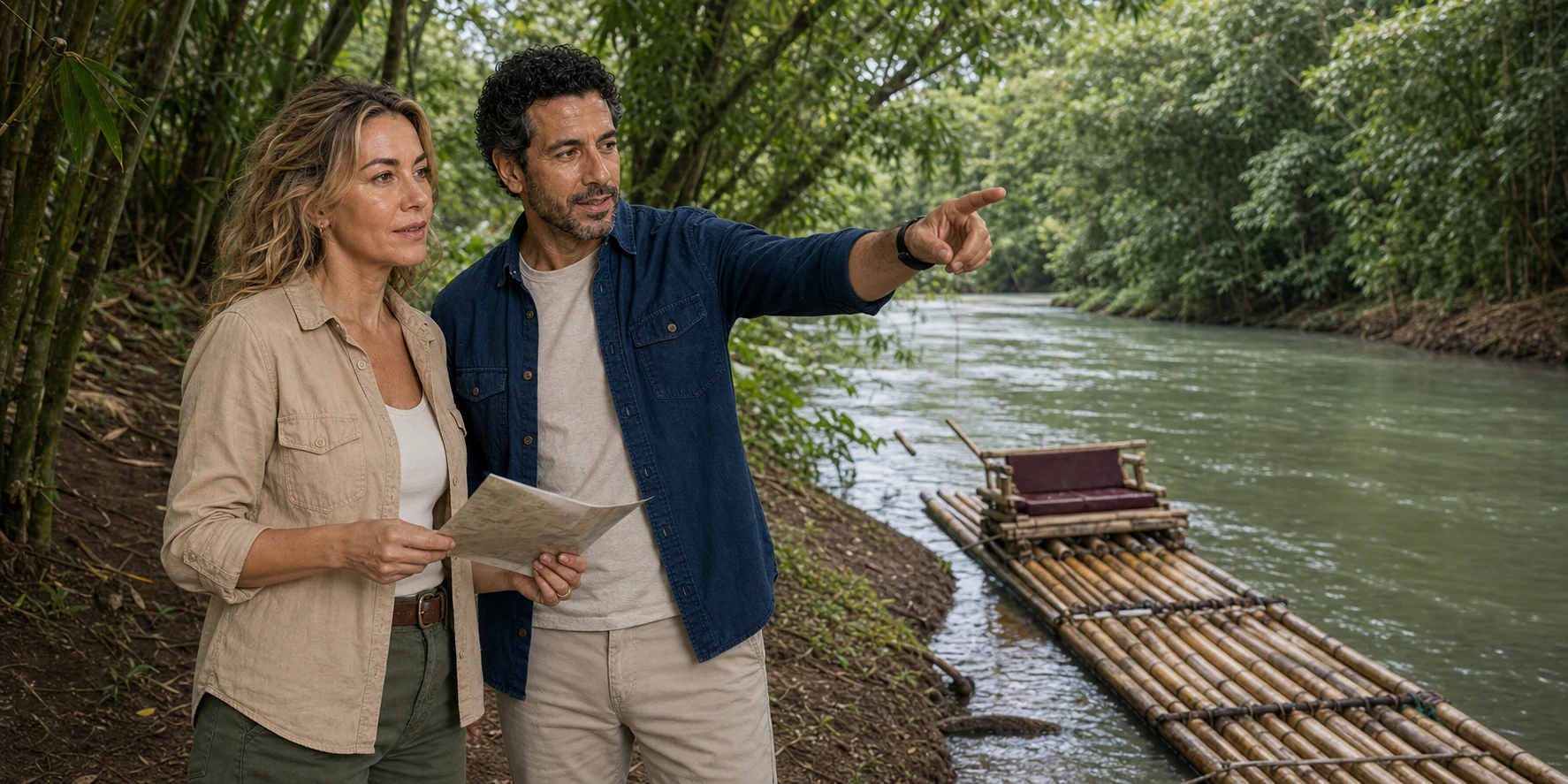
Martha Brae riverbank · ExcursionPass original generated visual
Read the system beneath the scenery
The Jamaica desk opens in Trelawny because the Martha Brae makes the editorial method visible. The visitor journey is small; the system beneath it reaches into karst uplands, watershed communities, regulation, river labour and the port history of Falmouth.
That history includes Indigenous dispossession, plantation slavery, cargo movement and later tourism. It cannot be reduced to one romantic origin story, and today’s passenger raft cannot be presented as an unchanged survival without evidence.
For a journey into Trelawny, connect the river to its villages, water supply and port. The field guide gives that history alongside the decisions that make a visit comfortable and informed.
Destination desks
The Martha Brae desk connects Trelawny’s limestone basin, Falmouth, bamboo rafting, labour, ecology, safety and access.
Stories from Jamaica
One reported feature turns a quiet river journey into an account of water, port history, oral tradition, skilled work, regulation, ecology and access.
Story 40 · Martha Brae River
Four working lenses
Read rainfall, limestone recharge, groundwater and water quality as one watershed system.
Keep Indigenous history, slavery, port commerce, oral tradition and later tourism distinct.
Understand bamboo selection, raft construction, poling skill, licensing, earnings and consent.
Connect transport, boarding and safety to watershed communities and ecological limits.
