Story 26 · Art, garden and power
Destination desk 19 · France
Read a famous garden as a household, a water intervention, a workplace, a changing ecology and an artistic instrument—not a painting preserved in soil.
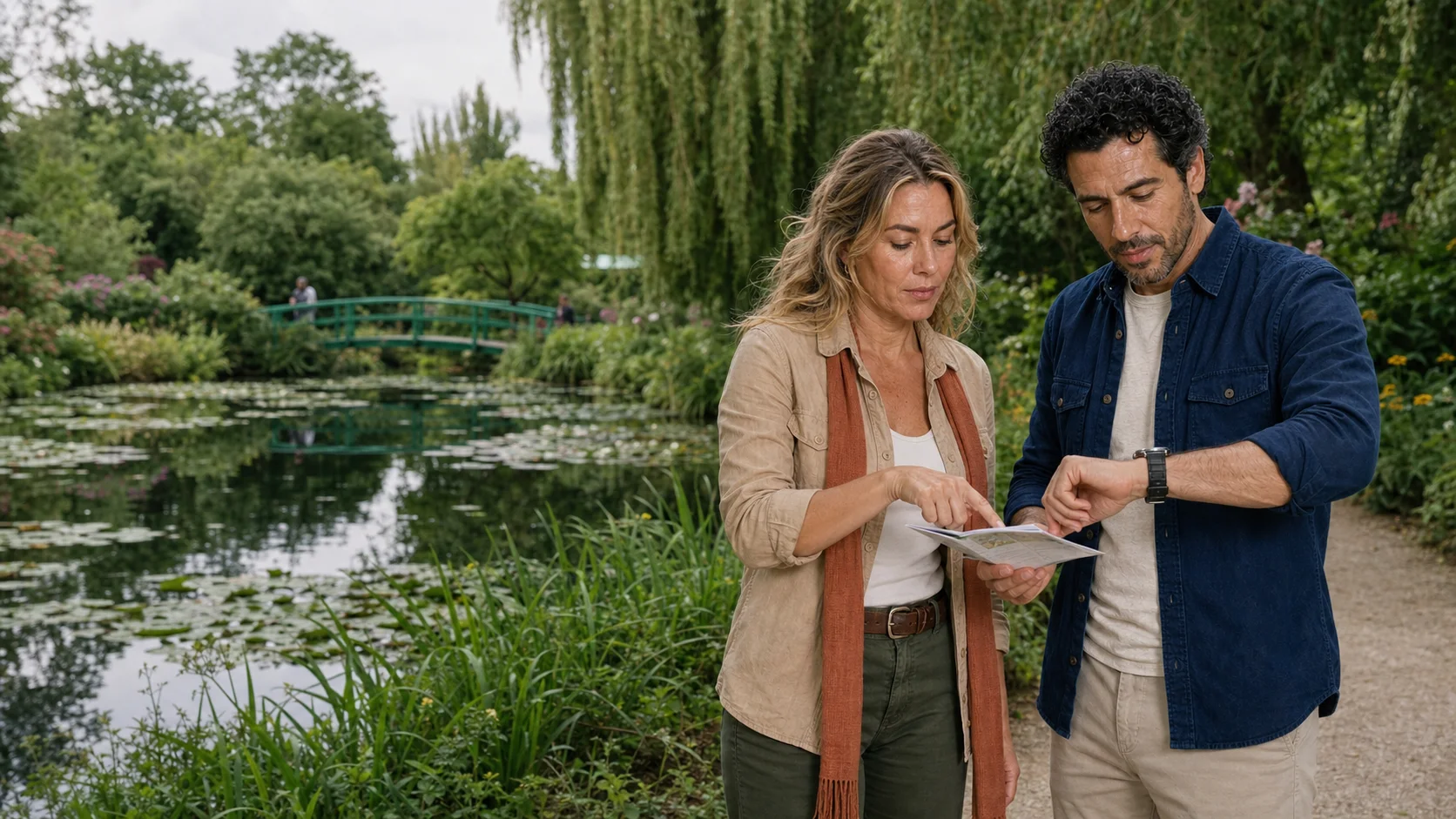
Water garden · ExcursionPass original generated visual
A garden read through work
Claude Monet moved to Giverny in 1883, first renting and later buying the long house and garden. The property became a family home, studio environment and sustained design project. Clos Normand replaced an orchard-and-kitchen-garden order with paths, arches and changing colour fields; the later water garden required land, diversion, planting and continuing maintenance.
Paintings did not simply copy that landscape. Repeated observation, cropping, reflection, memory and large-studio revision changed pond into picture. The present garden adds another history: decline, bequest, restoration and stewardship keep it alive by changing it.
This desk separates that durable explanation from today’s operations. Opening season, timed entry, transport from Vernon-Giverny, house access, bags, weather and the exact commercial route must be checked for the day of travel.
Field story
Giverny rewards repeated looking; Versailles projects authority across territory. One combined day makes the switch vivid—and makes its cost visible.
Story 26 · Art, garden and power
The property in layers
Family, domestic staff, rooms, Japanese prints and working space place the artist inside a large material household.
Paths, arches, beds, pruning, irrigation and seasonal succession turn apparent abundance into managed design.
Purchased ground, redirected water, a shaped pond, bridge, plants and gardeners make reflection an engineered ecology.
Serial looking became large canvases; later research and labour rebuilt a garden that had never been static.
Plan with current facts
Use the Foundation for current opening, access and garden conditions, then verify transport and any connected commercial format separately. Garden accessibility does not make the house step-free.
Read the complete field guide