Story 61 · Badagry
Country desk · West Africa
A country approached through named communities, long histories and living systems—beginning where Badagry's lagoon, Atlantic memory and present-day town meet.
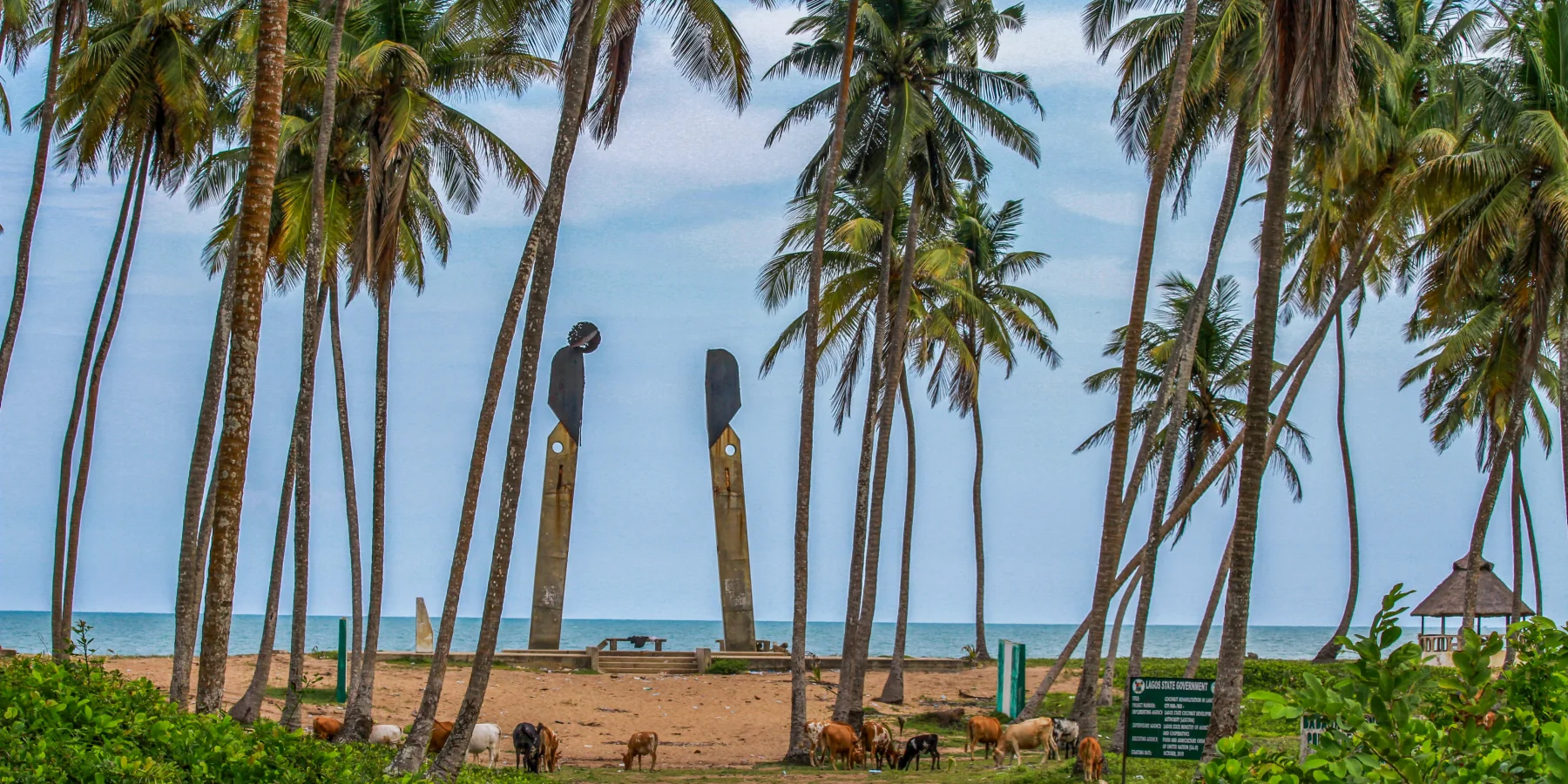
Gberefu memorial (photographed 2012) · Louis Gabriel Whenayon · CC BY-SA 4.0 · cropped derivative by ExcursionPass
Plural places, specific authority
Nigeria cannot be reduced to one people, language, ecology or historical route. Every destination desk should identify the community, landscape and authority closest to the fact rather than treating the country as interchangeable backdrop.
The first desk begins in Badagry with Ogu and Awori communities, the Yewa River and lagoon system, archaeology at Apa and Ahanve, Atlantic trafficking, mission institutions, British annexation, family-held museums and a coast that still supports work.
The method is consistent: distinguish archive from oral tradition, monument from event, national framing from family memory and evergreen history from current access. Evidence should deepen local knowledge, not displace it.
Destination desks
The Badagry desk joins deep settlement history, Atlantic routes, museums, mission history, living work and practical decisions.
Stories from Nigeria
Read enslavement and abolition through regional politics, named institutions, contested evidence and a town that remains alive.
Story 61 · Badagry
What this desk follows
Keep Ogu, Awori and other specific identities visible rather than making a heritage town anonymous.
Compare archaeology, archives, oral history, family collections and monuments without pretending they prove the same thing.
Follow European demand and shipping, African political and commercial agency, captivity, resistance and uneven abolition together.
Treat waterways, access, coastal change, conservation and community income as part of the place rather than footnotes.
Use the authority closest to the claim
The feature supplies the complete account. These links continue into archaeology, Nigerian collections, local interpretation and current waterways authority.
Read the complete Badagry feature