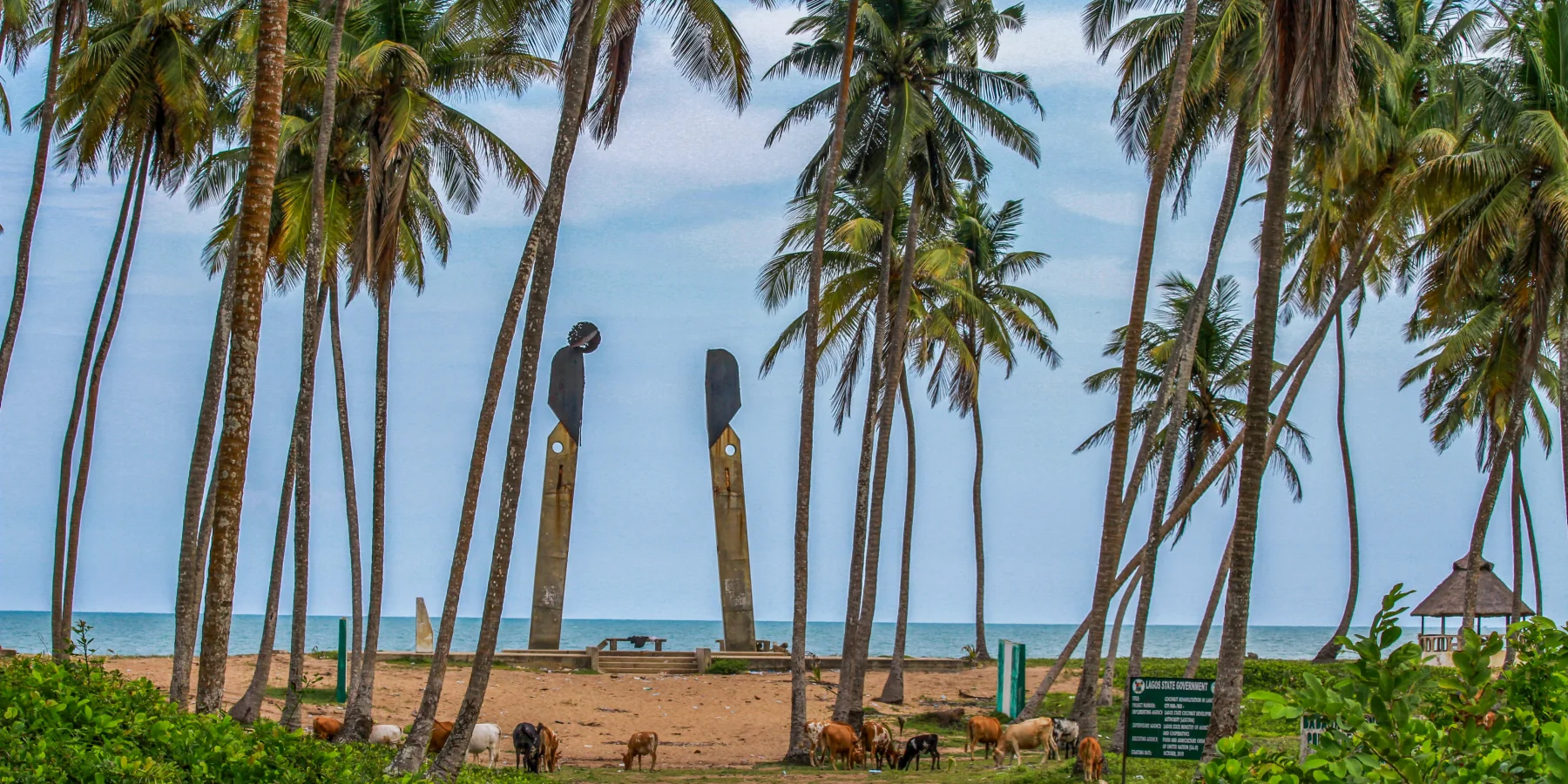

Badagry is often compressed into a market, a chain of holding sites and a path labelled the “Point of No Return.” The fuller place is harder and more revealing: an old lagoon landscape, an Ogu and Awori town remade by migration and commerce, a port implicated in Atlantic enslavement, a mission foothold, a colonial border post, a fishing community and a collection of museums where families and institutions still negotiate what can be proved, remembered and repaired.
01 · Badagry through evidence
Begin with water, not the monument
Badagry occupies a threshold west of Lagos where lagoon, creek, river, swamp, sand barrier and Atlantic shore meet. Its position near the modern Nigeria–Benin border makes it look peripheral on a national map. Historically, water made it connective. Canoes and larger craft could move through the lagoon system toward Lagos and ports farther west; the Yewa River linked communities inland; a narrow coastal strip separated protected water from the ocean. The same geography supported fishing, salt making, farming and regional exchange long before Europeans turned the Bight of Benin into one of the principal theatres of the Atlantic trade in enslaved people.
That longer time matters. Archaeological work in the wider Badagry Cultural Area has found evidence of occupation far earlier than the heritage circuit normally begins. At Apa, near the meeting of the Yewa River and Badagry Creek, a charcoal sample yielded an age of 2,670 ± 90 radiocarbon years before present. That is an uncalibrated laboratory result, with “present” conventionally meaning 1950, not an exact calendar date for the foundation of a town. Excavations at Ahanve, west of Badagry, recovered pottery, palm kernels, animal remains, catfish bones, freshwater shells and salt residues. The assemblage does not describe an isolated “slave port waiting to happen.” It describes generations adapting to a wetland: making vessels, collecting and cultivating plants, fishing, hunting and boiling Atlantic brine in large clay pots.
Orijemie’s published excavation results include a small but revealing encounter between material evidence and remembered work. Chief Suru Toyon, an Ahanve elder aged 78 when consulted in 2008, identified salt residues from experience: he had made salt as a boy. His recollection helped interpret something that could otherwise look like an anonymous fragment. Alongside the pottery, shells and fish bones, it connects the excavation to local technical knowledge. It does not date every residue or make one recollection stand for the whole settlement; it shows why archaeology and the knowledge of residents need one another.
The work also records environmental change. Mangrove and lowland rainforest retreated while freshwater swamp and secondary vegetation expanded. In later archaeological layers, imported smoking pipes, glass and other material entered the record; local salt production declined as imported salt circulated through Atlantic commerce. The important lesson is not that outside contact suddenly created history. It is that an old living economy was redirected by new markets and coercive systems.
Communities in the area commonly identify as Ogu—also written Egun—and Awori, with linguistic, kinship and trading relationships that cross today's international boundary. Yoruba is widely used, but a visitor should not turn that fact into one undifferentiated identity. Badagry's history is one of movement among neighbouring polities and language communities. The border is recent; the social landscape is not.
02 · Badagry through evidence
Badagry was rebuilt by people seeking refuge
The nineteenth-century town cannot be understood as a single ancient city continuing unchanged. Historian Caroline Sorensen-Gilmour’s study of Badagry from 1784 to 1863 follows its reconstruction after destruction in 1784. Refugees, migrants, merchants, political exiles and local lineages made a new lagoonside community. Its divided authority could be a weakness: competing quarters and leaders did not always act together. It could also be a form of flexibility, allowing different groups and commercial networks to coexist when the balance held.
Badagry's fortunes were inseparable from neighbouring Lagos, Porto-Novo, Oyo, Dahomey and Abeokuta. Political struggles inland altered who was captured, displaced or able to trade. Coastal rivalries altered which port received merchants and ships. Exiled leaders and foreign traders used Badagry as a refuge or base; local authorities tried to protect their own position. The town was neither a passive beach where Europeans arrived nor an all-powerful African state directing events alone. It was a contested port whose residents operated inside unequal Atlantic markets and unstable regional politics.
Two named arrivals bring those relationships into focus. Sorensen-Gilmour identifies Adele, an exiled king of Lagos, and the Dutch trader Hendrik Hertogh among the people whose refuge in Badagry affected regional affairs. Political refuge and commercial refuge were different things. An incoming ruler carried followers and claims to authority; a merchant brought trading connections and interests. Neither simply joined an empty, neutral settlement. Their presence depended on relationships with existing quarters and leaders, and helped turn local disputes into matters for neighbouring ports and powers. “Refuge town” therefore describes a political process as well as a humane aspiration.
This is why easy moral geography fails. “Europe” did not stand on one side and “Africa” on the other. European and Brazilian merchants, African rulers, war leaders, brokers, boat crews, creditors and household authorities occupied different positions in a chain that converted captivity into sale and forced migration. Some people were coerced at several stages; some survived enslavement and later participated in the trade; some families contained both beneficiaries and victims. Responsibility was distributed, but power and profit were not equal. European demand, shipping, finance and plantation economies made mass oceanic trafficking durable. African wars, legal systems and commercial actors supplied and moved captives. No honest account can erase either side.
03 · Badagry through evidence
The port belonged to a regional trafficking system
People did not begin their forced journey at Vlekete or at a modern archway. Capture could occur hundreds of kilometres inland through war, raid, kidnapping, judicial enslavement, debt or sale. A captive might be resold repeatedly and moved through several markets before reaching Badagry. Others came through ports elsewhere on the Bight. The coast was a network rather than a single funnel.
Badagry's lagoon position helped brokers assemble people and goods away from the open Atlantic surf. Holding compounds stood near the waterside. Canoes and boats connected the town to the coastal strip and offshore shipping. Ocean-going vessels did not need to berth at a modern-style quay for embarkation to occur. People and provisions could be transferred through smaller craft, exposing captives and crews to difficult lagoon, bar and surf conditions.
The word “slave” can make that movement sound like a fixed identity. It was an imposed legal and commercial status. The people being sold were children, women and men with names, languages, skills, families and political communities. Records created by traders usually preserve them as numbers, age categories, prices or cargo. Museum objects and route narratives can either repeat that reduction or interrupt it. The most useful question at each site is therefore not simply “how many?” It is “what kind of evidence restores people to this system, and what still remains unknown?”
The numerical claims repeated around Badagry require special care. Local displays and tourism pages sometimes assign millions of departures to one market, a fixed weekly volume or a precise exchange rate between a person and a commodity. Those figures are not supported by a complete Badagry port series. The Trans-Atlantic Slave Trade Database provides a powerful regional picture, but documented voyages, estimated embarkations and named ports cannot be converted into a confident total for one market by repetition. A large rounded number can produce shock while hiding the archival gap. The scale of Atlantic enslavement is not in doubt; Badagry-specific precision is.

04 · Badagry through evidence
Read the archive for its purpose as well as its detail
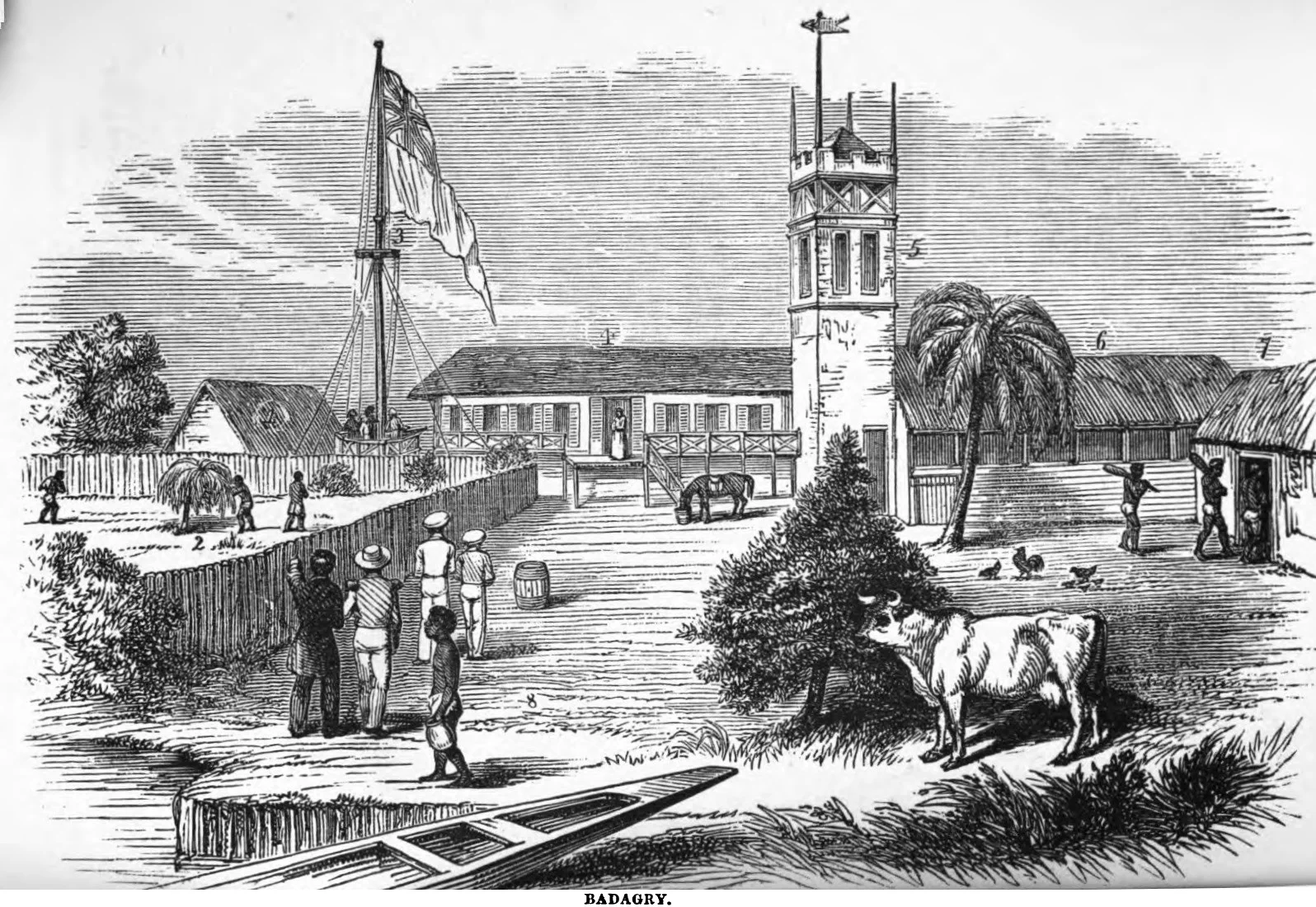
An engraving published in the Wesleyan Juvenile Offering in 1851 depicts a building, figures, palms and a canoe. It is valuable as a dated representation of settlement and mission life. It is also a missionary publication made for readers in Britain. Its calm view does not show the political conflict, coerced movement or commercial negotiation of the place. A visitor should learn from the image without mistaking the publisher's frame for an all-seeing record.
The same caution applies to consular reports, traders' correspondence and naval accounts. They record names, disputes, commodities and journeys that may survive nowhere else. They also served commercial, evangelical and imperial agendas. British writers often presented anti-slavery action as moral authority while their government expanded political control. Missionaries opposed Atlantic enslavement yet linked Christianity and Western schooling to a civilising project. Local rulers could describe agreements differently from foreign officials. Reading across those archives is more reliable than selecting the most dramatic sentence from one.
Badagry's museums add another archive: buildings, chains and restraints, replicas, family histories, guide narratives, monuments and the memories attached to them. Not every displayed object has a documented excavation context or an unbroken chain of ownership. That does not make local knowledge worthless. It means material, oral and written evidence answer different questions. A responsible guide should be able to distinguish a period object from a later memorial, a documented biography from family tradition, and an interpretive claim from a measured fact.
05 · Badagry through evidence
Vlekete is a place of memory, not a frozen auction scene
Vlekete is presented locally as a market associated with the sale of captives and with a shrine of the same name. Today's memorial landscape includes sculptural groups representing merchants, exchange and restraint. Those figures are modern acts of interpretation. They give visitors a spatial focus and make commerce in people impossible to treat as abstract. They do not reproduce an intact market frozen at the moment of sale.
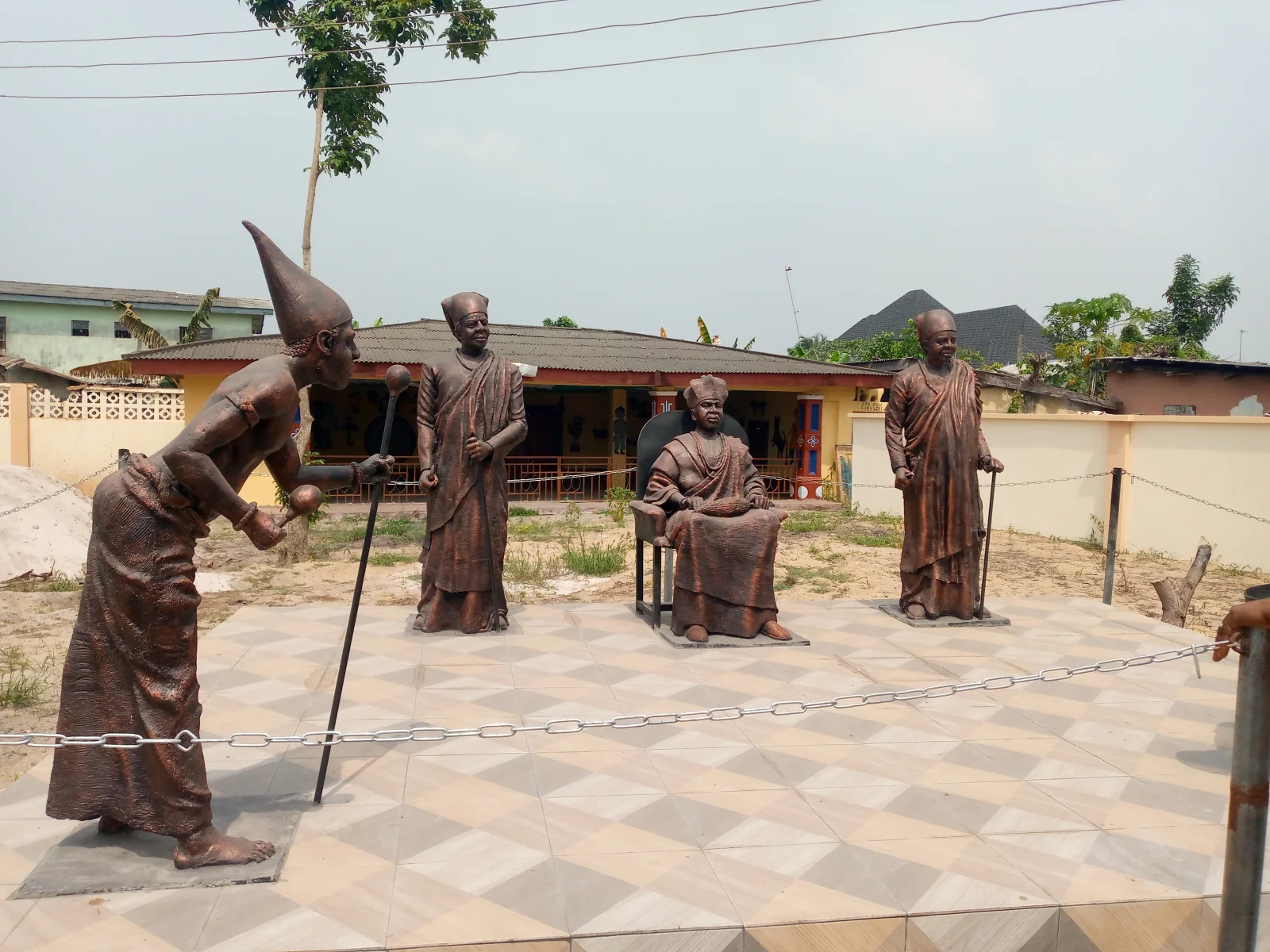

Local accounts give Vlekete an early foundation date and repeat exact weekly sale totals and commodity ratios. The official local-government page is useful evidence of the story the destination currently tells, but its superlatives and arithmetic require corroboration that has not been published there. The better visit separates three layers: the historical market and shrine; the documentary evidence for Badagry's Atlantic commerce; and the modern monument through which the town now represents both.
That separation does not weaken the site. It creates better questions. Who commissioned the sculpture? Which figures are shown with agency and which as anonymous bodies? Does the guide connect transactions here to violence and political change inland? Are resistance, escape and survival given space, or does the narrative move directly from capture to ship? Does the shrine appear only as exotic atmosphere, or as part of a living religious history? A monument becomes more meaningful when its choices are visible.
06 · Badagry through evidence
The Seriki Abass compound holds a morally complicated biography
The Brazilian Barracoon in the Seriki Williams Abass compound is one of Badagry's most important surviving heritage places. “Barracoon” refers to an enclosure or building used to confine people before onward shipment. The present complex contains small cells and a family-run museum. Its value lies partly in physical scale: confinement stops being a general noun when walls, openings and circulation are examined. But the building should not become a stage on which a guide assigns a fixed number of people to every room without explaining the source.
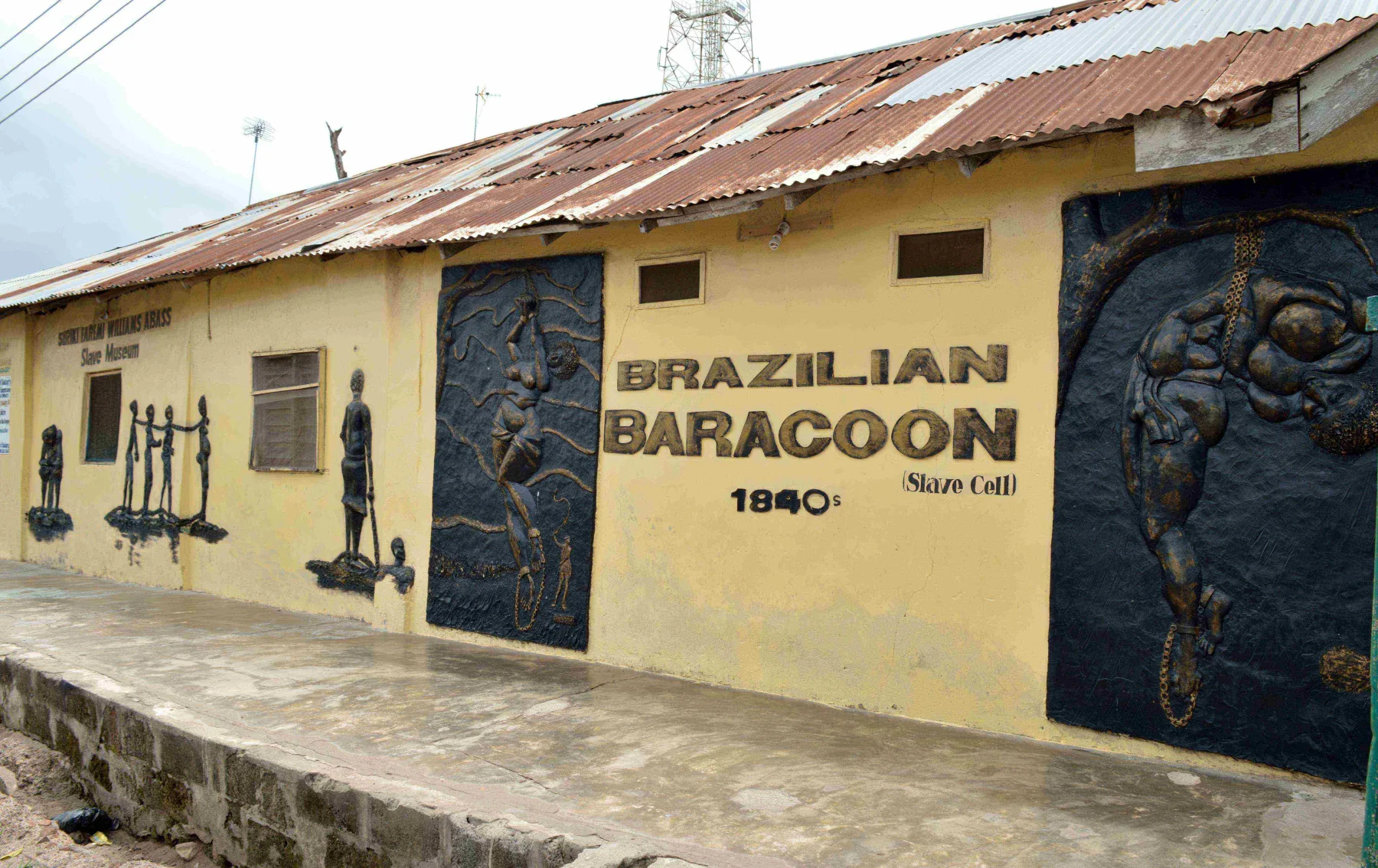

Abass's life resists a simple villain-or-victim label. The museum's account presents a man who experienced enslavement and later became involved in enslaving and trading others. Historian Faye Sayer’s study of Nigerian museum interpretation uses the site to show why localised narratives matter: a named life can humanise a system, yet interpretation can soften the contradiction by dwelling on suffering endured while passing quickly over suffering enabled. Holding both facts in view is not an attack on the family or museum. It is the ethical core of the story.
During Sayer’s April 2018 visit, a typed statement from Abass’s descendants expressed regret for his involvement in the Atlantic trade. That documented intervention belongs to the site’s history too. Descendants were not merely conserving a building; they were choosing how to speak about inherited responsibility. A family statement cannot undo the violence or speak for those who were sold. It can make an institution’s present ethical position visible, alongside the documents, images and objects through which it explains the past. Its recorded existence in 2018 is different from a promise that the same statement will be on display during your visit.
Family stewardship supplies knowledge that a state museum may not hold. It also shapes emphasis. Ask what documents support dates and roles, when an object entered the collection, and whether alternative accounts exist. Listen for the difference between “our family remembers” and “the archive records.” Both statements can carry truth; they do not carry it in the same way.
The compound also reveals a larger afterlife. Atlantic trafficking ended, but families remained, buildings acquired new uses, and reputations were renegotiated. A heritage site is not merely the shell of a nineteenth-century function. It is a present institution with caretakers, income needs, community relationships and choices about whose names are spoken.
07 · Badagry through evidence
Mobee makes family implication impossible to externalise
The Mobee Royal Family Slave Relics Museum sits in a family compound near the waterside. Its collection is associated with restraint, exchange and the family's own account of ancestors who participated in the trade and in its abolition. That combination matters. If enslavement is described only as something foreigners inflicted on an innocent town, local agency disappears. If local participation is isolated from Atlantic demand and European power, the global system disappears. Mobee can keep both levels in the room.
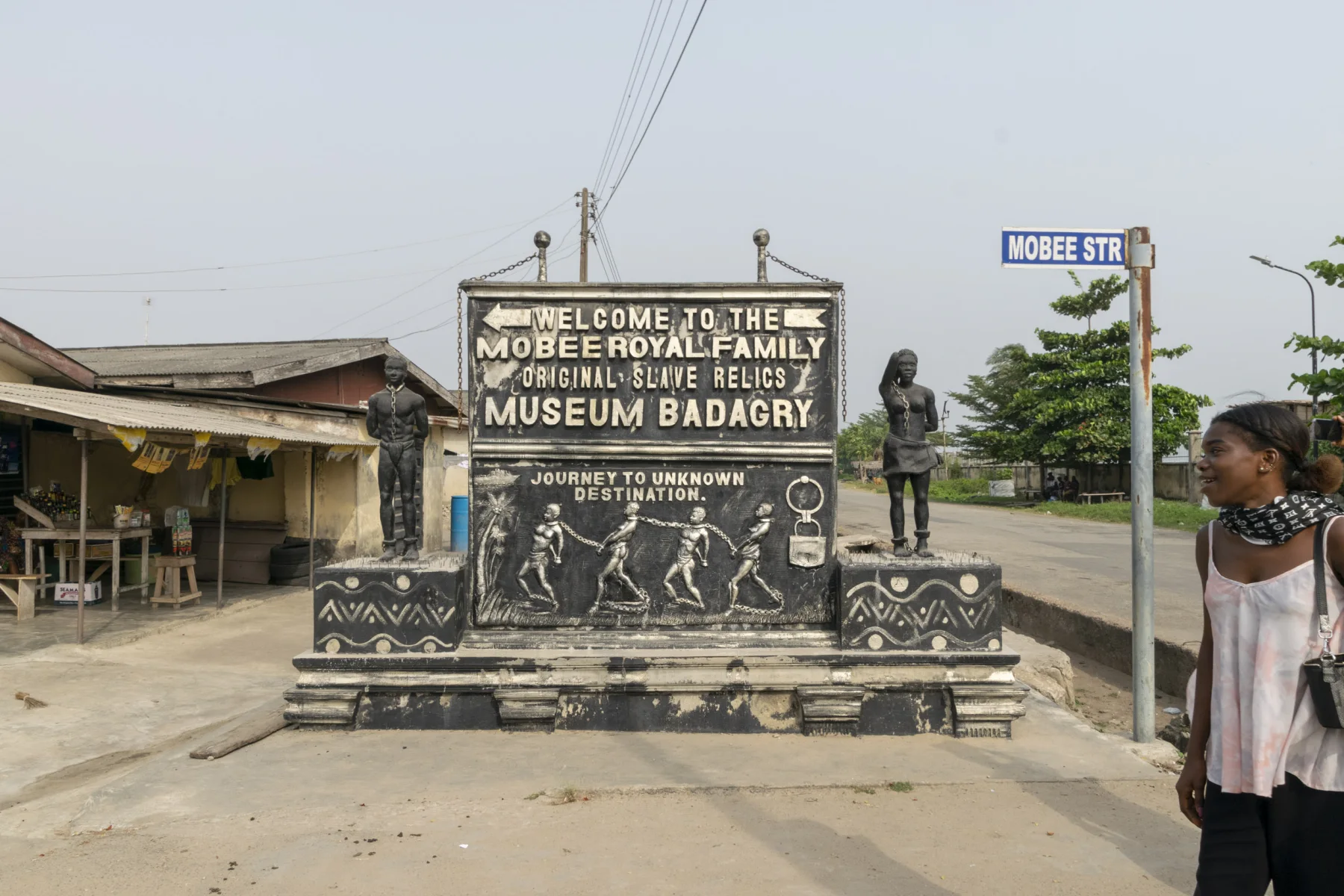

Objects commonly identified as chains, shackles, locks or exchange materials have strong emotional force. Their material questions matter too. What metal and method of manufacture do they show? Is the object's original use documented? Does wear reveal repeated use or later handling? Is it original, reconstructed or displayed as an example? Without those questions, an artefact can become a generic symbol detached from the people and transactions it is meant to explain.
The museum's family setting also changes the visitor relationship. You are not entering an anonymous national collection. You may be hearing descendants interpret an inherited association with commerce, authority and harm. Respect does not require suspending critical thought. It requires asking without accusation, avoiding photographs of people without consent, and allowing a family narrative to be locally authoritative while still comparing it with archival and academic research.
08 · Badagry through evidence
The Heritage Museum shows how the state organises the story
Badagry Heritage Museum occupies a former colonial administrative building. The local authority’s monuments account dates the structure to 1863—the year of British annexation—and its conversion to a museum to 2002. That setting creates a productive tension. A building made for colonial government now brings objects, photographs and interpretive displays into a public account of enslavement and Badagry’s history.
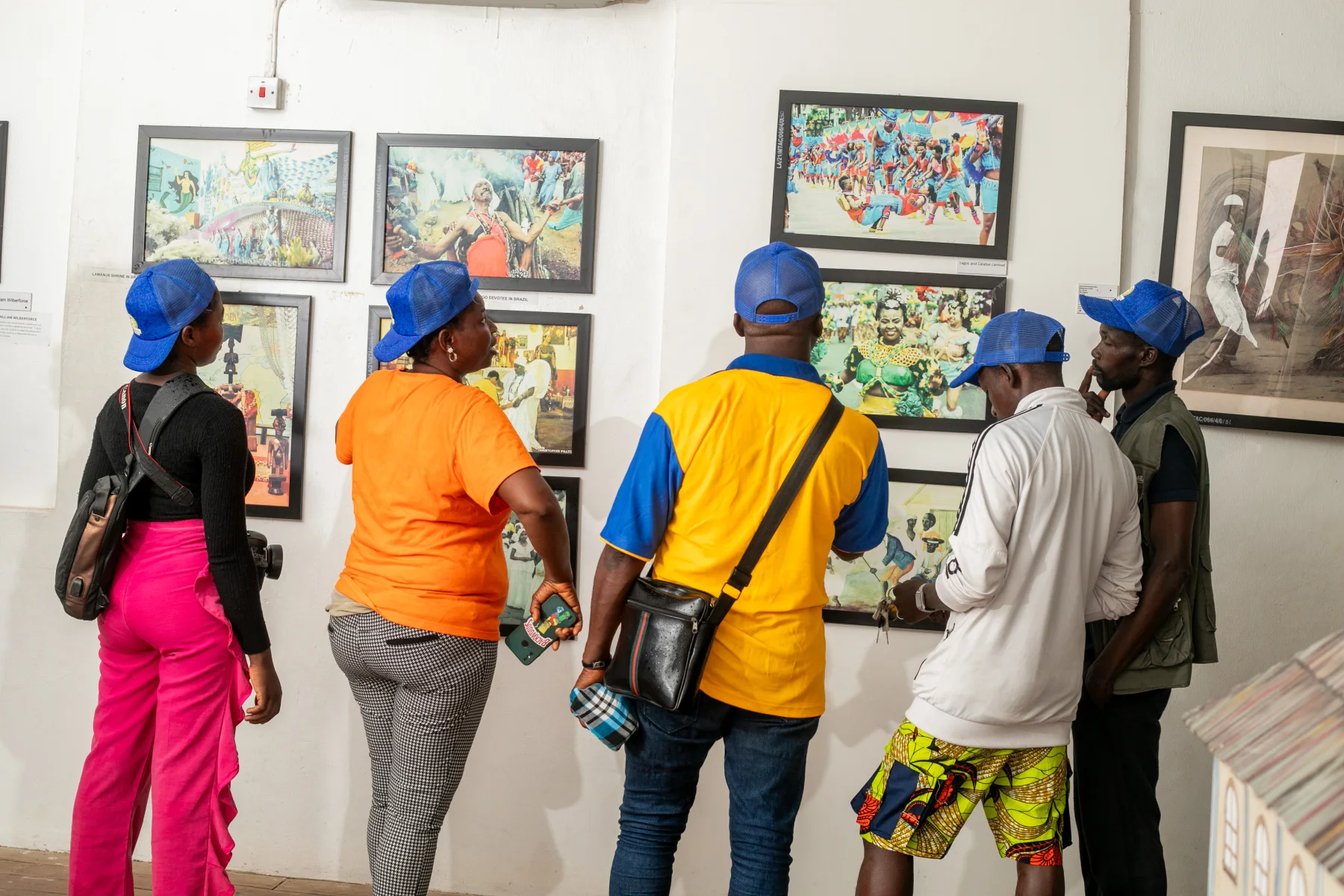

The museum offers breadth that a family collection cannot. It can connect local places to ships, plantation economies, abolition movements and diaspora. It can also produce an “official” sequence that appears more settled than the evidence is. Sayer’s comparison concerns the public museum in Calabar and the family-run Seriki site in Badagry; it does not supply a catalogue of this building’s galleries. Its wider argument is useful here: local, national and global accounts shape one another. Reading a public museum alongside a family collection exposes differences in scale, selection and authority, without automatically making one objective and the other emotional.
Pay attention to category labels wherever they appear. Accounts of brokers and political actors should not imply that everyone living near a port shared responsibility. Accounts of abolition should not turn legal change into immediate liberation. An account of resistance needs room for actions by enslaved people, rather than punishment alone. Look at what a display places before and after an object, whose words it uses and whether it identifies its source. Curatorial order is an argument.
The former District Officer's building adds a final question: what happened after annexation? Colonial administration did not simply arrive to preserve a town rescued from the slave trade. It imposed law, taxation and territorial authority. The museum's walls belong to that political transformation. They can help connect anti-slavery language with empire rather than treating the two as unrelated chapters.
09 · Badagry through evidence
A port arch is orientation, not proof of one universal route
Near the waterside, an arch identifies the “slave port.” It marks a place from which local memory traces movement across the lagoon toward Gberefu and the Atlantic. The marker is useful orientation. It is not evidence that every captive embarked through this exact opening, walked the same path or followed one unchanging ceremony over several centuries.
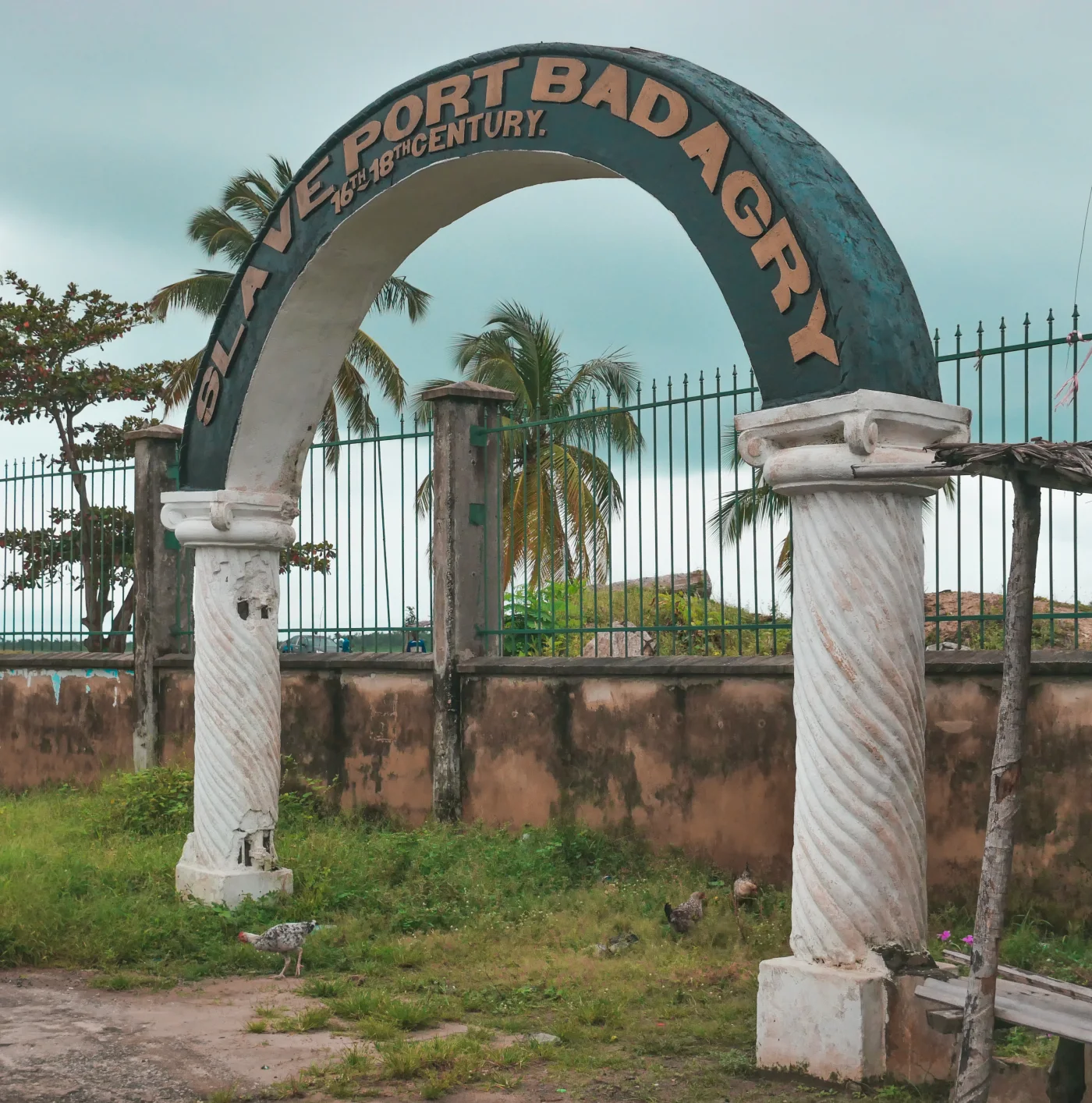

Ports are systems. Their evidence may include landing places, family compounds, canoe channels, storage, account books, shore topography and foreign shipping records. Water levels, erosion and later construction alter the shoreline. A ceremonial route created for remembrance can overlap historical movement without mapping every journey exactly.
This distinction protects the people at the centre of the story. Claims that visitors are walking “the exact footsteps of millions” replace many unknown lives with one dramatic formula. The more honest statement is also more powerful: people were forced through this lagoon-and-coast system; records and local memory identify places associated with that movement; the precise path and number varied, and much individual evidence was destroyed or never written.
10 · Badagry through evidence
Gberefu is a memorial landscape across living water
The heritage route to Gberefu usually requires crossing Badagry Lagoon and continuing on foot across the sandy coastal strip. A memorial at the Atlantic shore names a Point of No Return. The phrase is used at many West African embarkation sites. It describes the finality imposed on people shipped into an oceanic system, but it should not erase escape, revolt, survival, cultural continuity or return by descendants. “No return” was the captors' project, not a complete account of African and diasporic life.
Local interpretation also includes a well from which captives were allegedly forced to drink so that they would forget their past. The well is an important part of oral heritage. The claimed pharmacological loss of memory is not established evidence and should not be presented as one. A guide can say that the story expresses a historical violence—the attempt to sever language, kinship and identity—without asserting that water literally erased memory.
The walk itself is not a reenactment. A visitor is choosing to cross, carrying water, a phone and the expectation of return. Captives had none of that freedom. Silence and attention may be appropriate, but no guide or article can prescribe an emotional performance as proof of respect. The memorial deserves care without turning temporary discomfort into imagined equivalence.
The lagoon crossing is also a real transport decision. Use a properly authorised operator; check the craft and weather; wear a correctly fitted life jacket for the whole crossing; do not accept overloading or substitute a casual canoe for a planned passenger transfer. The route may involve an uneven jetty, boat step, sand, heat and limited shade. If you need step-free access, seating, a companion space or a particular transfer method, ask about the jetty, boat and walking surface before leaving Lagos. The NEMA and NIWA safety guidance also advises against night journeys: plan both crossings for daylight, including enough margin for the return.
11 · Badagry through evidence
Abolition was a process, not a switch
Britain prohibited its subjects' participation in the transatlantic slave trade in 1807, but the traffic did not end in 1808, and British law did not control every ship or jurisdiction. Demand in Brazil and Cuba sustained illegal and semi-clandestine voyages. Naval suppression changed risk, routes and paperwork; it did not immediately dissolve markets, systems of dependency or local interests.
Badagry's nineteenth century joined anti-slavery action to commercial competition, mission expansion and imperial ambition. Treaties could declare a trade prohibited while enforcement remained uneven. British officials used suppression as a moral and strategic claim. Local factions negotiated for security and advantage. When Britain annexed Badagry in 1863, the event belonged to a wider expansion of control along the Lagos coast, not to a simple ceremony in which emancipation and colonial rule became the same thing.
Nor did the end of Atlantic export end unfreedom. Domestic enslavement, pawnship, coerced labour and unequal dependency had different legal and social histories. Freed and recaptive people returning from Sierra Leone or the Americas entered societies with existing hierarchies. Some built new commercial and religious institutions; some faced suspicion or exclusion. “Abolition” must therefore be dated and qualified: a law, a treaty, a naval practice, an emancipation measure and a lived change are not identical events.
This is one reason triumphal monuments can mislead. Broken chains express a necessary claim to freedom. Historical explanation must still ask who obtained legal freedom, when, under whose authority and with what capacity to live independently. The afterlife of slavery includes property, family status, racial ideas, diaspora memory and the distribution of wealth long after embarkation stopped.
12 · Badagry through evidence
Mission history brings translation, schooling and colonial power together
The building promoted as Nigeria's first storey house was constructed by Church Missionary Society workers between 1842 and 1845. The National Library of Nigeria’s building record associates it with Samuel Ajayi Crowther and his work translating Christian texts into Yoruba. Crowther's own life connects capture, naval interception, Sierra Leone, education, translation and African church leadership: seized as a boy during warfare, he was freed from a slave ship by a British naval patrol, educated in Freetown and later became the first African Anglican bishop.
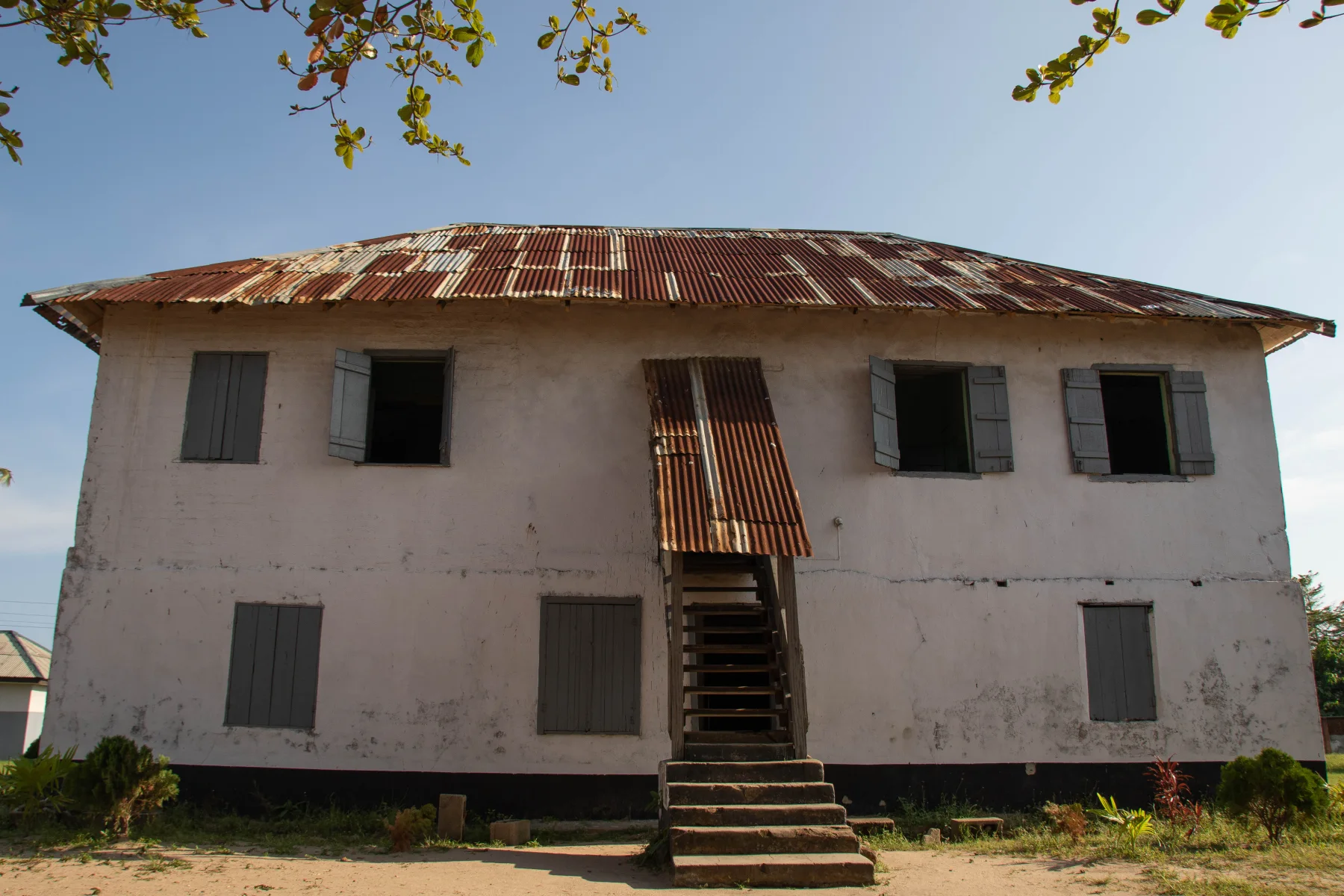

Crowther’s education did not begin with the Badagry mission house. He was among the early students of Freetown’s Fourah Bay Institution, founded in 1827, and joined the Niger expedition of 1841 before his ordination in 1843. Returning to Yorubaland, he found close relatives, including his mother and sister. His later Niger mission, opened in 1857, had an African staff, largely from Sierra Leone. His consecration as bishop followed in 1864. Those connections show people carrying language, knowledge and relationships across the Atlantic aftermath, rather than receiving education on an empty cultural map.
Andrew F. Walls’s scholarly biography also explains the limits of that autonomy. In the 1880s, European financial controls, appointments and the removal or transfer of African staff gradually dismantled Crowther’s mission. The achievement of an African episcopate did not protect an African-led institution from changing racial attitudes and power. For the visitor, the mission house opens a history of collaboration and translation, but also of contested authority.
The house is often narrated as a sequence of national firsts: first storey building, first school, first Christmas service, first Bible translation. These claims have commemorative value, but the category “first” depends on what territory, institution and building type is being counted. It can also make mission history look like uncomplicated progress.
School history needs the same care. The National Bureau of Statistics’ historical introduction dates a Methodist primary school in Badagry to 1843. The local-government account instead places the Nursery of the Infant Church within the mission-house premises in 1845, and describes its later move to Posukoh and renaming as St. Thomas’ Anglican Primary School. These accounts identify early mission schooling, but their dates and institutional lineages should not be fused into one effortless “first”. A building’s completion, a school’s opening, a change of denomination and a relocation are different events. Nor does an early Western-style school imply that learning began in Nigeria with missionaries.
The school belongs in this route because teaching, language and religious authority helped shape the same changing town as commerce and abolition. It should also be approached as an institution with responsibilities to pupils. Arrange any proposed visit through the responsible school or heritage custodian, rather than treating classrooms as an extension of the museum circuit. Keep children’s images out of casual tour photography and distinguish a permitted heritage stop from entry into a working school.
J. F. Ade Ajayi's history of Christian missions describes the early period as a negotiation rather than immediate European dominance. Missionaries needed African teachers, translators, congregants, land agreements and political protection. Communities could reject or reshape their proposals. Western education helped form a new literate middle class, but mission teaching also challenged existing religious authority and later benefited from colonial power.
Crowther's translation work was not the mechanical replacement of English words. Yoruba vocabulary, grammar, oral knowledge and the politics of standardisation shaped the text. Translation expanded literacy and religious access while privileging particular forms of language. The building is most interesting when it opens those questions, not when it is treated only as a record-setting shell.
13 · Badagry through evidence
A living town cannot be reduced to a departure point
Badagry's residents fish, trade, teach, worship, farm, build, repair boats, commute and raise families. The black-and-white image of a group hauling a net is not an illustration of timeless communal harmony; it records one collective act in 2023. It nevertheless restores something the heritage circuit can obscure: the lagoon and coast continue to support work.
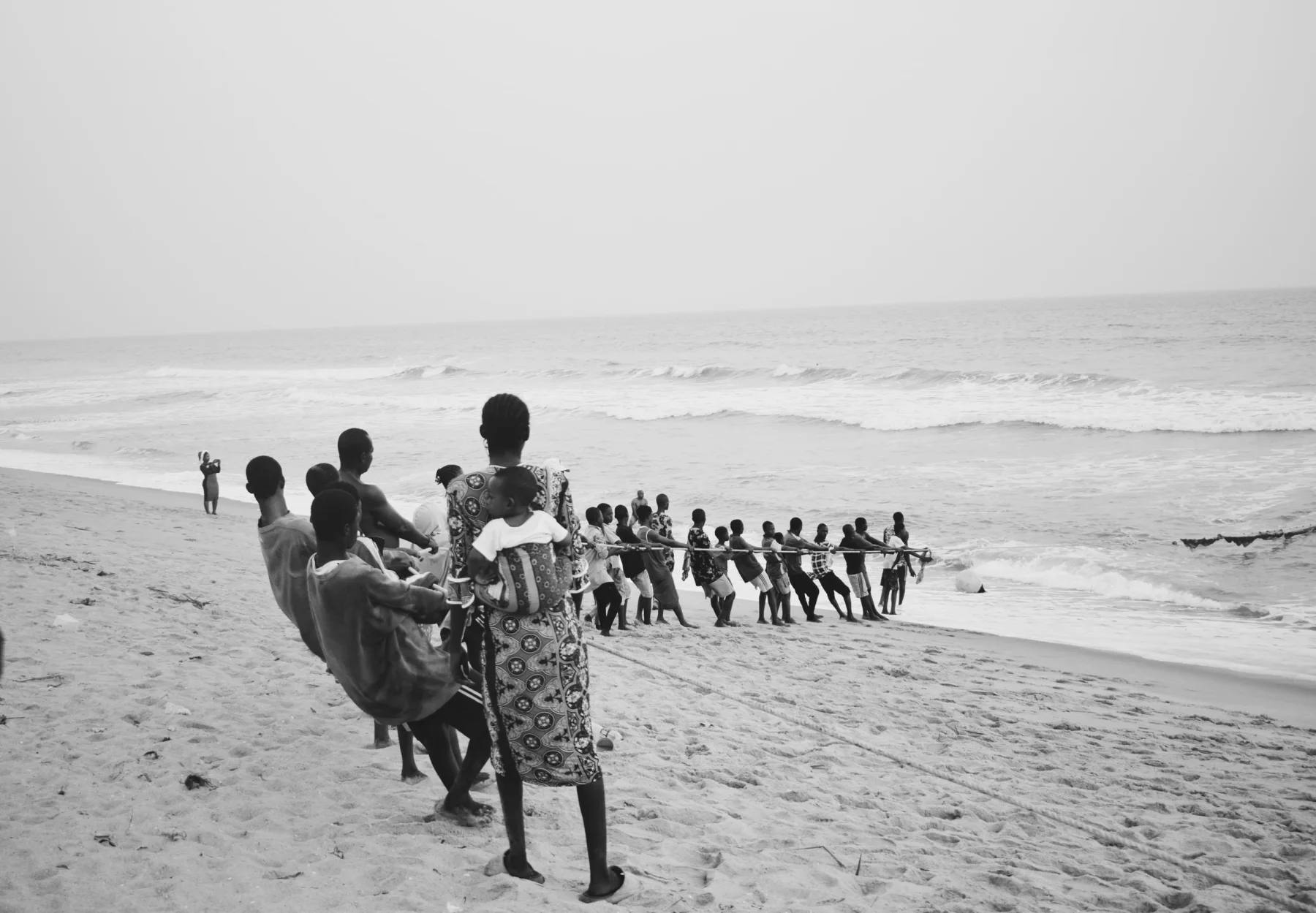

Archaeology places that work in a much longer environmental history. Catfish, bivalves, salt residues, palm kernels and pottery from the Badagry Cultural Area document decisions about water, food and craft over centuries. Those materials also show disruption: imported commodities and Atlantic systems altered what people produced and how they exchanged it.
The current coast is not stable scenery. Lagos State’s climate-risk assessment identifies low-lying coastal areas, including Badagry, as vulnerable to flooding, erosion and sea-level rise. Shoreline change can damage homes, livelihoods and heritage sites at once. Conservation cannot focus only on chains in a case or masonry in a compound; it must also consider drainage, humidity, salt, sand movement, storm exposure and the communities expected to maintain sites.
Preservation also raises a choice about use. A family compound can contain a memorial, a collection and ordinary domestic life; preserving it as if it were an empty exhibit would lose part of its meaning. Repairs need to protect historic material while keeping residents’ needs visible. A photograph taken from a permitted public area does not confer permission to enter an adjoining home. Humidity and salt exposure make care of metal, paper and masonry different tasks; a chain, a photograph and a wall cannot all be conserved by the same treatment. Asking who maintains the place, and how interpretation fees support that work, connects conservation to the people doing it.
Tourism can provide income for guides, boat operators, museums and food sellers. It can also reward the most sensational version of history. A visitor's spending choices matter: pay stated site fees rather than treating interpretation as a favour, do not bargain over a guide's labour as if knowledge has no value, ask before photographing people, and buy directly from makers when provenance is clear. Respect is practical as well as rhetorical.
“Coconut Beach” also needs clarification before it is added to an itinerary. The name is used in tourism material for a leisure beach or coconut-farm area west of town, while Gberefu's Atlantic shore is tied to the memorial route across the lagoon. They are not automatically the same stop, and a name on an itinerary does not establish which access point, facilities or swimming conditions are intended. The coast can be worthwhile in its own right, but it should not be sold as emotional recovery after the museums. Confirm the exact beach and road or boat access; get local advice before entering the water because open-coast currents can be dangerous.
14 · Badagry through evidence
Plan Badagry as two linked circuits
The town circuit and the Gberefu coastal circuit require different logistics. Trying to turn both into a rushed checklist makes the story shallower and the transport choices less safe.
- Start with the Heritage Museum. Its broad sequence supplies vocabulary for capture, commerce, resistance, abolition and colonial administration. Note where labels state a source and where they generalise.
- Move through the town's family and memorial sites. Vlekete, the Mobee museum, the Seriki Abass compound, the waterside marker and the mission house are close enough to be understood relationally, although road conditions, heat and opening arrangements affect the order.
- Keep the lagoon transfer separate. Confirm the jetty, licensed operator, return arrangement, life jackets, passenger limit and weather before boarding for Gberefu. A verbal “it is included” is not enough if any member of the group has mobility or medical requirements.
- Allow interpretation time. Family museums may depend on a guide or custodian rather than a continuous ticket desk. Opening hours published for a local-government office are not proof that every heritage site follows the same schedule.
- Treat the beach as coast, not catharsis. The Atlantic does not provide emotional closure on demand. Observe the memorial, shoreline and living environment without forcing a redemptive ending onto the history.
From Lagos, road time can vary substantially with traffic and checkpoints. Build margin into the day and avoid making a last possible boat or site opening the plan's hinge. Check the current official travel advice issued by your own government and the terms of your insurance close to departure. The UK’s Nigeria advice is one such official reference; use the authority responsible for your own nationality and circumstances. Arrange identified transport, share the plan with someone you trust and retain control of your return rather than relying on an informal promise made on arrival.
For heat and the Gberefu walk, carry drinking water, sun protection and footwear that can manage sand and uneven surfaces. Ask before entering religious spaces or photographing ritual objects. Never touch restraints or artefacts unless a custodian explicitly permits it. If a guide's number, medical claim or dramatic anecdote conflicts with a label or another site, record the difference as a research question rather than staging an argument in the gallery.
For a family visit, decide how much interpretation each child can manage before choosing the number of sites. Start with the geography and the fact that people had families, names and choices taken from them. A historical object needs an explanation of its function and evidence, not a demonstration on a child. Ask the guide about the approach to difficult material, leave room for questions and allow anyone to step outside. Do not infer a connection to enslavement from a visitor’s appearance or require a personal ancestry story. These choices make space for attention without turning the group into part of a performance.
15 · Badagry through evidence
Accessibility must describe the whole chain
A vehicle advertised as private does not establish accessibility. Before choosing any organised visit, ask for the whole chain in writing: pickup point, step height, seat transfer, wheelchair or mobility-aid storage, toilet access, walking surfaces, rest seating, companion policy, jetty, boat boarding and evacuation procedure.
The town sites occupy older buildings and compounds that may have thresholds, narrow doorways, uneven ground or limited seating. The Gberefu route adds a moving boat, jetty transitions and sand. Conditions may change without a central accessibility page being updated. Contacting each responsible site and transport provider is more reliable than asking only whether a tour is “suitable.”
Travellers who do not cross the lagoon can still build a complete town-based visit: the Heritage Museum supplies regional structure; Vlekete addresses public commemoration; Mobee and Seriki show family stewardship and contested biography; the mission house connects Atlantic suppression, Sierra Leone, translation and colonial-era education. Gberefu adds a specific memorial landscape, not the legitimacy of the entire journey.
16 · Badagry through evidence
How to listen when accounts conflict
Badagry's strength is not a perfectly harmonised story. It is the proximity of different narrators: public museum, local authority, royal family, descendant custodians, church history, academic archaeology, regional political history and diaspora remembrance. Their disagreements can reveal how heritage is made.
When two accounts conflict, identify the claim precisely. Is the dispute about a date, a quantity, a building's original use, a person's role or the meaning of a ritual? Then ask what type of source each narrator has. A contemporary letter can fix that someone wrote a statement on a date, but not guarantee its truth. An artefact can show manufacture and use, but not automatically identify its owner. Oral history can preserve names and relationships excluded from colonial archives, yet change as it is retold. A modern monument can document present memory, not directly prove a sixteenth-century event.
Do not demand that local custodians produce a European document before their knowledge counts. Do not accept a precise number merely because it is emotionally effective. The two habits are compatible: respect the holder of a story and remain clear about the evidence supporting it.
Photography requires the same discipline. A wide view of a building can help a reader understand space. A close image of a resident, worshipper or other visitor makes that person part of your publication. Ask first. In a museum about dehumanisation, treating contemporary people as unconsenting visual material would repeat the wrong lesson.
17 · Badagry through evidence
Listen to the Badagry journey
The 17-minute episode follows the town-to-coast circuit through the Heritage Museum, Vlekete, Mobee, the mission house, the waterfront and the lagoon toward the Atlantic. Listen alongside the different layers of the route: a museum object, a family account, a mission building and a memorial each tell the past in a different way.
The episode page and complete transcript offer another way to follow the journey or revisit a place name.
18 · Badagry through evidence
Leave with a more complicated map
Badagry is a place where several maps overlap. One follows creek, lagoon and sea. One follows capture, market, confinement and embarkation. One follows refugees and political factions rebuilding a port after 1784. One follows Sierra Leonean returnees, missionaries, translators and schools. One follows British annexation and colonial administration. One follows families who now interpret buildings tied to both suffering and profit. One follows nets, boats, palms, roads and homes in a town that did not stop living when Atlantic trafficking ended.
No single arch, well, market or museum can carry all of that. Together, approached critically and respectfully, the sites can do something more valuable than offer certainty. They can show how people turn fragments into public memory—and why the work of checking, naming and listening is part of remembrance itself.