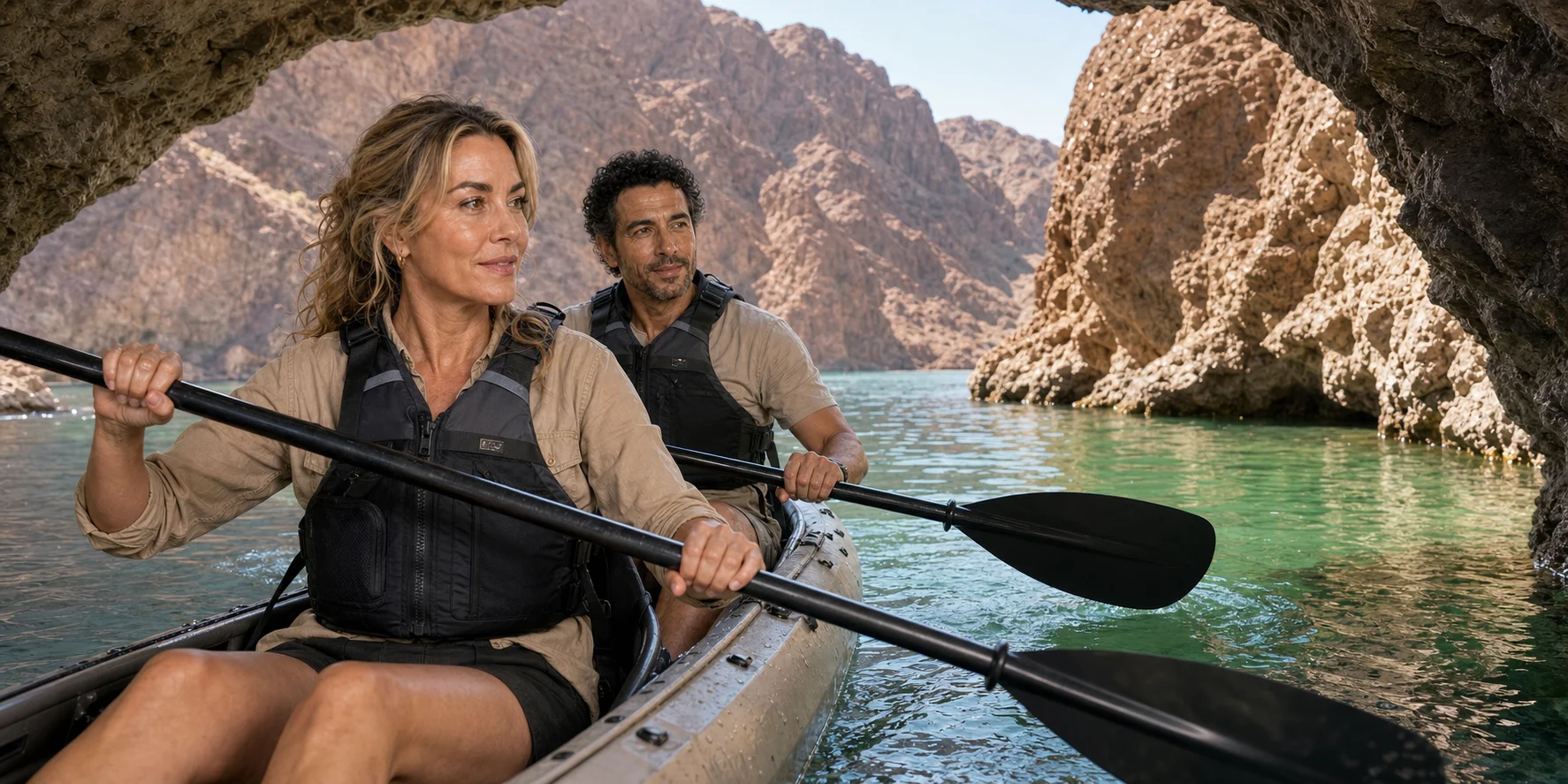
Emerald Cave is a small coordinate on a much larger river journey. Paddle upstream from Willow Beach and the famous green reflection may last minutes; the canyon, cold regulated water, dam history, desert springs, wildlife uncertainty and decisions that keep a four-mile return safe are the real experience.
01 · Black Canyon river field guide
The cave is the punctuation, not the sentence
The most useful correction to make before launching is also the simplest: Emerald Cave is not a cave expedition. The National Park Service describes a small cave about two miles upstream from Willow Beach on the Black Canyon Water Trail. When the angle of afternoon sun is favorable, light enters the shallow rock opening and the water can throw a vivid green reflection into the shade. At another hour, under cloud, at a different water level or behind a line of kayaks, the effect can be muted.
That uncertainty does not diminish the trip. It puts the trip back into proportion. The common Willow Beach route is roughly four miles round trip, so almost all of the paddling happens outside the alcove. The river corridor supplies the changing walls, the temperature contrast, the current, the sound of boats or their absence, the chance—not promise—of wildlife, and the physical work of returning to the launch. A traveller who books only for a neon photograph has made several uncontrollable variables responsible for the day. A traveller who comes to read Black Canyon can miss the strongest glow and still understand something substantial.
The podcast values launch support, paced movement, canyon scale and shared exertion more than a drive-by landmark. Its strongest question is how a guided paddle changes what the traveller notices along the river.
A guided paddle can provide equipment, instruction, pacing and local route support, but those services vary by operator and departure. That is a format, not the subject of the story. The durable subject is the river a paddler is preparing to enter.

02 · Black Canyon river field guide
Begin at Willow Beach, not Las Vegas
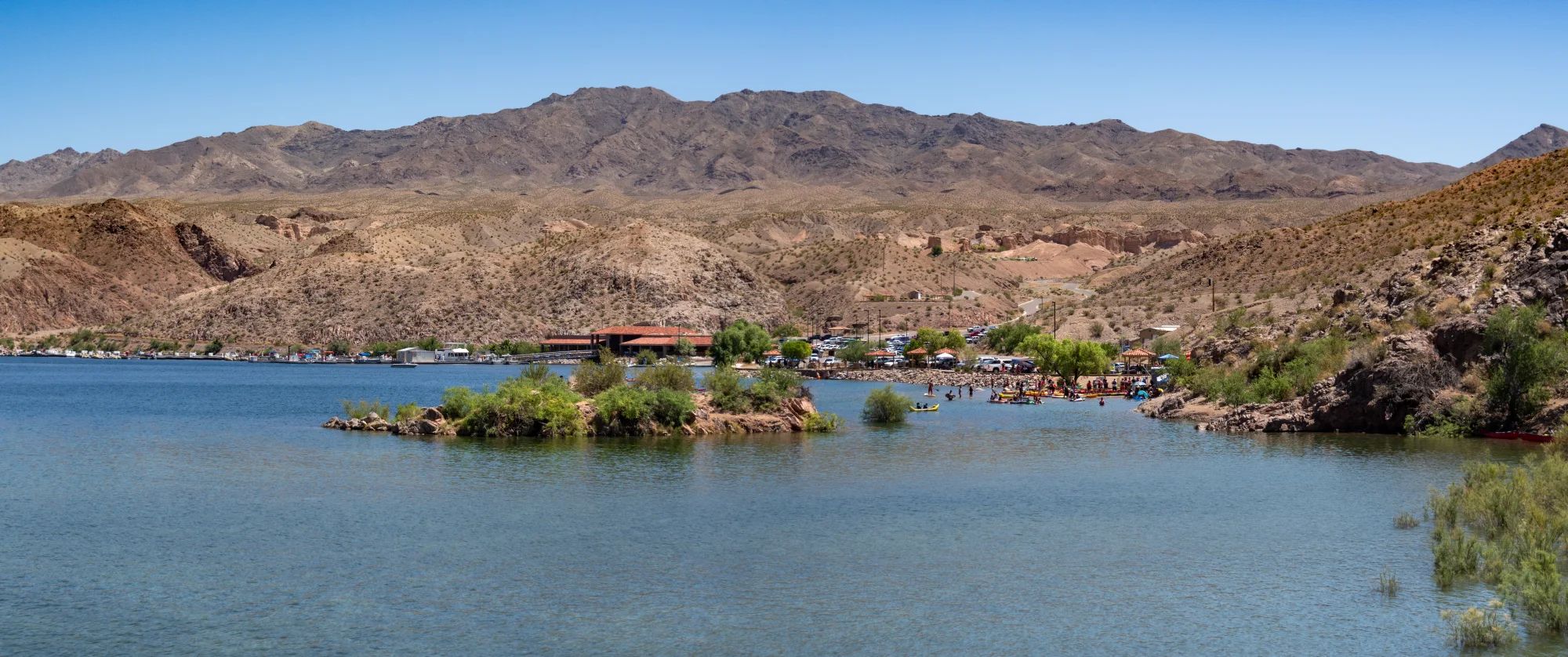
The paddle is often marketed to people staying in Las Vegas, but it does not begin there. Willow Beach is in Arizona, inside Lake Mead National Recreation Area, on the Colorado River below Hoover Dam. That geographic sentence prevents several planning mistakes. It means the park entrance, launch conditions and river rules matter. It means a Las Vegas hotel should never be assumed to be the meeting point. It means the return drive, heat exposure and time-zone awareness deserve attention rather than being hidden inside the phrase “near Vegas.”
The road descends toward a narrow blue reach held between dark, broken walls. At the developed area are a marina, paddlecraft launch, parking and visitor facilities. The National Park Service lists accessible restrooms and a fishing pier at Willow Beach. Those facts describe the shore facility; they do not establish a step-free route into a kayak. Reaching a seat low on the water, stabilizing a boat, rotating the torso, gripping a paddle and recovering after a capsize are separate physical tasks.
Before unloading, identify where the boat will enter, where it must return and how it will be carried. A concrete launch shared with trailers can be slippery and busy. Keep the ramp clear while fitting equipment. Put on the personal flotation device before the boat moves into traffic. Secure water and essentials so they remain with the paddler if the kayak overturns. A phone loose in a cup holder is not an emergency plan, and a signal shown in a parking lot is not evidence of continuous canyon coverage.
Lake Mead National Recreation Area charges entrance and lake-use fees and operates cashless fee collection. Anyone arriving independently should verify the current official fee page, pass coverage, payment guidance and any vessel requirements immediately before travel rather than relying on an amount remembered from an older booking.
.jpg)
03 · Black Canyon river field guide
A familiar launch with a longer human history
Willow Beach can look like a modern recreation outpost attached to a dam-made landscape. That frame begins far too late. The National Park Service finds archaeological evidence for people living, travelling and using the Lake Mead region for at least eight to ten millennia. The river corridor was not empty space waiting for surveyors, miners, dam builders or tourists to give it meaning.
That history cannot be compressed into a decorative acknowledgment. Tribal nations are the Colorado River basin's first peoples and remain governments with rights, needs, knowledge and authority. Yet the 1922 Colorado River Compact divided water among states without tribal representatives at the table. Legal scholarship on present basin governance treats that exclusion as a continuing structural problem, not a closed historical footnote. A kayak does not resolve basin law, but it moves through water whose allocation has always been political.
Later river use added other layers. Willow Beach served fishing and river travel before the contemporary marina landscape, and its role changed again after Hoover Dam impounded Lake Mead and Davis Dam created Lake Mohave downstream. The water at the ramp is often described simply as the Colorado River. Hydrologically and operationally, this reach is also the upper end of Lake Mohave: a reservoir corridor whose level and movement respond to dams above and below.
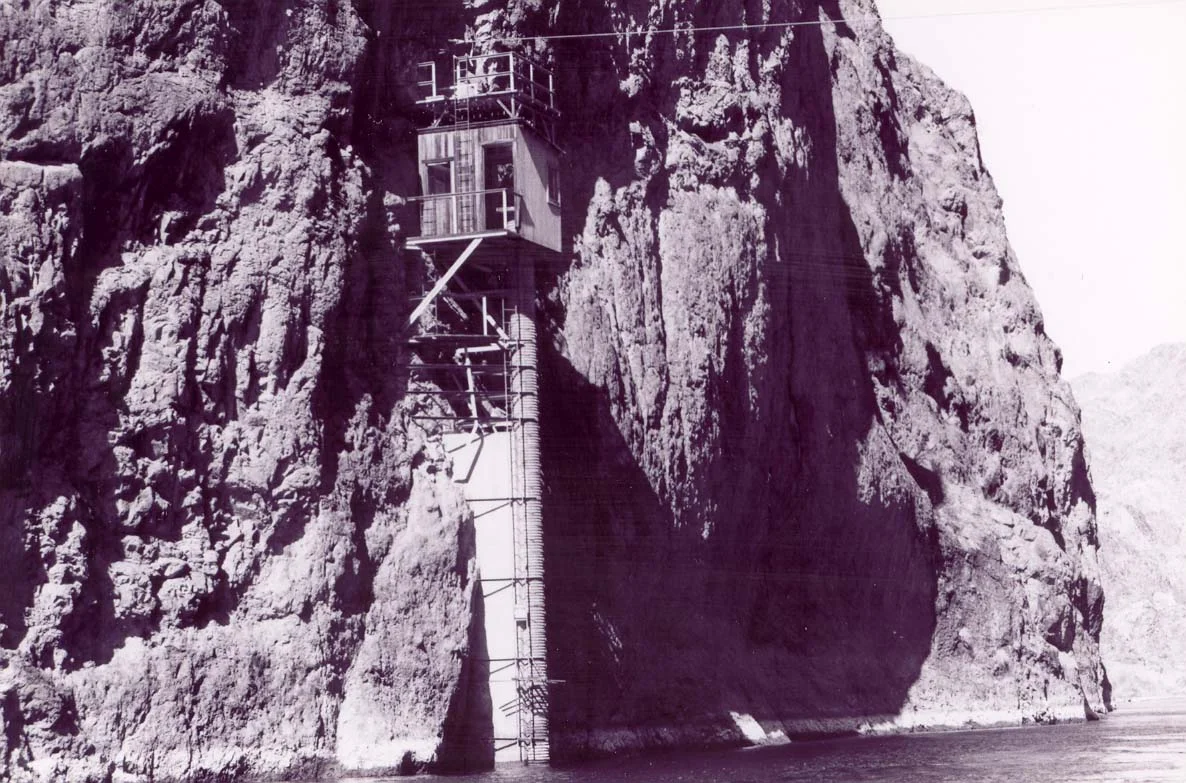
The surviving historic gaging station makes that transition visible. A gage is an instrument of attention: level and flow become records, records become operational knowledge, and a river long understood through lived observation is translated into a managed data system. The structure is not a romantic ruin. It is evidence that modern institutions learned to measure this corridor in order to control, allocate and predict it.

04 · Black Canyon river field guide
Read the walls as a broken volcanic record
From water level, Black Canyon can appear to be one enormous wall repeated for miles. It is more complicated. The wider Lake Mead landscape preserves evidence of ancient seas, volcanic activity, faulting, uplift and erosion. In the canyon, dark volcanic rocks, breccias, fractures and lighter deposits interrupt one another. Erosion exposes that structure; shadows exaggerate it; the low kayak makes every face seem steeper.
“Volcanic” does not mean a single eruption poured two tidy walls and the Colorado later cut a slot between them. Different materials formed at different times and were broken or displaced along faults. Water exploits weakness. Talus gathers below cliffs. Side canyons deliver debris. The present river reveals a section that geologists continue to interpret rather than a diagram already completed in stone.
The NPS geological chronology places regional volcanism around 20 million years ago and the beginning of major crustal extension around 17 million years ago, with intense activity around 15 million years ago. As the crust stretched, blocks moved along faults and volcanic material accumulated in changing landscapes. These are regional stages, not dates assigned to every cliff passed by the kayak. They explain why fractures, displaced rock and contrasting deposits belong together: the canyon exposes a landscape that was being built and pulled apart long before the modern river was regulated.
The walls also leak. Black Canyon's seeps and springs create small wet margins in a very arid system. Ferns and other moisture-dependent life can occupy a few shaded metres where the surrounding slope is dry. To a paddler, a green seam may look abundant. Ecologically it can be a tiny refuge vulnerable to landing, trampling, contamination and invasive species.
A United States Geological Survey investigation inventoried more than one hundred hydrologic sites south of Hoover Dam, including springs, seeps, pools, river and reservoir sites, and wells. Its study of spring water found mixed sources: some water is connected to Lake Mead, while some moves through local or regional groundwater. Faults help control pathways, and some spring mineral deposits formed after the dam. Not every spring is an untouched remnant from before regulation, and not every wet patch is simply reservoir leakage. Dam, geology and groundwater interact.

05 · Black Canyon river field guide
The cold river is part of Hoover Dam
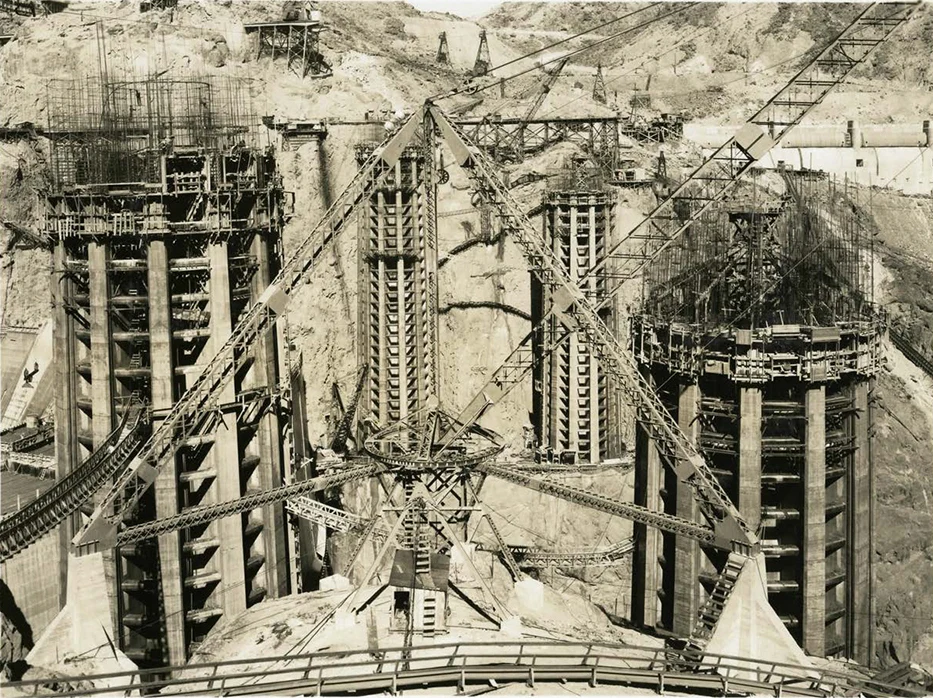
Hoover Dam is not visible from Emerald Cave, but it determines the water beneath the kayak. Before construction, the Colorado's seasonal floods, sediment and temperature moved through Black Canyon in a very different regime. The Boulder Canyon Project put an immense concrete control structure upstream, stored water as Lake Mead, generated power and reorganized life across the lower river.
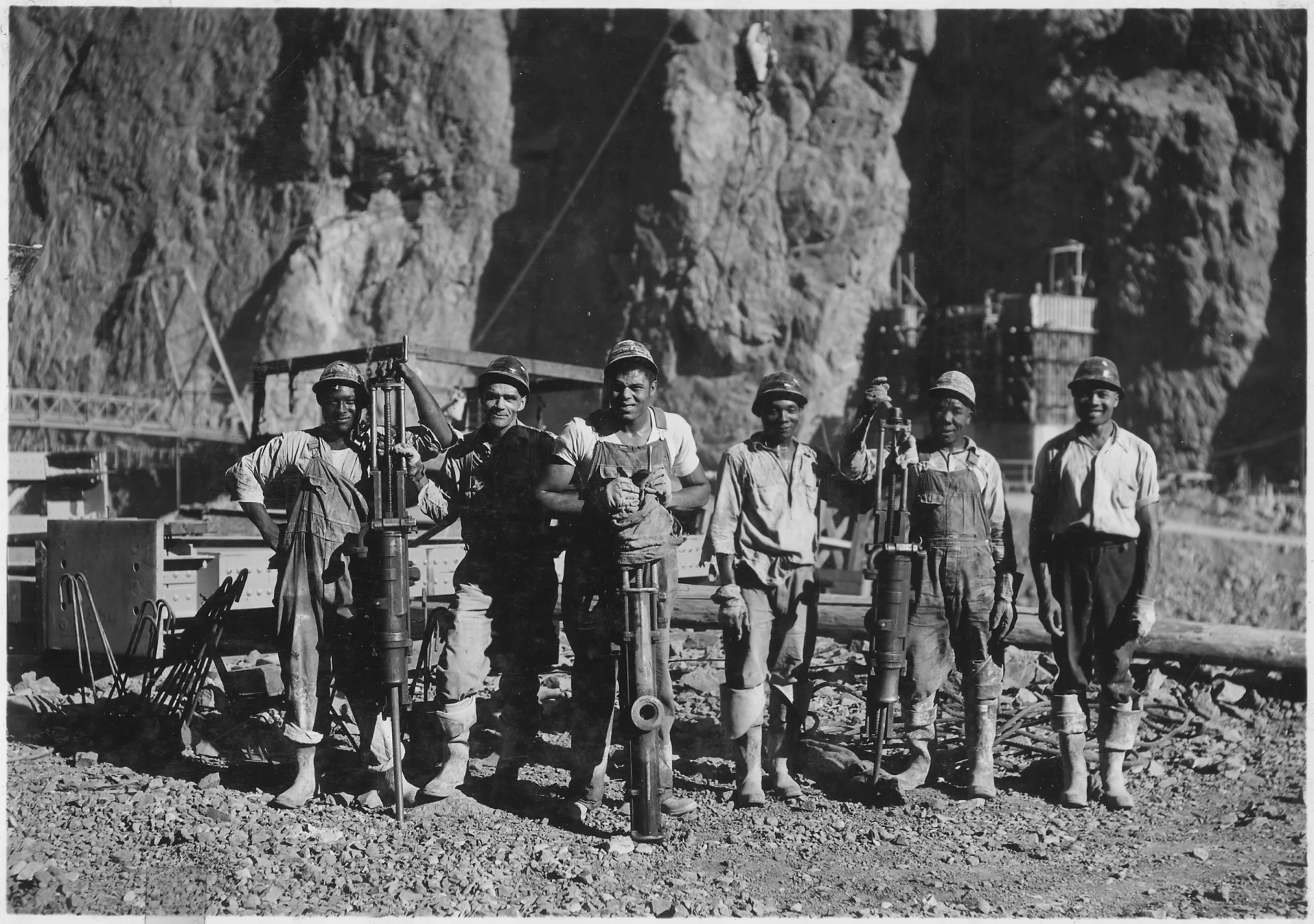
The engineering sequence began by moving the river out of the way. Workers excavated four diversion tunnels through the canyon walls. In 1932 the flow was directed through them so the riverbed could be prepared for the dam. Lake Mead began to impound in 1935; the first generator entered service in 1936. Those milestones describe the successful machine. They should not conceal the heat, dust, carbon monoxide, falling rock and coercive economic conditions under which people built it.
Tunnel work could take place in extreme temperatures. Boulder City was created as a controlled worker settlement. Six Companies held the principal construction contract. Federal histories also record racial discrimination: Black workers were substantially excluded at first and remained segregated within an unequal labor system when hiring expanded. The famous dam was not produced by an abstract national will. It was produced by named institutions and a workforce divided by race, occupation, risk and power.
The Bureau of Reclamation's official construction-fatality count is 96. Even the agency's own account explains why a number needs a boundary: it counts deaths classified as construction-related under official rules and does not capture every illness, later consequence or disputed case people associate with the project. Repeating a larger legend without evidence is careless; treating 96 as the complete human cost is also careless. Good history states what the figure measures.
For the upstream system in full, continue to Hoover Dam beyond the Viewpoint. That companion story follows arch-gravity load, concrete cooling, labour, hydropower, river governance, changing Lake Mead and the approved desert roads around Callville Wash before returning to the cold regulated water below the dam.


06 · Black Canyon river field guide
A regulated river can still surprise a paddler
Water released from depth behind Hoover Dam enters the canyon much colder than the desert air. National Park Service guidance describes temperatures in the low 50s Fahrenheit through this river reach even as summer air can exceed 100°F. That contrast produces a dangerous misconception: cold water may feel refreshing on a hand, yet sudden immersion can trigger gasping, loss of breathing control and rapid impairment. Cold is not a treatment for heat illness when the treatment requires falling out of a kayak.
The reach can look flat because it is held within Lake Mohave, but it is not static. Hoover releases vary for power and water operations. Lake Mohave levels respond to the larger system. Flow can strengthen, ease or change the effort required to return. Wind can run along the canyon and create chop. Reflected wakes can arrive after a motorboat has passed. A calm launch is a snapshot, not a promise for three hours later.
This is why the Superintendent's Compendium requires anyone underway in a hand-propelled craft between Hoover Dam and river mile 43 to wear a United States Coast Guard-approved personal flotation device. Willow Beach at river mile 52½ and the Emerald Cave route sit inside that reach. The rule is stricter than merely carrying a jacket. It reflects cold water, changing current and traffic congestion.
Current Bureau of Reclamation operation tables and the annual operating plan give professionals the basin context, but they are not simple consumer forecasts. A paddler should use operator guidance, National Park Service alerts and same-day conditions rather than trying to convert an hourly release table into confidence. The correct inference is modest: managed releases can change the water, so build a margin for the return.

07 · Black Canyon river field guide
The upstream leg teaches the route
From Willow Beach, Emerald Cave lies upstream. That means the first two miles are more than approach scenery: they are the chance to learn how the boat, body and river are behaving while the launch remains behind. A guide may use the early reach to correct paddle grip, establish spacing and identify a line away from docks and motor traffic. An independent paddler must perform the same assessment without transferring responsibility to a group.
Use a relaxed torso rotation rather than pulling only with the arms. Keep the blade near the boat for a forward stroke and watch whether the bow wanders under unequal effort. In a tandem, decide who sets cadence and who steers; two people paddling hard at different rhythms create work rather than speed. Exact technique should come from competent instruction for the boat in use, not from a generic article, but the planning lesson is universal: the return will expose every inefficiency learned on the way out.
Look back periodically. Canyon walls can make bends resemble one another. Willow Beach is a clear destination, but orientation should not depend on recognizing one cliff from the opposite direction. Note river position, wind and obvious developed features. Carry an offline map appropriate to the route. Tell someone ashore the plan and return time when travelling independently.
The podcast describes the route as manageable for newcomers and emphasizes guide support. That can be true for many participants under suitable conditions; it is not a universal rating. Four miles requires repeated upper-body movement and sustained sitting. Wind can turn an easy outward leg into a demanding return. A capsize demands a re-entry or a controlled assisted rescue. A beginner label should never substitute for the question: what happens if this person is in the water beside the kayak?
There are no lifeguards. A guide reduces uncertainty through local routing, equipment, pacing, communication and a rescue plan, but cannot abolish weather or individual limits. Before departure, disclose injuries, mobility constraints, fear of immersion and swimming ability honestly. Ask what assistance is actually available rather than assuming “guided” means every participant can be lifted, towed or medically supported in every situation.
08 · Black Canyon river field guide
Motor-free days change the sound, not the physics
The NPS motor rules concern the narrow reach between Willow Beach harbour and Hoover Dam. Motors and personal watercraft are prohibited on Sundays and Mondays year round, with approved administrative exceptions in the park compendium. On Tuesday through Saturday, the cooler-season rule limits engines to 65 horsepower and excludes personal watercraft; from the Saturday of Memorial Day weekend through Labor Day, those days have no horsepower limit and allow personal watercraft. Check the current boundary and seasonal rule for the travel date rather than treating the whole water trail as one motor-free zone.
For a kayaker, Sunday or Monday usually means fewer wakes and less engine noise, though administrative traffic remains possible. It does not remove wind, cold water, current, heat, lightning, crowding or the work of paddling. A quiet day is not automatically a safe day. A motor-permitted day can still suit the journey, with more attention to visibility, predictable movement and wake management.
Stay where larger vessels can see the kayak without sitting unnecessarily in their preferred line. Do not assume a powered boat can stop or turn quickly in a confined reach. Meet a wake with control rather than broadside panic, following instruction appropriate to the craft. At bends, sound and view can be blocked by rock. At the cave, a cluster of boats can be more difficult than open-river traffic because paddles, bows and cameras compete inside a small space.
The best date therefore depends on the experience sought. A motor-free day favors quiet and human-powered travel. A different day may fit a live guided departure or cooler seasonal conditions better. Choose with the entire river in mind rather than optimizing only for the cave's light.
09 · Black Canyon river field guide
Emerald is an optical event, not a permanent color
The low, shallow rock opening frames shaded water beside the sunlit river. Its striking colour belongs to that relationship among incoming light, water, surrounding rock, shade and the viewer’s position. The green is local: it does not turn the whole canyon into an emerald channel. The National Park Service describes the effect when afternoon light is right. The illustration below explains those viewing conditions; it is not a measured model of light paths through this particular alcove.
Time of day matters, which is why the National Park Service specifically mentions afternoon light. So do season, cloud, water level and the position of each viewer. A camera may intensify or suppress the color depending on exposure, white balance and later editing. Promotional photographs are often made at the best instant. They cannot guarantee the eye will receive the same scene on a booked date.
Once several kayaks enter, geometry becomes social. One boat blocks light; another occupies the viewing angle; paddles disturb the reflection; a queue encourages people to rush or hold position too long. The ethical solution is not to fight for ownership of the glow. Approach slowly, allow boats to leave, keep the mouth clear, take a few frames without forcing a formation, and yield the space. No photograph justifies collision, landing on a sensitive margin or separating from a group.
The alcove's smallness is part of the revelation. A minor fold in a vast canyon became the product's headline because a camera can translate a fleeting effect into a symbol. Recognizing that mechanism makes the story richer. The cave is not fake, and the marketing need not be dismissed; the honest claim is simply conditional: under suitable light, this small space can become remarkably green.

10 · Black Canyon river field guide
Wildlife is a possibility, never an inclusion
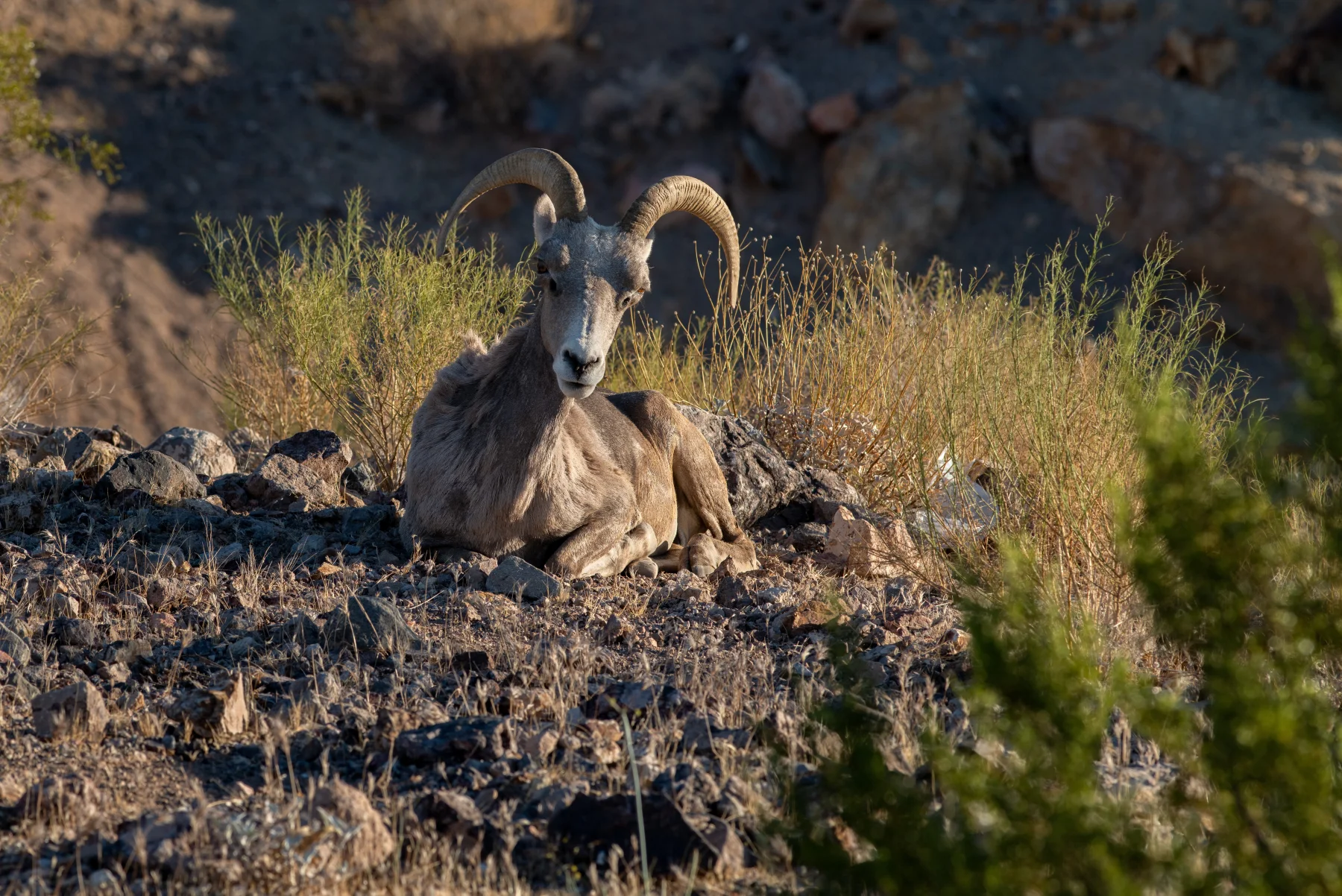
Desert bighorn sheep are the animal most often attached to this route. Their bodies are adapted to steep, dry terrain, and Lake Mead National Recreation Area supports important populations. They can move across slopes that look inaccessible from a kayak and may descend toward water. They are not scheduled scenery. A group may see sheep, a distant shape, birds overhead—or none of them.
That uncertainty is ecologically healthy. Wildlife does not owe proximity to an itinerary. Keep voices low near an animal, maintain distance, do not block its path to water and never feed it. Feeding changes behavior, harms nutrition and can bring animals into dangerous contact with people. A telephoto view is more responsible than pressing a kayak against shore for a closer phone image.
Bighorn history also complicates the idea of an untouched refuge. Populations have been affected by disease associated with domestic livestock and by habitat fragmentation. Conservation and translocation have helped re-establish animals in parts of the Southwest. A sighting therefore belongs to a story of adaptation and management, not merely luck.
The NPS bighorn account offers a concrete example of conservation beyond the riverbank: wildlife overpasses on U.S. Highway 93 reconnect habitat divided by the road. A sheep able to reach water still needs to move between feeding areas and other animals. The canyon view hides much of that larger geography. Respecting distance during a sighting helps locally; maintaining connected habitat works at the scale of the animal’s life.
Birds, fish, reptiles and insects occupy different parts of the corridor. Springs concentrate species that cannot use the dry wall. The river has also been transformed by introduced species and dam-altered temperature and sediment. Avoid turning every animal into a checklist. Watch behavior and habitat instead: which slope holds shade, where a spring changes the vegetation, how a bird uses rising air, and where human traffic narrows an animal's options.
.jpg)
11 · Black Canyon river field guide
Heat above and cold below require two plans
Black Canyon can combine severe heat, intense reflected sun and very cold water in the same hour. Preparing for one extreme does not prepare for the other. Shade moves as the sun crosses the walls. A morning launch can feel protected until the return. Rock radiates heat; a light breeze can disappear; exposed skin burns even when cool air sits over the river.
The National Park Service advises desert visitors to carry generous water—its general benchmark is a gallon per person per day—while adjusting for trip length, conditions and medical needs. For this paddle, water must be accessible and distributed securely, not buried where a capsize loses the entire supply. Bring sun-protective clothing, sunscreen, eye protection and secure footwear that can get wet. A snack supports energy; it does not replace hydration or heat judgment.
Headache, nausea, dizziness, unusual weakness and heavy sweating can signal heat exhaustion. Stop paddling, reach a safe shaded shore, cool the person and seek medical help; do not leave them alone. Confusion, slurred speech, seizures or loss of consciousness during heat exposure are an emergency: call 911 through the available communication plan and begin cooling immediately. Wet the skin or clothing and use cold wet cloths while help is sought. The CDC guidance makes clear that someone with heat stroke may still sweat. Do not send an affected person into the cold river: uncontrolled immersion adds drowning and cold-shock hazards.
Cold-water preparation means keeping the PFD on, carrying a dry layer in protected storage and having a realistic rescue plan. Hypothermia can occur even when air temperature is warm. Wet clothing, wind and inability to re-enter a kayak accelerate heat loss. A guided party should know how the guide manages a swimmer; an independent paddler should practice re-entry in controlled conditions before relying on it in the canyon.
Thunderstorms add a different risk. Monsoon storms can build quickly, bringing strong wind, lightning and runoff. The National Park Service advises water users to seek a sheltered cove or shore when conditions deteriorate, note their position and move to higher ground when flash flooding threatens. A narrow side canyon or wash is not automatically shelter; it may be a drainage path. Check the current forecast and park alerts before driving down, then keep watching the sky.
12 · Black Canyon river field guide
Access is a chain, not a label
“Accessible” becomes useful only when divided into the actual stages of the day. First is the road journey and park entry. Second is movement from parking to check-in and toilets. Third is carrying or receiving the kayak at the ramp. Fourth is transferring into a low, unstable seat. Fifth is three hours of paddling, exposure and potential immersion. Sixth is landing, standing and returning uphill after fatigue.
Willow Beach has developed and accessible amenities, but a guided operator's exact assistance, kayak type and transfer support must be confirmed for the departure. Ask for the seat height and width, cockpit or sit-on-top configuration, back support, tandem assignment, maximum safe fit, method of boarding, distance carried, toilet timing and ability to accommodate an assistive device. Do not reduce a person to a generic weight or medical rule copied from an old podcast.
For someone with shoulder, wrist, back, balance or temperature-regulation concerns, the critical question may not be total distance. It may be repetitive rotation, gripping, static sitting, sun exposure or getting out. For someone who is neurodivergent or anxious around water, the noise of a busy ramp, close cave queue and possibility of immersion may matter. For a deaf or hard-of-hearing paddler, agree on visible signals before spacing increases. For a blind or low-vision traveller, precise verbal orientation and consistent boat communication can be more important than a visual highlight.
A tandem can share propulsion but is not automatically accessible. Partners need compatible cadence and a plan for steering. One person may still need to stabilize during transfer or assist after a capsize. A guide can adapt pacing and instruction only when needs are disclosed early and the equipment allows it. Obtain written confirmation for essential accommodations before the cancellation window closes.
Independent rental can provide flexibility, yet it transfers navigation, rescue, loading and weather decisions to the traveller. Owning those decisions is not proof of adventurous character. Choosing a guide, shortening the route or remaining at Willow Beach can be the more independent decision when it protects the rest of the trip.
13 · Black Canyon river field guide
The return is where planning becomes visible
At Emerald Cave, a paddler is only halfway. The route returns downstream toward Willow Beach, but “downstream” does not guarantee effortless travel. Wind can oppose the current. Fatigue can degrade steering. Motor traffic may increase. The same exposed reach can feel longer when the destination is known but not yet visible.
Before leaving the alcove, assess the group rather than the clock alone. Is anyone developing a hot spot on a hand, one-sided shoulder pain, nausea, confusion or unusual silence? Is water still secure? Has the wind changed direction? Does the remaining daylight and weather margin support a slow return? Correcting a problem early is more effective than converting it into a rescue later.
Keep enough distance for paddles to work while maintaining communication. A group strung across the river is hard to manage and may obstruct others. A group packed bow-to-stern collides when the leader stops. The guide's spacing instruction should reflect current and traffic. Independent companions should agree on a regrouping rule before someone races ahead.
Near Willow Beach, developed infrastructure returns before the physical effort is over. Watch for marina and launch traffic. Approach the assigned take-out, keep fingers away from pinch points, and do not stand until the boat is stable. Heat stress can become apparent after exertion stops. Drink, cool down and account for everyone before loading equipment.
The trip also ends with biosecurity. Quagga mussels are established in lakes Mead and Mohave. Adults can attach to hard surfaces; microscopic larvae can travel in retained water and wet gear. Clean, drain and dry the kayak, PFD, ropes, footwear and clothing according to current park guidance before moving equipment to another water body. A rental or guided operator should have a procedure, but each traveller still controls personal gear.
14 · Black Canyon river field guide
Guided or independent: choose where responsibility sits
A guided trip is most useful when local knowledge changes decisions. Equipment and fit are handled at one meeting point. Instruction can correct technique before the canyon magnifies it. A guide can pace the group, interpret geology and history, monitor weather and traffic, and coordinate a rescue. Those are real advantages for a first paddle in this reach.
They are not guarantees of a particular animal, green glow, departure time or named guide. Before paying for any guided departure, confirm the assigned kayak and PFD, instruction, route, meeting point, park-entry responsibility, transport, cancellation terms, rescue procedure and any assistance needed. Those are fulfilment details, not permanent features of Black Canyon.
An independent paddle may suit someone who already understands the craft, can self-rescue, knows how wind and cold water change the risk, carries navigation and communication backups, and accepts full responsibility for timing. It allows the river rather than a group schedule to set the pace. It also requires transport, legal entry, launch logistics, serviceable equipment and a conservative turnaround rule.
Choose a motor-free Sunday or Monday if quiet is central and the rest of the conditions fit. Choose a guided departure on another day if instruction and coordinated support matter more. Choose a different season or activity if current heat, wind or mobility makes the four-mile paddle a poor trade. A booking should be the outcome of the decision, not the force that prevents changing it.

15 · Black Canyon river field guide
A current checklist for the real river
The day before departure, verify the National Park Service conditions, the local forecast, the Black Canyon Water Trail rules and the exact operator message. Do not treat a confirmation issued weeks earlier as a weather clearance.
Before leaving lodging, confirm:
- the Willow Beach, Arizona meeting point and arrival buffer;
- transport in both directions, including park entry and no assumed hotel pickup;
- launch status, high wind, lightning, heat alerts and any closures;
- whether current motor restrictions match the date and reach;
- the assigned boat, PFD fit, group format and realistic physical demands;
- water, sun protection, secure footwear, dry layer and protected essentials;
- the operator's cancellation, weather and rescue procedure in current writing;
- an offline route and emergency contact plan for independent travel.
At the ramp, make a fresh go/no-go decision. Conditions observed in person outrank the desire to preserve a booking. A guide who delays or cancels for safety has not failed to deliver the river; the river has supplied the relevant information.
On the water, wear the PFD, keep a predictable line, leave springs and wildlife margins undisturbed, and turn around before fatigue or weather consumes the reserve. At the cave, share the small space. At take-out, clean, drain and dry. These actions sound less dramatic than a green photograph because they are the invisible structure that lets the photograph remain optional.
16 · Black Canyon river field guide
Listen: the Willow Beach paddle
The original Emerald Cave Guided Kayak Tour podcast episode runs 20 minutes 50 seconds and follows the Willow Beach launch, the upstream paddle, guide support, canyon scenery, heat, wildlife possibility and the cave's limited scale. It is useful as a human preview of rhythm and expectation.
Listen for the Willow Beach launch, the upstream paddle, guide support, canyon scale and the cave's limited size. For an actual departure, verify staff, policies, waivers and timing with the provider, and remember that the cold Colorado requires immersion planning even on a hot day.
17 · Black Canyon river field guide
The river makes the cave honest
Emerald Cave can be beautiful. It is also small, conditional and crowded enough that beauty cannot be ordered like an admission ticket. That truth frees the journey from disappointment. The canyon walls need no color effect to expose faulted volcanic history. The springs need no dramatic waterfall to sustain rare wet habitat. The low-50s water needs no whitewater to command respect. Hoover Dam need not appear in the frame to structure every stroke.
The best version of this trip therefore measures more than arrival. Did the paddler understand why the water is cold? Did the group leave enough energy for the return? Did a bighorn remain undisturbed whether seen or not? Did the small cave stay passable for the next boat? Did equipment leave the river without carrying invasive life elsewhere? Did the story of the landscape begin before the dam and continue beyond recreation?
If the sun reaches the alcove at the right angle, green light becomes a precise reward: not proof that the marketing was true, but a visible relationship among desert sun, clear water, rock and shade. If it does not, the four-mile route still supplies its own answer. Emerald Cave is the punctuation. Black Canyon is the sentence.