Field feature · Port Arthur
Destination desk · Tasman Peninsula
A harbour and peninsula where living Country, colonial invasion, transportation, labour, reform, tourism and memory must remain distinct and connected.
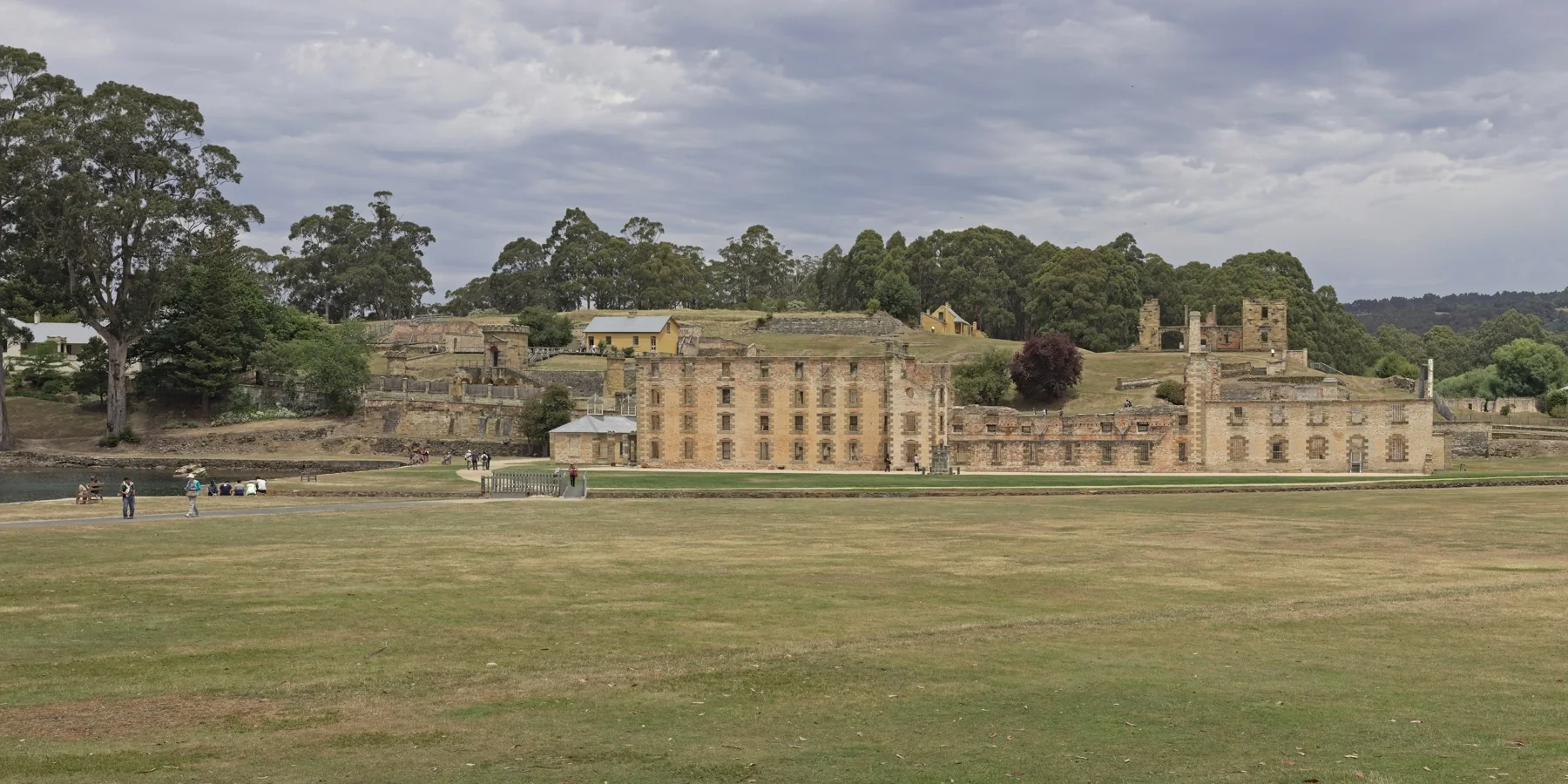
Thennicke · CC BY-SA 4.0 · derivative prepared by ExcursionPass
A landscape before it was a prison
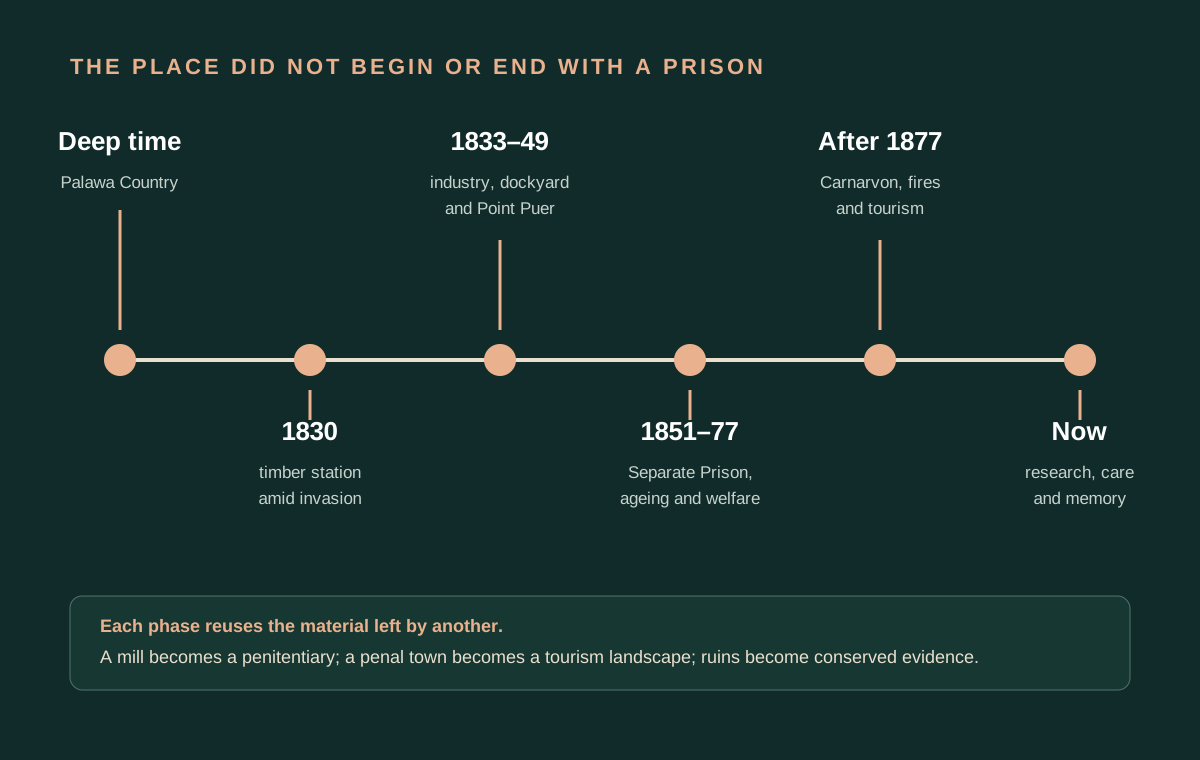
Palawa relationships with the Tasman Peninsula precede British occupation by thousands of years and continue. Convict transportation began here inside an invading settler colony, not on empty land.
The usual Hobart route passes Richmond and Eaglehawk Neck before reaching Port Arthur. Each stop supplies different evidence: colonial labour, a security barrier, deep-time geology and a harbour-scale institution.
The desk keeps punishment, reform, burial and the 1996 Memorial Garden on their own historical and ethical terms. It does not convert suffering into spectacle or ancestry into an automatic credential.
Country, harbour and institutions
Follow timber and shipbuilding, Point Puer, the Separate Prison, women and families, later welfare institutions, Carnarvon tourism, archaeology, conservation and present-day visitor decisions.
Field feature · Port Arthur
What this desk follows
Keep living Palawa connections, dispossession and frontier violence visible before and beside the convict story.
Read harbour, timber, dockyard, mill, penitentiary, Dog Line and conduct records as one colonial production and surveillance system.
Connect Point Puer, the Separate Prison, religion, classification, women, children, ageing, illness and welfare without flattening individual lives.
Distinguish ruins, archaeology, conservation, tourism, burial and the Memorial Garden while refusing spectacle.
Check the authority closest to the fact
The feature contains the explanation. The historic-site authority remains closest to current access and conservation; Parks and Wildlife to the neck and coast; Aboriginal Heritage Tasmania to cultural-site guidance.
Read the complete field guide