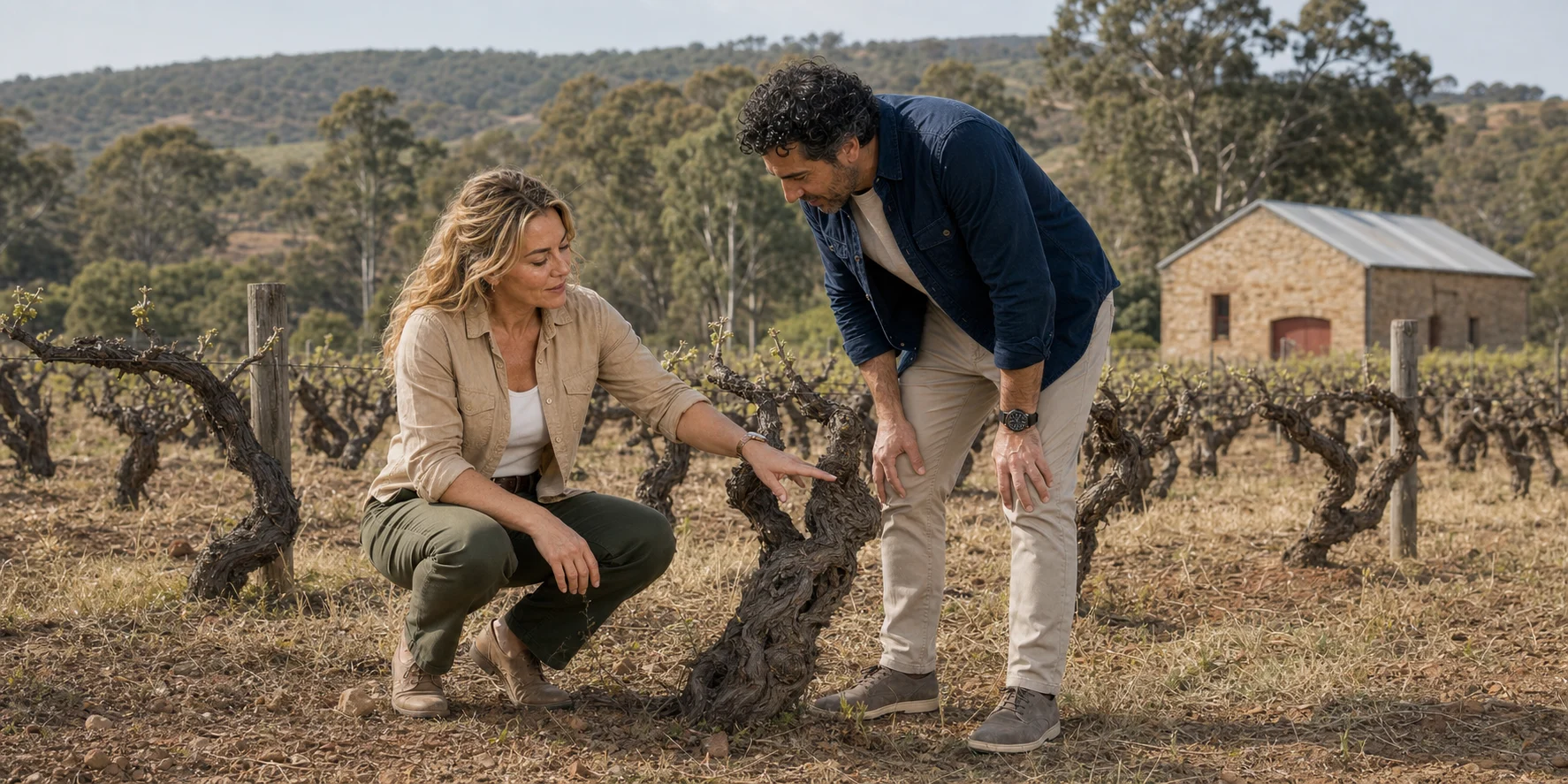
A private tasting day can make the Barossa feel effortless. Understanding it asks more: to see Country before “wine country,” distinguish valley floor from high country, read an old vine without worshipping age, and recognise that every glass contains farming, migration, labour, fashion and risk.
01 · Barossa landscape
The first decision happens before the first glass
A Barossa wine day often begins in Adelaide with a question that sounds merely logistical: who will drive? It is actually the first editorial decision of the journey. Drive yourself and the map remains yours, but one person must stay sober, appointments have to be assembled, rural turns monitored and the day paced against the return road. Join a large route and those burdens disappear, although the stops and clock usually become less negotiable. Hire a small private vehicle and the itinerary can become a conversation—but only within the limits of winery availability, licensing, opening times and what the group has actually booked.
The useful question is what a guided cellar-door day can teach. Wine tourism earns its value when transport creates room for attention: to changing topography, to why adjacent vineyards can make different wines, to the person pouring, and to the fact that tasting less can reveal more. A small group may make conversation easier; a private booking can give companions more control over the pace. Those are different arrangements, and either needs a route built around confirmed appointments.
Flexibility has a geography. A host can change the order of available wines more easily than a driver can add a distant winery between booked appointments. Ask whether the day is arranged around your interests or follows a shared schedule, how long each visit allows, and whether the driver also interprets the landscape. The answers determine whether you will understand the valley or simply move efficiently between glasses.
Choose a route that leaves room to understand a few places. A focused comparison of sites, varieties or winemaking choices gives the day a thread, while a proper lunch break and realistic return journey keep attention from turning into endurance.
02 · Barossa landscape
Country did not begin with vines
The phrase “wine country” can make a landscape sound as though its meaning began when rows were planted. It did not. The region now marketed as Barossa lies across Country to which Ngadjuri, Peramangk and Kaurna peoples maintain continuing connections. The Barossa Council’s public heritage guidance and the regional visitor authority acknowledge all three as Traditional Custodians. Those names should not be compressed into a ceremonial preface and then abandoned when the wine story begins.
Water, soils, animals, plants, seasonal movement and routes through the ranges were already held in systems of knowledge and law. Colonisation did not discover empty agricultural potential. It dispossessed people from land and water, brought disease and fractured cultural practice. Public regional sources describe those effects in broad terms; they are not permission to reproduce restricted knowledge or turn Dreaming into tasting-room decoration. The responsible visitor’s first task is therefore modest: understand that the vineyard is a recent layer on a living cultural landscape, use public cultural material with attribution, and seek Indigenous-led interpretation when it is available rather than asking a cellar-door host to stand in for cultural authority.
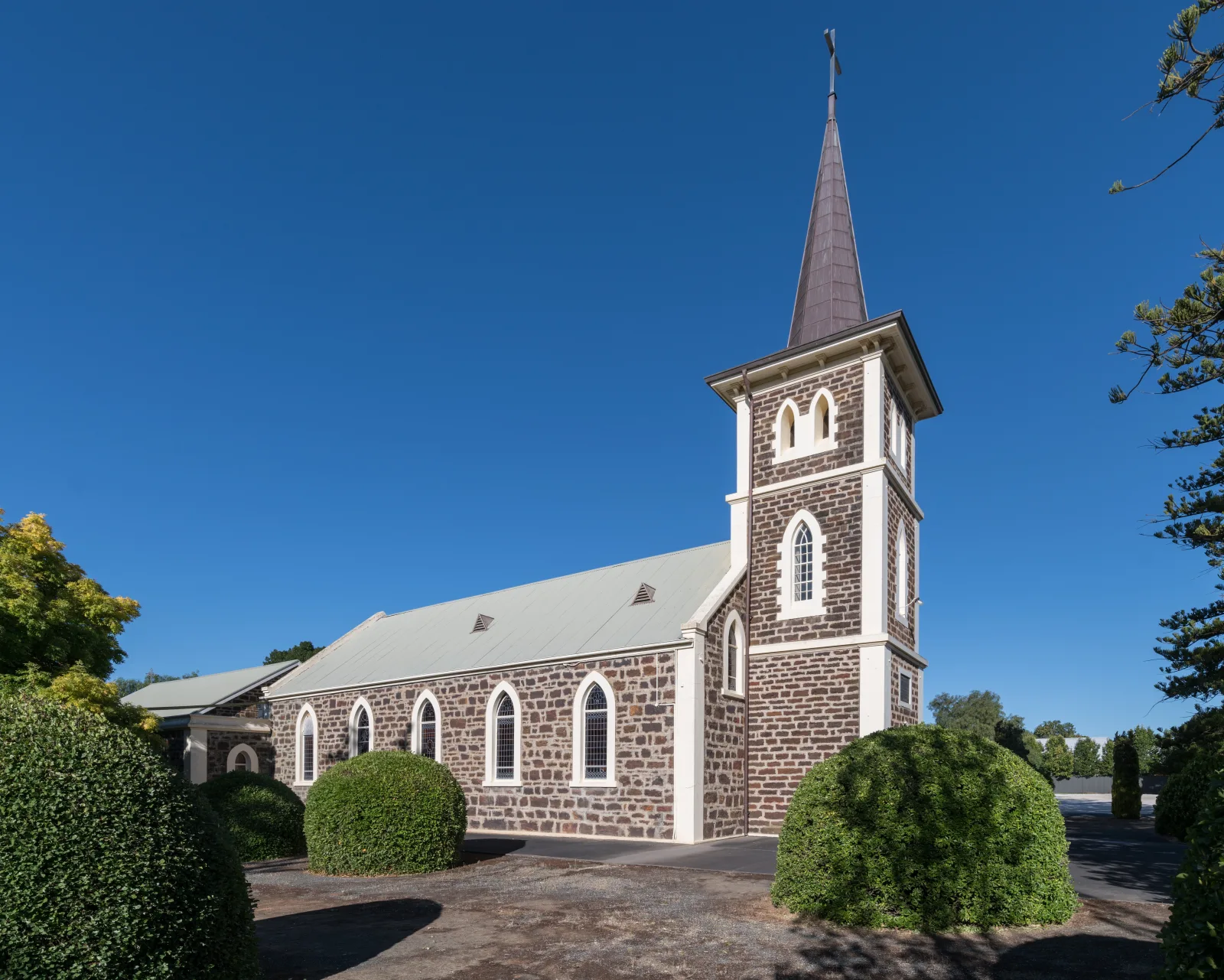
This perspective also changes how “heritage” is read. A stone church may be old in colonial terms. A vineyard planted in the nineteenth century may be extraordinarily old in viticultural terms. Neither is older than First Nations connection to Country. The layers can be studied together without pretending that they are morally or chronologically equivalent.
03 · Barossa landscape
A colonial name, religious refugees and a constructed valley
The Barossa name is itself an act of colonial memory. South Australia’s Surveyor-General William Light named the range after the British victory at Barrosa in Spain, where he had served during the Peninsular War; the spelling shifted to “Barossa.” A European battle name was laid over Country, and then became one of Australia’s strongest geographical brands.
German-speaking Lutheran migrants began arriving in South Australia in 1838 and 1839, many seeking freedom from the Prussian state church under Pastor August Kavel. George Fife Angas helped finance their passage, but the Australian Dictionary of Biography warns against inflating him into a solitary benevolent founder. His capital, land dealings and colonial politics were bound up with the larger project of settlement. Kavel and his followers established communities first near Adelaide and in the hills, then at Bethany and Langmeil in the Barossa from the early 1840s. Later theological disputes divided those communities for generations.

The migrants brought village patterns, farming skills, trades, religious institutions and food practices. Viticulture became one part of a mixed agricultural economy. Wheat, orchards, livestock, baking, smoking, pickling and preserving mattered alongside vines. The Barossa food tradition still carries Silesian-inflected breads, streuselkuchen, smallgoods and preserved fruit, but it is not a sealed nineteenth-century capsule. Contemporary chefs, migrant communities, growers and producers have widened the table. A regional lunch should be read as an evolving economy of orchards, grain, meat, dairy, vegetables, hospitality labour and culinary exchange—not merely as fat and protein inserted to “reset” a wine tasting.
The neat rural scenery also hides coercion and exclusion. Colonial farming depended on dispossession. German heritage was later recast by wartime suspicion: South Australian places with German names were renamed during the First World War, and public expressions of Germanness were pressured. The valley’s identity was never handed down untouched. It was built, challenged, suppressed, revived and marketed.
04 · Barossa landscape
The drive north is an agricultural transect
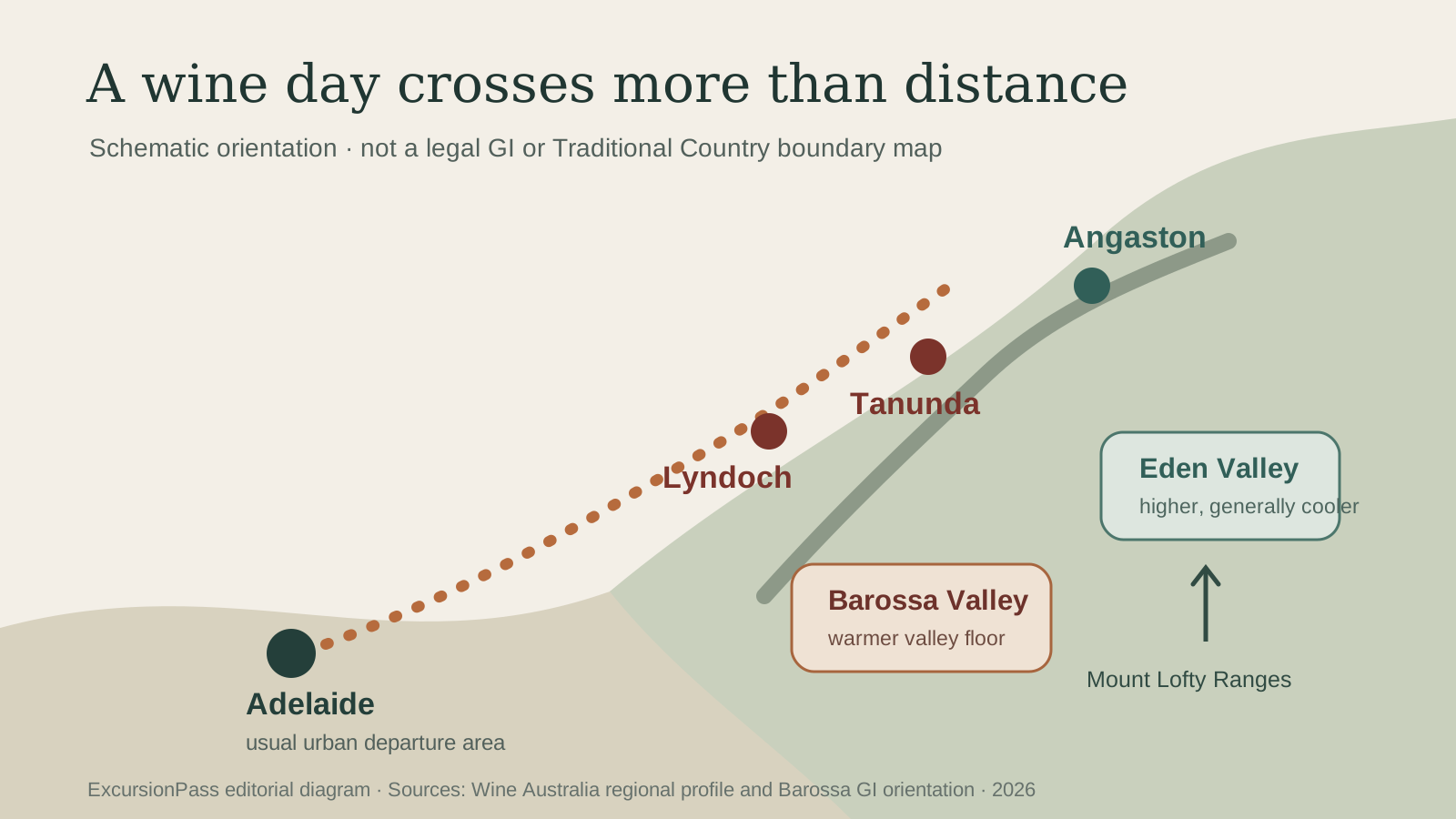
The hour from central Adelaide to the southern Barossa is not dead time between hotel and tasting room. It is the route’s first piece of evidence. Urban streets give way to northern suburbs and the Adelaide Plains, then to the catchments and folds at the edge of the Mount Lofty Ranges. A guide who narrates only wine awards misses the more important transition: a city is connected to a working region by roads, water, labour and daily commuting.
The southern approach around Lyndoch opens the first vineyard views, but the valley does not arrive as a single green bowl. Pasture, grain, vines, gums, towns, dams and shelterbelts alternate. Tanunda makes Lutheran settlement especially legible through churches, cemeteries, village scale and German-derived place memory. Bethany, just southeast, preserves another early settlement layer. Nuriootpa is a practical centre of the regional wine industry and services, less easily reduced to a postcard. Angaston, toward higher ground, connects George Fife Angas’s colonial estate story to later agriculture and food production. To the west, Seppeltsfield grew around a large nineteenth-century wine enterprise and a road landscape now strongly associated with palms, cellars and tourism.
These names help orientation, but they are not a checklist for one day. A four-tasting route cannot examine every town, and crossing the valley repeatedly wastes the attention a private format is meant to protect. Good sequencing groups appointments geographically and uses the drive between them to compare slope, vegetation, vineyard design and settlement. If a lunch reservation sits at Seppeltsfield, for example, a western-Barossa morning is more coherent than bouncing from Angaston to Greenock and back merely to collect prestigious labels.
Roadside observation also has limits. A dam does not reveal its water licence. Bare earth does not prove poor farming; it may reflect season, weed strategy, frost management or recent work. Green cover does not automatically prove regenerative practice. An old stone building may house modern tanks, while a sleek contemporary cellar may process fruit from historic vines. The guide’s job is to turn visible clues into questions, not instant verdicts.
05 · Barossa landscape
There is no single Barossa terroir
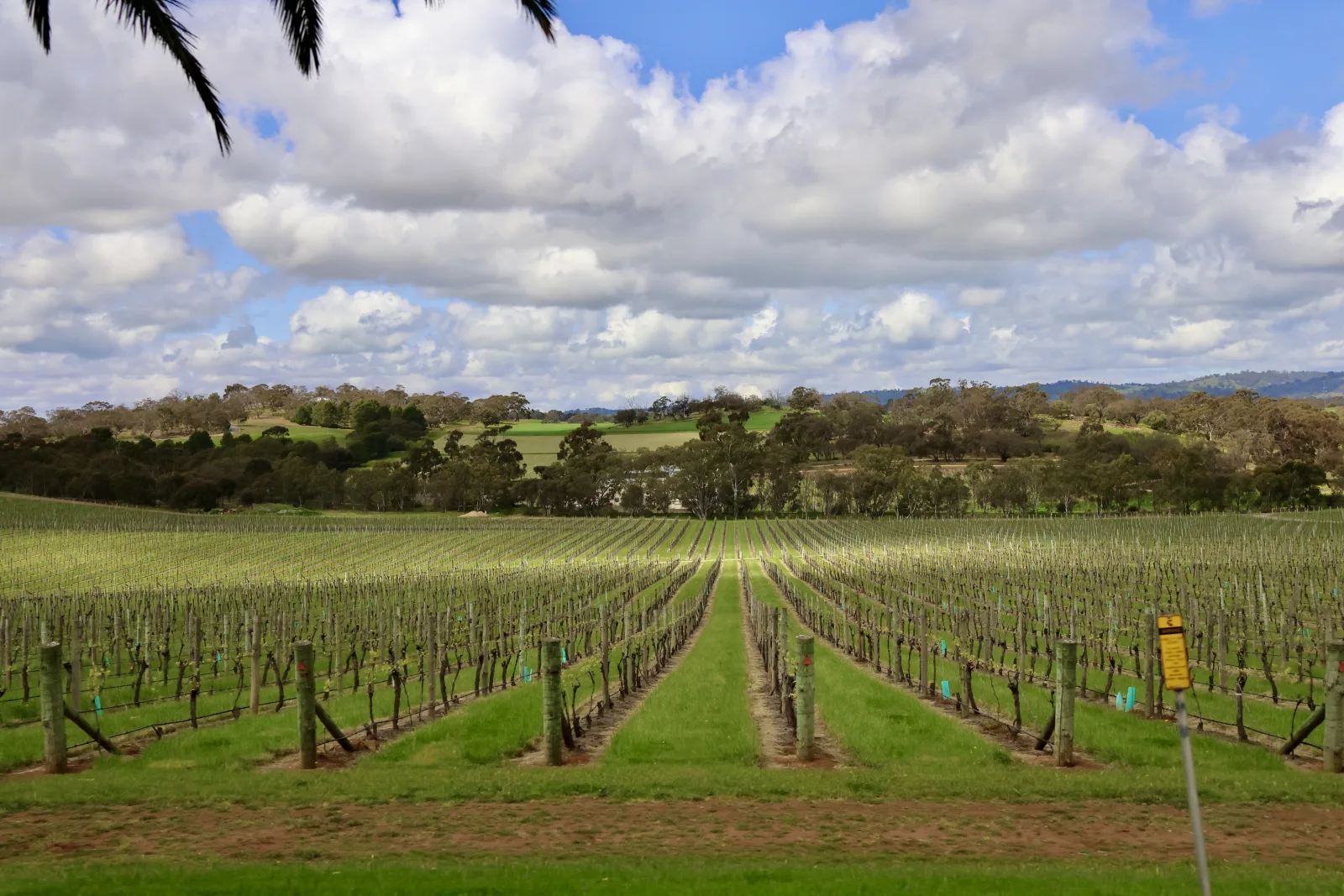
From a lookout above the valley, vineyard geometry seems to promise order. Rectangles line up with roads; farm dams hold hard flashes of light; towns sit among shelterbelts and gums. Yet the view is an argument against the idea that Barossa wine comes from one climate or one soil.
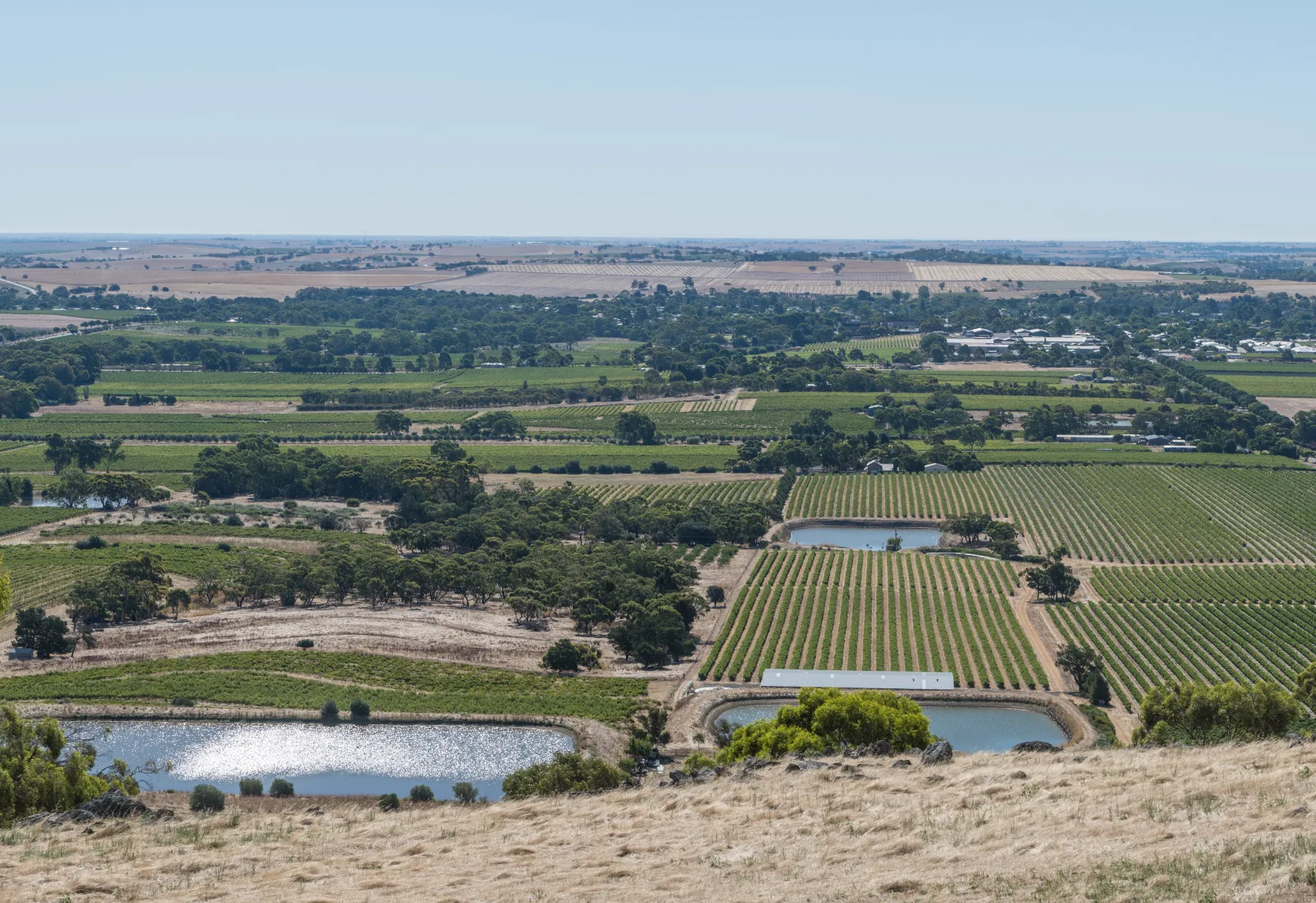

“Barossa” is a wine zone containing two registered regions: Barossa Valley and Eden Valley. The Barossa Valley floor is generally warmer and drier. Higher country toward Eden Valley is generally cooler, with greater rainfall and larger day-night temperature differences in many sites. Wine Australia’s Barossa Valley profile gives an altitude range of roughly 112 to 596 metres across the registered region; that is a regional topographic range, not a claim that vineyards occupy every elevation. Slope and aspect make one-note claims about “hot Barossa” unreliable.
Soils vary too: clay loams, sands and grey, brown and red profiles occur across twisting valleys, slopes and flats, often with acidic subsoils that constrain roots. Aspect changes sun exposure. Elevation changes temperature. Wind, drainage, vine age, rootstock, pruning, canopy management, irrigation, crop load and harvest date all modify what reaches the winery. Variety and winemaking then add another set of choices.
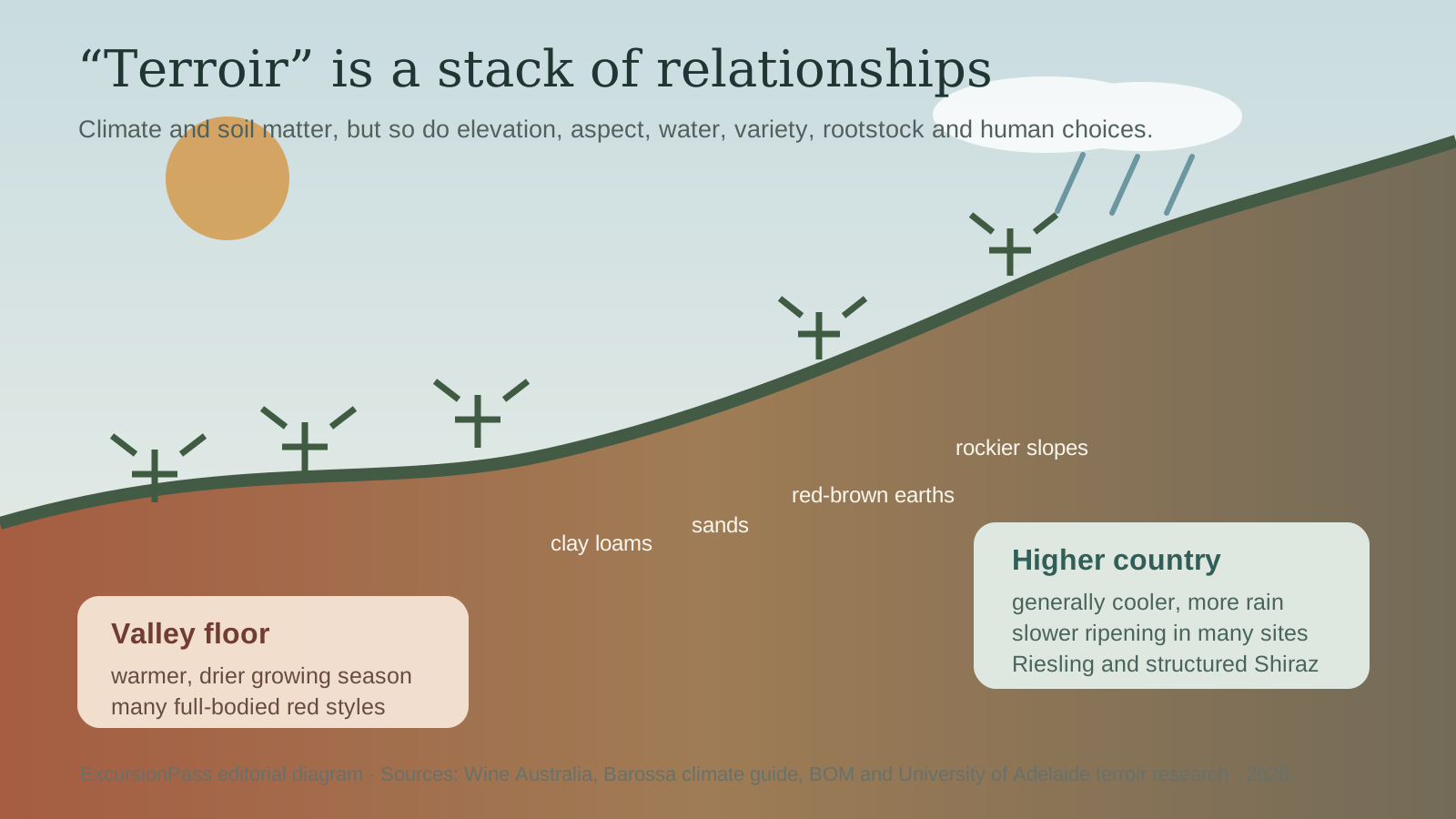
This is why “terroir” needs both respect and scepticism. A University of Adelaide and Wine Australia research project found that wine chemistry could separate some Barossa subregions, with stronger consistency in some areas than others. That is evidence that place can leave measurable patterns. It is not proof that every flavour can be reverse-engineered to a rock or that marketing boundaries replace careful tasting. The honest explanation is plural: wine emerges from environment, plant and people, repeated across seasons that never behave identically.
Seasonal timing matters as much as annual totals. Rain before budburst can replenish soil water; rain close to harvest can create fruit-damage and disease pressure. Heat has different effects on a shaded, well-watered vine and an exposed, water-stressed one. Variety, soil depth, crop load and the timing of picking change the result again. A useful cellar-door conversation asks how the particular vintage differed from the producer’s usual season, and what was changed in the vineyard or winery in response. A year on the label records a growing season, not a universal quality grade.
06 · Barossa landscape
Old vines: survival, evidence and mythology
An old vine earns attention before it earns reverence. Thick, contorted trunks show repeated pruning and repair. Low yields may reflect age, site, disease, management or economics. Deep or extensive roots can help some vines buffer variable seasons, but age alone does not guarantee depth, concentration or quality. A neglected old block can make poor wine; a younger, well-sited vineyard can make exceptional wine.
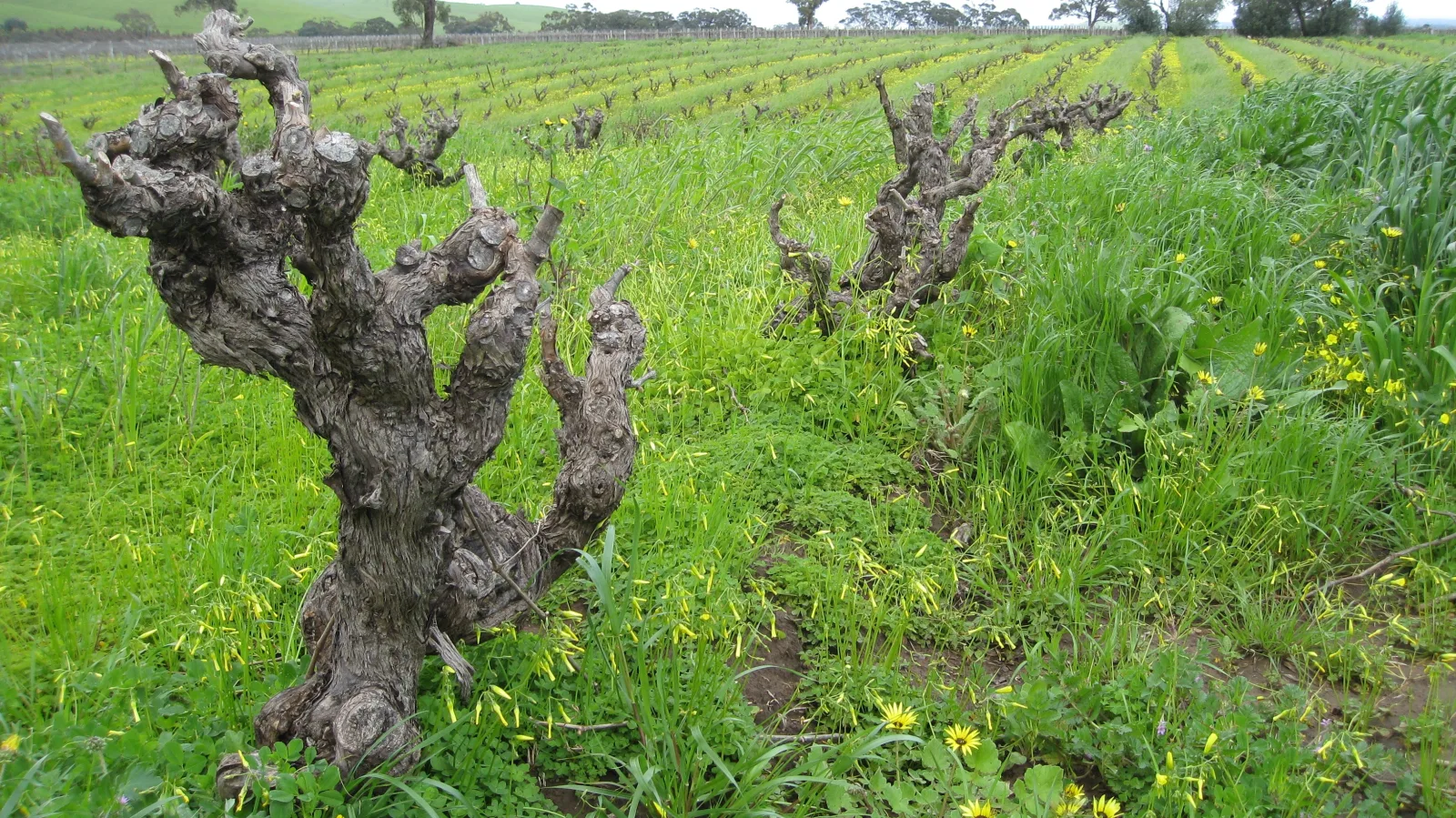

Barossa’s Old Vine Charter, introduced in 2009, offers a vocabulary rather than a legal quality ladder. It calls vines at least 35 years old Old, at least 70 Survivor, at least 100 Centenarian, and at least 125 Ancestor. The named examples include Grenache, Shiraz, Mataro, Semillon, Cabernet and Riesling. The charter makes age visible and encourages stewardship, but a label still needs provenance. Ask when a block was planted, whether vines remain on their own roots, how missing plants were replaced and whether the wine in the glass comes entirely from that parcel.
The survival story is partly biological. South Australia remains free of grape phylloxera, the root-feeding insect that devastated European vineyards and still threatens Australian regions. Vinehealth Australia explains why that freedom needs protection: strict quarantine and farm-gate hygiene help safeguard vines that remain on their own roots. Soil carried on footwear, tyres or equipment can move pests and pathogens. If a grower asks visitors to stay out of rows, clean shoes, use covers or follow a designated path, the rule protects a living agricultural asset; it is not theatre for exclusivity.
The survival story is also economic. When table-wine preferences shifted in the 1970s, red grapes fell into surplus. In the 1980s South Australia’s vine-pull scheme paid growers to remove unwanted or unprofitable vines. Old Grenache and Shiraz blocks disappeared because their historical importance did not pay the bills. Some growers and winemakers resisted. Peter Lehmann’s decision to keep buying grapes when his employer wanted purchases stopped became part of a larger rebalancing toward grower relationships and independent labels. By the 1990s, international interest in powerful Barossa reds and old-vine provenance turned some former liabilities into prized material.
That reversal should temper nostalgia. Vines were not preserved by destiny; they survived uneven markets, family decisions, changing tastes and the absence of phylloxera. A bottle sold as “liquid history” may carry genuine old-vine fruit, but history is not literally consumed. What the glass can offer is a present interpretation of surviving plant material, shaped by this year’s farming and winemaking.
Langmeil identifies its Freedom vineyard as a surviving 1843 planting. The Old Vine Charter lists it among Ancestor vines, and Wine Australia records Barossa Shiraz vines dating to 1843. The region therefore holds some of the world’s oldest surviving Shiraz vines. The important encounter is with documented continuity: the block’s planting record, the survival of original plants and the labour required to keep them producing. The sight of a contorted trunk alone cannot establish a uniquely oldest vine or promise a superior taste.
07 · Barossa landscape
Shiraz is the headline, not the whole cellar
Shiraz occupies about half the Barossa Valley’s vineyard area and remains its international shorthand. In warm sites it can produce full-bodied wines with ripe dark-fruit character and substantial texture. The best examples are not simply the biggest. Acidity, tannin quality, fragrance, alcohol, oak and fruit concentration have to balance. Cooler sites, earlier picking, whole-bunch use, vessel choice and gentler extraction can produce very different expressions.
A full-bodied Shiraz cannot be explained by heat or skin thickness alone. Tannins are phenolic compounds found principally in skins and seeds and can contribute astringency by interacting with proteins in saliva. Their amount, extractability and sensory effect depend on variety, ripeness, fermentation, maceration, seed condition, oak, oxygen and time. The Australian Wine Research Institute describes tannins changing chemically after extraction. Astringency is a texture to examine alongside fruit, acidity and alcohol; a wine’s body is not a tannin meter.
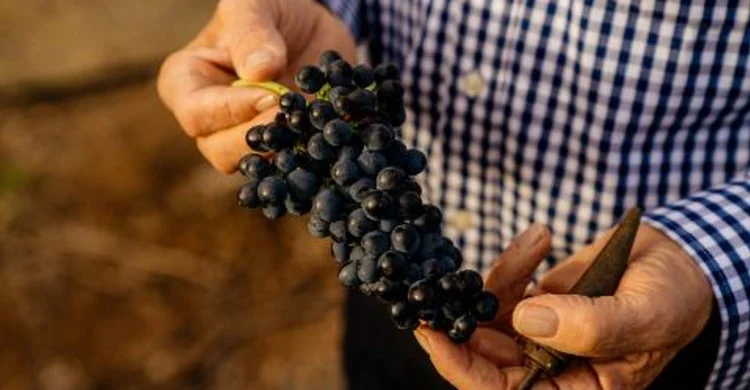
Grenache offers a second key to the region. It spent decades as blending and fortified-wine material, then gained new attention as growers and winemakers valued perfume, red fruit, spice and the character of old dry-grown blocks. Mataro—also called Mourvèdre—adds savoury depth and structure and often joins Grenache and Shiraz in GSM blends. Cabernet Sauvignon can bring blackcurrant, herb and firmer line, particularly in appropriate sites. Semillon has deep regional history. Higher Eden Valley is celebrated for Riesling as well as Shiraz. Alternative Mediterranean varieties are increasingly planted as growers test responses to heat and water stress.
Sparkling Shiraz is an Australian wine tradition found in Barossa and other regions. It can combine dark fruit, tannin, sweetness and chill in surprising ways. Treat it as a style to understand: compare its texture with still Shiraz, notice how serving temperature changes the impression, and ask about sweetness and the base wine rather than assuming all examples behave alike.
A useful tasting day therefore moves across contrasts rather than prestige ranks. Compare warm-site and cooler-site Shiraz; younger and older-vine material; Grenache with a GSM blend; dry Riesling with a textural white; open-fermented traditional styles with cleaner modern expressions. Four thoughtful flights can reveal more than four famous names.
08 · Barossa landscape
What happens between vineyard and glass
Cellar doors often speak in compressed winemaking verbs—picked, crushed, fermented, pressed, matured, blended. Slowing them down turns a tasting into an explanation of choices.
Harvest date sets the starting balance of sugar, acid, flavour and tannin maturity. Grapes may be destemmed or include some whole bunches. Crushing breaks berries; leaving more berries intact changes extraction and fermentation behaviour. Yeast converts sugar to alcohol and carbon dioxide. Red wine usually ferments in contact with skins, drawing colour, tannin and aroma compounds into the liquid. Pump-overs, plunging, vessel shape, temperature and time control how that contact proceeds. Pressing separates wine from solids; hard press fractions can taste and behave differently from free-run wine.
Malolactic fermentation commonly softens sharper malic acid into lactic acid. Maturation in old or new oak, large vats, concrete, amphora or steel changes oxygen exposure, flavour and texture. American oak can contribute conspicuous coconut, vanilla or sweet spice; French oak often behaves differently, but neither is automatically superior or subtle. A winemaker may blend parcels to achieve consistency, build complexity or correct imbalance. Filtration and fining can improve stability or adjust texture; they are techniques, not evidence of industrial inferiority.
This chain is why “minimal intervention” requires questions. All wine involves intervention: harvest, crushing, fermentation management, hygiene and packaging are decisions. Organic certification concerns defined farming inputs. Biodynamic certification adds a particular whole-farm system and preparations. Regenerative practices focus on soil function and ecosystem outcomes but lack one universal wine standard. None of these labels, alone, proves flavour or environmental performance. Ask what is certified, what is measured, how water and disease are managed, and what the producer changes when a season turns difficult.
09 · Barossa landscape
The people behind the regional shorthand
Regional histories often become a parade of founders, but people are useful when they reveal a system rather than decorate it. Johann Gramp planted vines at Jacob’s Creek in the 1840s and helped establish a commercial lineage that grew far beyond one family plot. Joseph Seppelt, arriving in the 1840s, built the enterprise at Seppeltsfield into a major producer; the estate’s scale, fortified-wine cellars and long maturation programmes make it a particularly clear place to study how agriculture became industry. Samuel Smith founded Yalumba near Angaston in 1849, another example of a family enterprise expanding through changing markets.
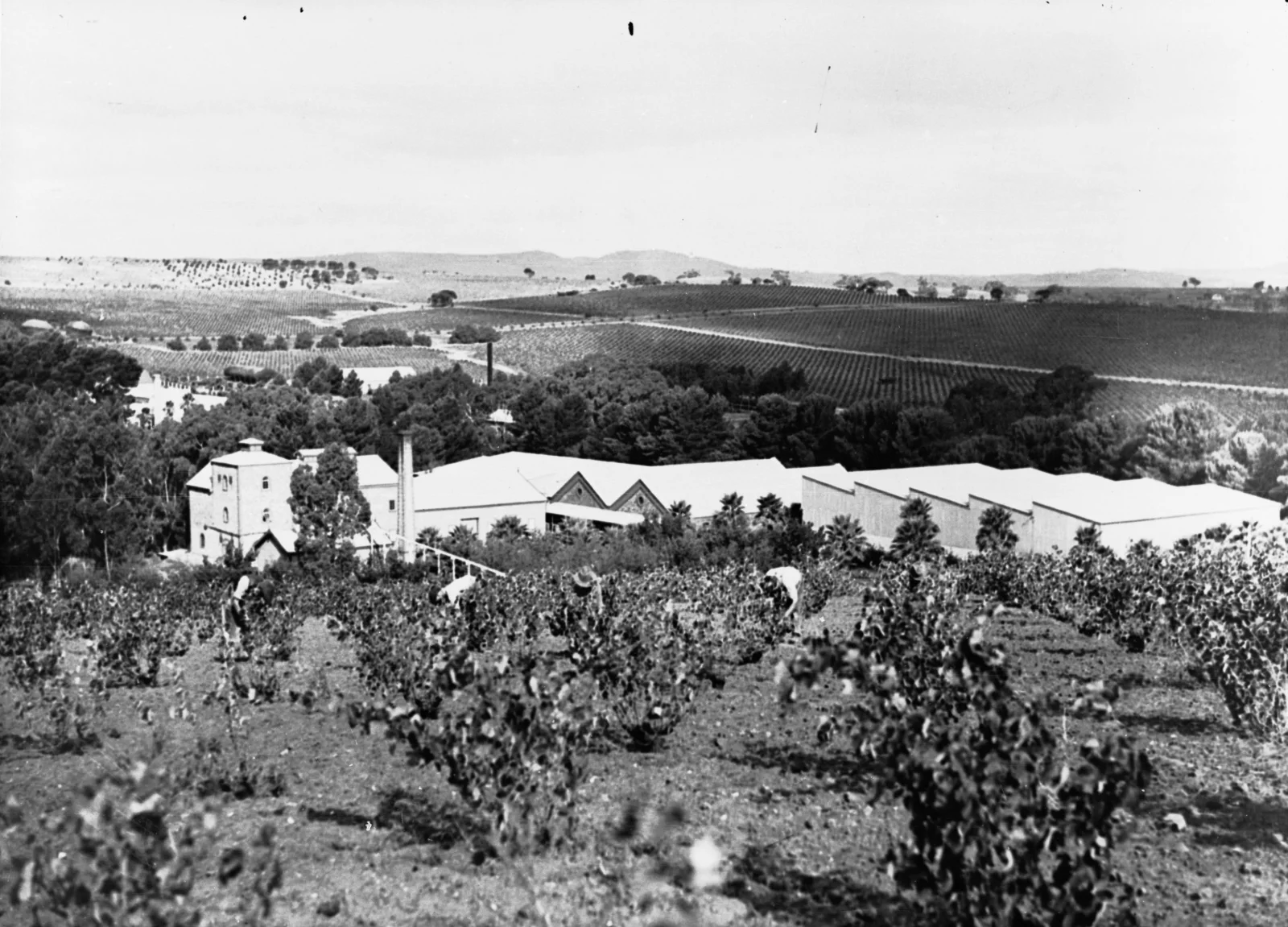
Those stories can obscure the unnamed workers who dug, pruned, picked, carted, crushed, coopered, cleaned and bottled. Early vineyards depended on family labour, hired workers and skills moving between farms. Later wineries required cellar hands, laboratory work, mechanics, drivers, packers and office staff. Seasonal harvest still rearranges the region’s working day. When an archive photograph shows figures bent among rows, they are not scale markers for a picturesque estate; they are the labour that made the view possible.
Max Schubert matters because Grange changed expectations for Australian red wine’s ageing potential and international status. Yet the story should not become a lone-genius myth. Schubert drew on European observation, Penfolds resources, multi-regional fruit, technical collaborators and a company that first resisted and later embraced the wine. Peter Lehmann matters because his response to the late-1970s grape surplus foregrounded relationships with growers. Again, the achievement belonged to a network: people supplied fruit, credit, equipment, labour and trust.
The modern cellar door adds another group of interpreters. Hosts translate technical work into a 45-minute encounter; growers and winemakers sometimes pour, but often cannot. A guide may know the route brilliantly without being an oenologist. The honest division of authority is a strength: driver-guide for geography and logistics, producer for its own farming and wine, historian for contested history, and Traditional Owners for culture. One charismatic host should not be required to impersonate all four.
10 · Barossa landscape
Read the building as carefully as the bottle
Winery architecture records gravity, temperature control, transport and fashion. Nineteenth-century stone walls provide thermal mass. Thick masonry and shaded openings can moderate heat, although modern climate control may now do more of the work. Long sheds and barrel halls speak to storage; loading access shows where grapes, barrels and bottles moved. Sloped sites once allowed gravity to transfer must or wine between stages, reducing pumping. Underground or partly buried spaces create stable conditions for maturation.
Contemporary wineries reorganise those same problems with stainless steel, insulated tanks, refrigeration, inert gas, washable surfaces and laboratory monitoring. A photogenic barrel does not prove the wine in the glass was matured in it. Display barrels can be empty; production can happen elsewhere; a heritage cellar can hold a modern hospitality room. Ask what functions remain on site and what has moved.
At Seppeltsfield, the combination of vineyards, industrial buildings, maturation cellars, workers’ history, village infrastructure and contemporary hospitality makes a dense cultural landscape. At a smaller producer, the useful details may be a hand-operated basket press, open fermenters, amphorae or a compact barrel room. The point is not to rank old against new. It is to ask how a building solves the physical problems of moving fruit, controlling fermentation, cleaning equipment and ageing wine—and how much of that process the visitor is actually seeing.
11 · Barossa landscape
The cellar door is a form of interpretation
A cellar door is both hospitality venue and sales floor. That dual role does not invalidate what it teaches, but it should shape how a visitor listens. A good host explains site, vintage and method, invites comparison, accepts dislike and does not make purchase the price of curiosity. A weak tasting relies on trophy lists, scarcity and adjectives that cannot be tested.
The private format can help because the guide can build a sequence around what the group is learning. Flexibility still needs confirmed appointments. Ask about the wines or tasting format, expected length, group size, fee and any production-area access. A private visit may mean a room or host reserved for the group; it does not automatically include a winemaker, a closed-door barrel tasting or access before normal opening. The value lies in thoughtful interpretation and time to ask questions.
The strongest four-stop architecture is educational:
- Begin with a regional overview and a flight broad enough to calibrate preferences.
- Visit a vineyard-led producer where farming, soils and old-vine provenance can be discussed.
- Use lunch to slow the pace and connect wine to agriculture and cooking.
- Finish with a contrasting style or scale—perhaps a historic estate after a small producer, or a lighter variety after concentrated reds.
Famous and small producers can both succeed. A large estate may preserve archives, historic buildings, vineyards and technical resources that a tiny cellar cannot. A small appointment-only room may provide direct access to the grower or winemaker. “Obscure” is not a synonym for authentic, and famous is not a synonym for shallow.
.jpg)
12 · Barossa landscape
How to taste without performing expertise
Wine language becomes useful when it points back to perception. It becomes theatre when the visitor hunts for someone else’s approved answer. Start with what is observable.
Look at colour and clarity without turning them into a quality score. Smell before swirling, then again after air changes the aroma. Take a small sip and notice sequence: acidity may make the mouth water; tannin may create grip; alcohol may feel warm; sweetness, fruit, savoury notes and oak can arrive at different times. The finish is simply what remains and for how long. “I prefer the second wine because its acidity keeps the fruit clearer” is more informative than “the first is better” or a list of imagined flavours.
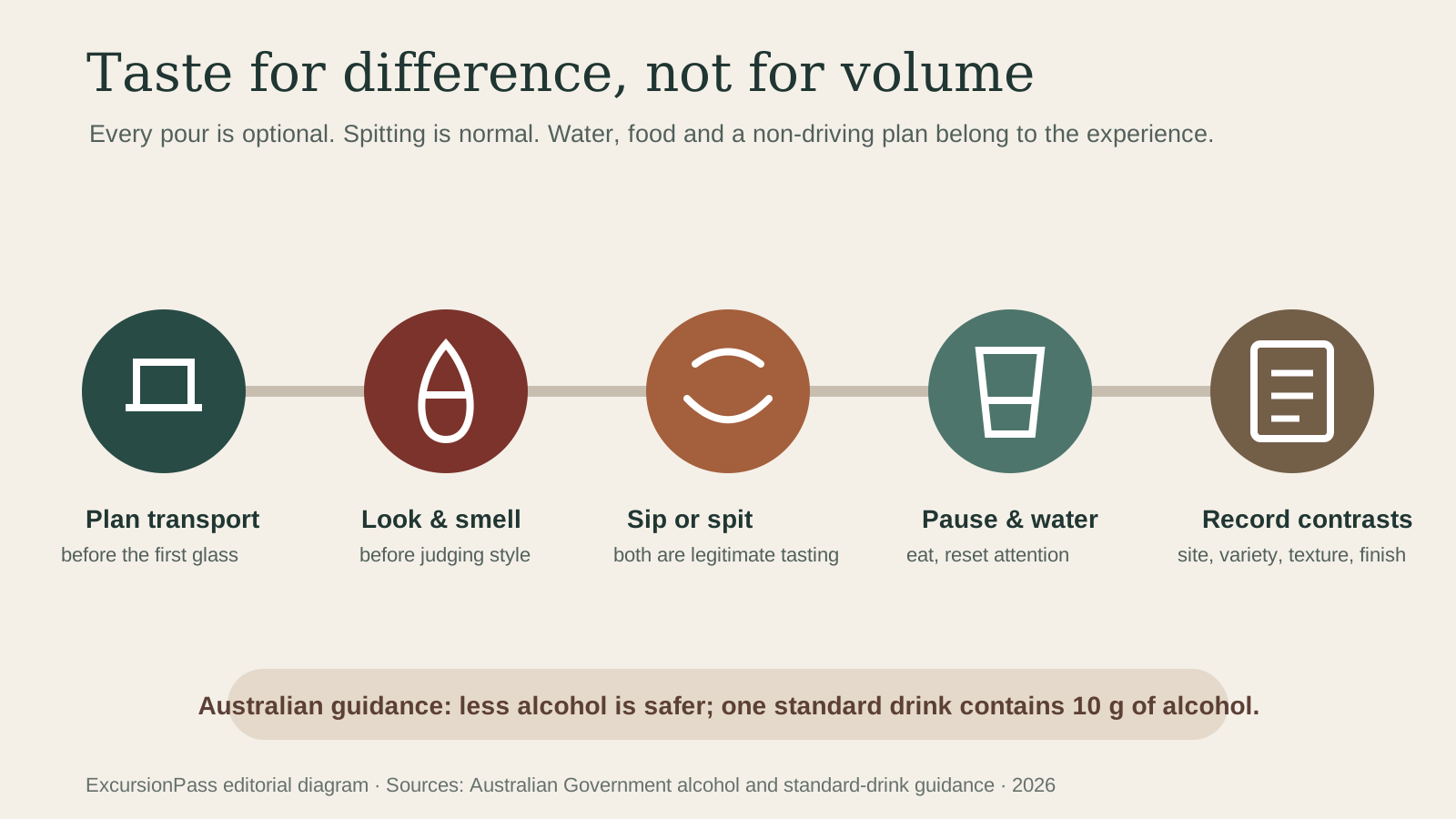
Spitting is not an insult. It allows flavour to be assessed while limiting the alcohol swallowed, but it cannot establish that someone is safe to drive. Every pour is optional, and declining wine leaves room to learn from the host’s explanation. Water helps hydration but does not sober a person. Food slows absorption but does not cancel alcohol already consumed. Coffee, cold air and a late lunch do not make an impaired driver safe.
Australia defines one standard drink as 10 grams of pure alcohol. A tasting pour is not automatically one standard drink; size and alcohol percentage determine the amount. The national lower-risk guideline for healthy adults is no more than ten standard drinks per week and no more than four on any one day, while less is safer. People under 18 should not drink; during pregnancy, planning pregnancy and breastfeeding, official advice is not to drink. Medication, health conditions, religious practice and personal preference can make abstaining the right choice. A serious cellar door should offer water and, increasingly, thoughtful non-alcoholic participation rather than treating the non-drinker as spare luggage.
13 · Barossa landscape
Lunch is part of the landscape, not a recovery device
Lunch gives a long tasting day time, nourishment and a change of attention. Sit down, stop comparing glasses for a while, and look at what the region grows and preserves. A meal opens a second way to read the Barossa: the migration and farming history that appears in a loaf, smallgoods, fruit or a contemporary restaurant dish.
The regional table draws from orchards, grain, livestock, dairies, market gardens and preservation traditions. Silesian-influenced breads, smoked meats, pickles and fruit cakes sit beside olive oil, verjuice, contemporary Asian-Australian cooking, Mediterranean techniques and produce-led restaurant menus. Maggie Beer helped broadcast a generous regional style, but no one personality owns the food story. Bakers, butchers, growers, market stallholders, chefs, dishwashers and hospitality teams all sustain it.
A fixed “wine pairing” is not required for lunch to work. After morning tastings, water or a non-alcoholic drink may be the more useful choice. If wine is poured, compare how salt, fat, acidity, spice and sweetness alter perception rather than accepting a pairing as perfect by authority. Ask what is actually local. A dish assembled in the valley is not automatically made from Barossa ingredients, and seasonality should change menus.
Confirm the lunch venue and inclusions when arranging the day. An included lunch may mean a main course rather than a multi-course meal, and drinks may be separate. Dietary requirements should be raised before booking, with an explanation of allergies or cross-contact needs where relevant, so that the operator and kitchen can plan before the rural route is fixed.
14 · Barossa landscape
From fortified volume to cellar-door value
The modern tasting economy makes more sense against Barossa’s cycles of abundance and crisis. Vines arrived in the nineteenth century, and fortified wines later became a major industry. In an era when sweet and fortified styles dominated Australian consumption and export, varieties now prized for dry table wine served different markets. Processing scale, grower contracts and blending mattered at least as much as the romance of a named block.
After the Second World War, table-wine culture expanded. Max Schubert’s development of Penfolds Grange—initially resisted inside the company—became a national story about long-lived dry red wine, though Grange is a multi-regional wine and should not be reduced to a Barossa souvenir. By the 1970s, changing consumer taste produced a red-grape glut. Peter Lehmann’s grower pool and the emergence of independent cellar doors helped keep fruit moving and shifted more value toward named producers and direct relationships.
The 1980s vine pull exposed the vulnerability of agricultural heritage when market prices collapse. The 1990s premium-red boom then rewarded ripe Shiraz, American oak, old vines and strong regional branding. International critics helped create demand; growers reinvested; tourism expanded. Later oversupply, corporate consolidation, retail pressure, COVID disruption and trade restrictions challenged the model again.

Cellar-door tourism is therefore not an ornament attached to wine production. Direct sales can improve margins, make small batches viable and give growers a public story. It can also turn farming into a performance in which visitors expect the winemaker to appear on command. The healthiest encounter acknowledges the transaction. Taste attentively, ask informed questions, buy only what you value, and do not mistake access for entitlement.
15 · Barossa landscape
Water, heat and the future of the familiar glass
Barossa’s old-vine narrative celebrates endurance, but the future cannot be secured by repeating the past. The region faces hotter conditions, rainfall uncertainty, extreme events, water constraints, fire risk and changing disease pressure. Different sites and businesses have different options. A dry-grown old block, an irrigated commercial vineyard and a high Eden Valley site do not share one adaptation plan.
Growers can adjust canopy shade, ground cover, pruning, harvest timing and irrigation efficiency; trial heat- and drought-tolerant varieties; protect soil carbon and structure; and reconsider row orientation or new planting sites. Some strategies trade one pressure for another. More canopy can protect fruit but use water. Earlier harvest can retain acidity but alter flavour and tannin maturity. Irrigation can protect vines but place demands on shared water systems and may affect soil salinity. New varieties can increase resilience while challenging regional identity and market expectations.
The Barossa Water Security Strategy treats water as a shared regional system through a planning horizon to 2050. Its options connect alternative supply, efficient on-farm use and storage with healthy waterways, biodiversity and Aboriginal knowledge and values. That breadth matters: a winery cannot establish sustainability by reporting its own water use while ignoring other users or the catchment. Ask what risks are measured, what resources are used, who bears the cost and whether progress is independently demonstrated.
Visitors have a role. Respect vineyard biosecurity. Do not enter rows without permission. Stay on roads and paths, especially during vintage. Avoid turning working machinery, chemical storage or harvest crews into photo props. Choose operators who manage waste and transport sensibly. Ask whether a cellar door offers tap water rather than single-use bottles, supports local food suppliers and explains farming trade-offs without greenwashing.
16 · Barossa landscape
Ecology continues between the rows
A vineyard is an agroecosystem, not a substitute for the woodland or grassland it displaced. Rows can provide cover and food for some organisms while excluding others. Remnant trees, creek lines, roadside vegetation and connected shelterbelts may carry more habitat value than the vines themselves. Farm dams can support wildlife but are built water infrastructure. Introduced cover crops may protect soil and assist beneficial insects, yet they also use water and need management. Sheep can reduce mowing and cycle nutrients in the cool season, but stocking, compaction and vine damage have to be controlled.
This complexity is why biodiversity should be read beyond bee logos and nest boxes. The regional resilience programme identifies native grass establishment and revegetation as ways to support soil health, reduce erosion and improve habitat. Ask whether native vegetation is protected and connected; whether creek banks are fenced or restored; how herbicide and fungicide use is reduced and monitored; what happens to winery wastewater; how marc, stalks and lees are reused or disposed of; and whether wildlife claims are measured. A single owl box cannot balance broad habitat loss, just as a green vineyard floor cannot prove healthy soil.
Soil itself is living infrastructure. Organic matter influences structure, infiltration and microbial activity. Compaction can restrict roots and water movement. Erosion removes a resource that takes far longer to rebuild than a tourist season. Mulch, compost, undervine cultivation, grazing and reduced traffic can help in some settings while creating new costs or risks in others. There is no universal visual recipe for “natural wine country.”
Fire belongs in the risk map too. Hot, dry summers can bring restrictions, smoke and route changes. Smoke exposure can affect grapes and wine, but a smoky aroma is not proof that a vineyard burned; sensory effects depend on timing, concentration, variety and winemaking. Visitors should follow official fire-danger advice and operator decisions rather than treating a rural itinerary as guaranteed access.
17 · Barossa landscape
Choosing the day: guided, self-driven or selective
The right format follows from the group’s actual priorities.
Choose a private driver-guide when everyone wants to taste, the group values conversation and route curation, or coordinating appointments would consume too much of the trip. Confirm whether the booking is genuinely private, how many passengers the assigned vehicle carries, who provides the commentary and which inclusions are written into the reservation. “Small group” is too elastic to answer those questions by itself.
Self-drive when one person is genuinely content not to drink, the group wants only one or two appointments, or access and pacing need to be controlled closely. The designated driver should not rely on tasting, spitting, food or time to remain under a limit. South Australian guidance is clear that a blood-alcohol concentration below 0.05 does not guarantee unimpaired or lawful driving, and some licence holders must maintain zero.
Use a larger scheduled tour when budget, solo travel or social contact matters more than itinerary control. A coach is not automatically “cattle class.” It may offer a well-researched route, accessibility support and a lower transport footprint per person. Ask about group size, commentary, time at each stop and whether tastings and lunch are included.
Build a selective day without four tastings when wine is only part of the interest. Combine one serious cellar-door appointment with a heritage site, local market, walking route, food producer or landscape viewpoint. This often gives non-drinkers and mixed-interest groups a richer day.
Before any format is booked, confirm pickup geography, total duration, winery and lunch inclusions, dietary handling, cancellation terms, accessibility, child policy, language, whether purchases can be stored safely and whether the vehicle can accommodate mobility aids. Seat capacity is not accessibility evidence. Cellar doors range from level contemporary spaces to historic buildings with steps, gravel and uneven thresholds; contact each venue or operator for the actual route.
18 · Barossa landscape
Seasons change what can be read
Spring, September to November, brings budburst, fast canopy growth, blossoms and cool mornings. It is an excellent time to discuss frost, flowering and vineyard floor management. Weather can turn quickly; layers and rain protection matter.
Summer, December to February, moves toward veraison and early harvest. Heat, UV exposure and fire conditions become practical concerns. Start early, carry water, use sun protection and accept that a producer may prioritise vineyard or winery work over visitors.
Autumn, March to May, is vintage and then colour change. Harvest offers the strongest connection between fruit and cellar, but it is also the busiest and most safety-sensitive period. Access behind the scenes should never be assumed. Machinery, wet floors, carbon dioxide in fermentation areas and moving vehicles are real hazards.
Winter, June to August, reveals vine structure. Dormant rows make pruning and old trunks easier to read; cold nights and rain change clothing and road conditions. The visual drama is quieter, while the agricultural explanation can be deeper.
Current opening times, event closures, tasting fees and bookings should always be checked directly. A magazine story can explain the system; it cannot keep every cellar door’s calendar.
19 · Barossa landscape
What a guide should make legible
A well-curated wine day has a reason for its sequence. One stop may make vine age tangible, another distinguish a cooler site or a different variety, and another show how fermentation or maturation changes texture. The road between them can explain settlement, water and land use. Ask for that thread when choosing a guide: what will the places reveal together that a row of unrelated tastings would miss?
The strongest interpretation moves between scales. A trunk opens a discussion of planting records and continued care; a tank leads to fermentation and temperature control; a hilltop view connects roads, vegetation, water storage and towns. Explanation should stay within the speaker’s knowledge. A driver can orient the route, a producer can describe its practices, and public heritage or Indigenous-led interpretation can supply authority that neither should improvise.
Curation is the deliberate arrangement of contrasts and enough time to notice them. A guide earns trust by making the landscape more legible, admitting uncertainty, adjusting to the group within confirmed arrangements and protecting safe, respectful behaviour. A traveller helps by arriving with interests, listening carefully and treating a working winery as someone’s workplace.
20 · Barossa landscape
Listen: Barossa Valley Wine Tour
The 21-minute Travel Podcast by ExcursionPass episode asks how a small group, a driver, old vines, lunch and a curated route change the Barossa day.
21 · Barossa landscape
Build a Barossa day without outsourcing judgment
A useful route does not require four tastings or a promise of privileged access. Start with the group’s real interests, appoint a sober driver or choose transport that keeps everyone off the wheel, and arrange a sequence that can be confirmed directly with the venues involved. Ask the operator or driver for the exact meeting arrangement, assigned vehicle, passenger restraints, route, inclusions, cancellation terms and product-specific accessibility information before paying.
The Barossa can be explored through direct cellar-door appointments, a sober self-drive plan, a guided service, a larger group tour or a selective day combining one tasting with food, landscape and heritage. The useful choice gives everyone a way to participate and leaves enough time for explanation. A non-drinker’s questions about farming, buildings or food can be as valuable to the group as a confident tasting note.
22 · Barossa landscape
Continue exploring
Place this story within the Barossa Valley destination desk and the Australia country desk. For other Australian landscapes where the route must remain accountable to Country, continue to Minjerribah Is Not a Wildlife Checklist, The Rainforest Is Not Scenery: Reading Yidinji Country or Sydney Harbour by Electric Bike. The subjects are different; the shared principle is that land is never merely scenery.